
The Joro spider (*Trichonephila clavata*), native to East Asia, has been increasingly spotted across the southeastern United States since its first documented appearance in Georgia around 2014. Recognizable by its striking yellow-and-blue markings and large, intricate webs, this arachnid often causes alarm due to its size—females can reach up to three inches in leg span. While not aggressive and considered harmless to humans, their presence on porches, gardens, and near entryways can be unsettling. For those seeking to remove them from living spaces, it's important to do so safely, humanely, and effectively. This guide outlines proven, responsible methods to manage and eliminate Joro spiders at home without resorting to harmful chemicals or unnecessary risks.
Understanding the Joro Spider: Harmless Invader or Nuisance?
Joro spiders are orb-weavers, meaning they build large, circular webs to catch flying insects like mosquitoes and flies. Unlike venomous species such as black widows or brown recluses, Joro spiders pose no medical threat to humans. Their bite is rare and typically results in mild, localized irritation similar to a mosquito bite. In fact, entomologists argue that these spiders may provide ecological benefits by reducing pest insect populations.
However, their rapid spread and tendency to colonize residential areas make them a concern for homeowners who prefer not to share space with large spiders. The key is to address infestations with methods that prioritize safety—for both people and beneficial wildlife—while being effective in removal.
“Joro spiders are not dangerous. They’re more likely to flee than bite. But if their webs obstruct walkways or cause anxiety, targeted, non-toxic control is reasonable.” — Dr. Nancy Hinkle, Professor of Entomology, University of Georgia
Safe and Effective Removal Methods
Killing or removing Joro spiders doesn’t require extreme measures. Below are five reliable, low-risk techniques suitable for home use.
1. Physical Removal Using a Vacuum or Jar
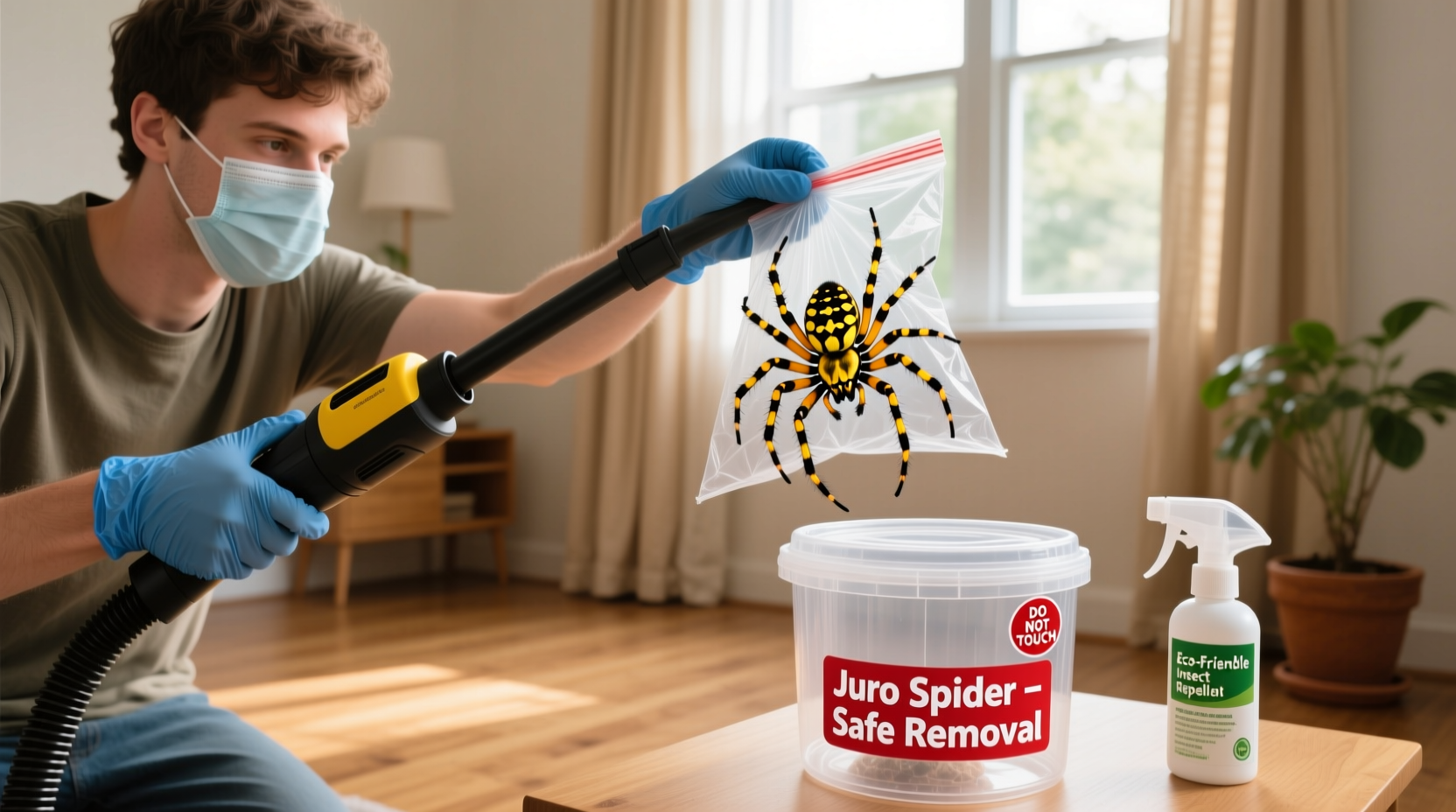
The simplest and safest method is physically removing the spider. Use a vacuum cleaner with a hose attachment to suction the spider and its web. For a more humane option, place a wide-mouth jar over the spider, slide a piece of cardboard underneath, and release it outdoors far from your home.
2. Web Disruption and Prevention
Joro spiders rely on their webs for survival. Regularly dismantling webs using a broom, pole, or garden hose discourages re-establishment. Focus on common web-building zones: eaves, railings, light fixtures, and dense shrubbery.
To prevent future web construction, consider installing motion-activated fans or lights. Spiders avoid vibrating surfaces and bright, moving air currents.
3. Natural Repellents
Certain scents deter spiders without posing health risks. Spray a mixture of essential oils (peppermint, tea tree, or citrus) with water around door frames, windowsills, and outdoor seating areas. Reapply every few days or after rain.
While not lethal, these repellents create an inhospitable environment, encouraging spiders to relocate.
4. Diatomaceous Earth (Food Grade)
For outdoor use, sprinkle food-grade diatomaceous earth (DE) along foundation walls, garden borders, or under decks where spiders travel. DE is a fine powder made from fossilized algae that dehydrates soft-bodied insects and arachnids on contact. It’s non-toxic to mammals but should be used cautiously—avoid inhalation and keep away from pets’ breathing zones.
5. Targeted Traps
Sticky traps placed near known web sites can capture wandering spiders. Opt for eco-friendly versions that avoid attracting non-target insects. Check traps daily to prevent prolonged suffering and dispose of them humanely.
Step-by-Step Guide: Eliminating a Joro Spider Infestation
- Inspect Your Property: Walk around your home’s perimeter and note all web locations, especially near entrances and lighting.
- Remove Existing Webs: Use a long-handled brush or hose to dismantle webs. Do this consistently for at least one week to break nesting patterns.
- Apply Natural Repellents: Spray essential oil solutions weekly on potential entry points.
- Set Up Barriers: Install weather stripping on doors and repair window screens to limit indoor access.
- Monitor and Maintain: Continue weekly checks during peak season (late summer to early fall) when Joro spiders are most active.
Do’s and Don’ts When Dealing With Joro Spiders
| Do’s | Don’ts |
|---|---|
| Use a vacuum or jar to remove spiders gently | Handle spiders barehanded or provoke them |
| Clear webs regularly to discourage return | Use chemical pesticides near children or pets |
| Try natural repellents like peppermint oil | Crush spiders indoors—this can attract other pests |
| Seal cracks and gaps in exterior walls | Assume all large spiders are dangerous—correct ID matters |
| Contact pest control for recurring issues | Release captured spiders too close to your home |
Real Example: A Homeowner’s Experience in Athens, GA
Sarah M., a homeowner in Athens, noticed several large webs forming on her porch each morning during September. Initially alarmed by the size of the spiders, she consulted her local extension office before taking action. Instead of spraying pesticides, she began a routine of sweeping down webs every morning and spraying a mix of water and 10 drops of peppermint oil along the railing. She also installed a small solar-powered fan near the entryway. Within two weeks, web activity ceased. “I didn’t need to kill anything,” she said. “Just making the area less inviting worked perfectly.”
When to Consider Professional Help
While most Joro spider encounters can be managed independently, professional pest control may be necessary if:
- You have a severe phobia affecting your quality of life.
- Spiders repeatedly enter living spaces despite preventive efforts.
- You're unsure whether the spider is a Joro or a potentially dangerous species.
A licensed exterminator can conduct a site assessment and recommend integrated pest management (IPM) strategies that minimize chemical use while maximizing effectiveness.
Frequently Asked Questions
Are Joro spiders poisonous?
No. Joro spiders are not considered poisonous or medically significant. Their venom is designed for insects and is not strong enough to harm humans. Bites are extremely rare and usually only occur if the spider is squeezed against skin.
Can I just leave them alone?
Yes. Many experts recommend coexistence. Joro spiders eat disease-carrying insects and are not destructive to structures. If they’re not in high-traffic areas, tolerating them can support local biodiversity.
What time of year are Joro spiders most active?
Joro spiders are most visible from late summer (August) through early fall (October). This is when mature females build large webs. They typically die off with the first hard frost.
Final Checklist: Safe Joro Spider Management at Home
- Identify First
- Confirm it’s a Joro spider—look for bright yellow and blue markings, red-tipped legs, and large orb webs.
- Remove Webs Weekly
- Disrupt habitat to discourage re-nesting.
- Use Non-Toxic Deterrents
- Peppermint oil sprays or outdoor fans reduce appeal.
- Seal Entry Points
- Check windows, doors, and utility penetrations for gaps.
- Relocate, Don’t Kill
- If removal is necessary, capture and release far from the house.
Conclusion
Managing Joro spiders at home doesn’t require drastic or hazardous measures. With informed, thoughtful actions, you can maintain comfort and peace of mind without compromising safety or environmental responsibility. These spiders are not enemies—they’re part of a changing ecosystem adapting to new regions. By choosing humane, sustainable methods, you protect your household while respecting nature’s balance. Start with simple steps like web removal and natural deterrents, stay consistent, and observe the difference. If needed, consult local extension services for region-specific guidance. Your home can remain spider-managed—and even spider-smart.




 浙公网安备
33010002000092号
浙公网安备
33010002000092号 浙B2-20120091-4
Comments
No comments yet. Why don't you start the discussion?