
In an age of constant connectivity, unwanted cell phone signals can be more than just a nuisance—they can compromise privacy, disrupt sensitive environments, or interfere with critical operations. While the temptation to block these signals may be strong, doing so illegally or unsafely can lead to serious consequences, including federal fines and interference with emergency communications. The key lies in understanding which methods are both effective and compliant with laws such as those enforced by the Federal Communications Commission (FCC) in the United States.
This guide explores practical, lawful approaches to reducing or managing cell phone signal reception in specific settings—without breaking any rules. From architectural design choices to approved shielding materials, you’ll learn how to control wireless access responsibly.
Understanding Signal Blocking: What’s Legal and What’s Not
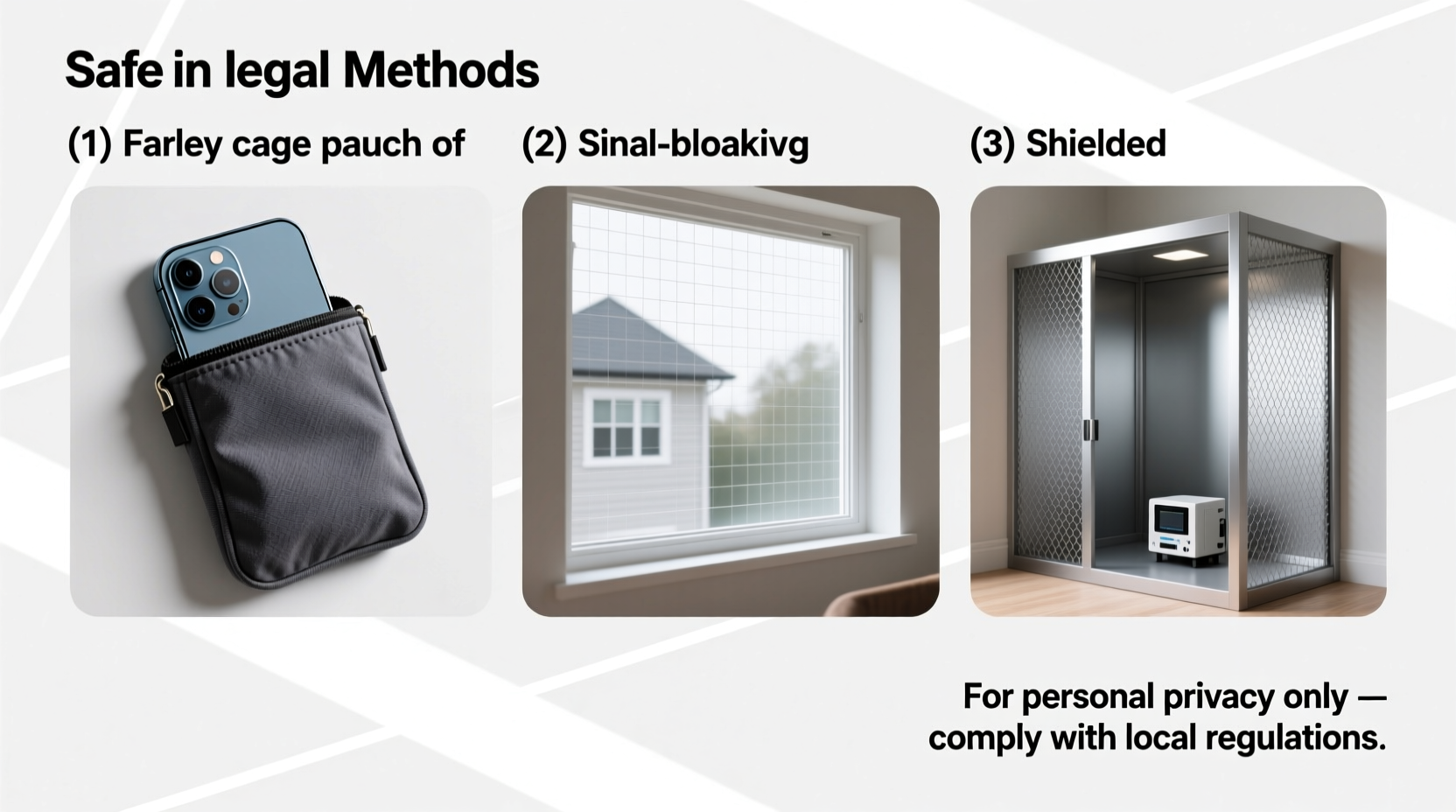
The FCC strictly prohibits the use, sale, and marketing of devices designed to jam or interfere with authorized radio communications, including cell phone signals. This includes commercial signal jammers, even if used in private spaces like homes or offices. Violating these regulations can result in penalties exceeding $100,000 and potential criminal charges.
However, there is a crucial distinction between *jamming* and *blocking*. Jamming actively transmits interference, disrupting signals over a wide area. Blocking, on the other hand, refers to passive methods that prevent signals from entering or leaving a space—such as using physical barriers or Faraday cage principles. These passive techniques are generally legal because they do not emit disruptive frequencies.
“Passive shielding is permitted under current regulations because it doesn’t interfere with spectrum usage—it simply creates a zone where signals cannot penetrate.” — Dr. Alan Reyes, RF Engineering Consultant
Proven Passive Methods for Signal Reduction
Several non-invasive, legal strategies exist for minimizing cell phone signal penetration into a designated area. These rely on materials and construction techniques that attenuate radio frequency (RF) waves.
1. Faraday Cages and Shielded Enclosures
A Faraday cage is an enclosure made of conductive materials (like copper or aluminum) that blocks external static and non-static electric fields. When properly constructed, it prevents RF signals—including cellular, Wi-Fi, and Bluetooth—from penetrating.
- Use conductive mesh or foil-lined drywall for room-scale enclosures.
- Ensure all seams are sealed with conductive tape to maintain continuity.
- Ground the structure appropriately to enhance effectiveness.
2. RF-Blocking Paints and Wallpapers
Specialized paints containing nickel, graphite, or copper can be applied to walls, ceilings, and floors to reduce signal penetration. These coatings reflect or absorb RF energy and are often used in secure facilities.
Popular brands include YSHIELD HSF54 and CuPro-Cote. When combined with proper grounding via conductive tape and wiring, these paints can reduce signal strength by up to 99%.
3. Window Films and Metal Screens
Windows are common weak points in signal containment. Transparent RF-shielding films allow light transmission while blocking frequencies used by mobile networks. Alternatively, fine metal mesh screens installed over windows offer high attenuation without sacrificing ventilation.
Common Applications and Real-World Scenarios
Mini Case Study: Securing a Home Office for Confidential Work
Sarah, a cybersecurity consultant, needed a private workspace where client calls wouldn’t be intercepted and personal devices couldn’t connect to external networks. Rather than risk legal issues with a jammer, she retrofitted a spare bedroom into a shielded office.
She applied RF-blocking paint to all walls and ceiling, installed a shielded door gasket, and covered the window with transparent metallic film. Inside, she placed a Wi-Fi router connected via Ethernet for controlled internal use. After testing, her phone lost all signal—exactly as intended. Her solution was fully passive, compliant, and effective for her needs.
Step-by-Step Guide to Building a Legal Signal-Reducing Room
- Assess the space: Choose a room with minimal external walls and few windows.
- Seal gaps: Caulk around doors, windows, and electrical outlets to reduce signal leakage.
- Apply RF-blocking paint: Coat all interior surfaces with two layers, grounding each wall using copper tape and a grounding rod.
- Treat windows: Install RF-shielding film or replace glass with laminated conductive panes.
- Upgrade the door: Use a solid-core door with conductive edge seals to close the loop.
- Test the enclosure: Place a cell phone inside and attempt to call it from outside. No connection means success.
Do’s and Don’ts of Signal Management
| Do | Don't |
|---|---|
| Use RF-absorbing materials like metal foils, conductive fabrics, or special paints | Use active jammers or any device marketed as a \"cell phone blocker\" |
| Ground shielding materials properly for maximum efficiency | Assume regular insulation or drywall will block signals—it won’t |
| Test signal reduction with multiple carriers and devices | Block signals in public areas or shared buildings without consent |
| Consult an RF engineer for large-scale or mission-critical installations | Ignore local building codes when modifying structural elements |
Checklist: Preparing a Signal-Secure Environment
- ☐ Identify the purpose and scope of signal reduction
- ☐ Confirm compliance with FCC and local regulations
- ☐ Select appropriate shielding materials (paint, film, mesh)
- ☐ Seal all gaps and penetrations (doors, vents, outlets)
- ☐ Ground conductive surfaces correctly
- ☐ Test signal levels before and after installation
- ☐ Maintain access to emergency communication (e.g., landline or designated alert system)
Frequently Asked Questions
Can I legally block cell signals in my home?
Yes, as long as you use passive shielding methods like RF-blocking paint, films, or enclosures. You cannot use active jammers, which are illegal for private use regardless of location.
Will a metal roof block cell phone signals?
Possibly. Metal roofs can significantly weaken signals, especially if combined with foil-backed insulation. However, gaps around windows and doors often allow enough signal leakage to maintain connectivity. For full blocking, additional sealing and shielding are necessary.
Are there any health risks associated with signal-blocking materials?
No direct health risks are linked to passive shielding materials when installed correctly. Unlike jammers, these materials do not emit radiation. However, ensure proper ventilation when applying conductive paints, and follow manufacturer safety guidelines.
Conclusion: Responsible Control Over Wireless Access
Controlling cell phone signals doesn’t require illegal tools or risky workarounds. By leveraging passive shielding technologies and thoughtful design, individuals and organizations can create spaces free from unwanted wireless intrusion—while staying within legal boundaries. Whether protecting sensitive data, reducing distractions, or enhancing privacy, the right approach combines technical precision with regulatory awareness.




 浙公网安备
33010002000092号
浙公网安备
33010002000092号 浙B2-20120091-4
Comments
No comments yet. Why don't you start the discussion?