
Waking up with uncertainty about whether your contact lens is still in your eye—or realizing midday that one might be missing—can be unsettling. Many people instinctively rub their eyes or use excessive force when searching, which can lead to scratches, dryness, or even dislodging a lens further under the eyelid. The good news: there are safe, effective ways to confirm the presence of a contact lens without irritation. Understanding ocular anatomy, using proper techniques, and knowing when to seek help can prevent unnecessary discomfort and protect your vision.
Understanding How Contact Lenses Behave in the Eye
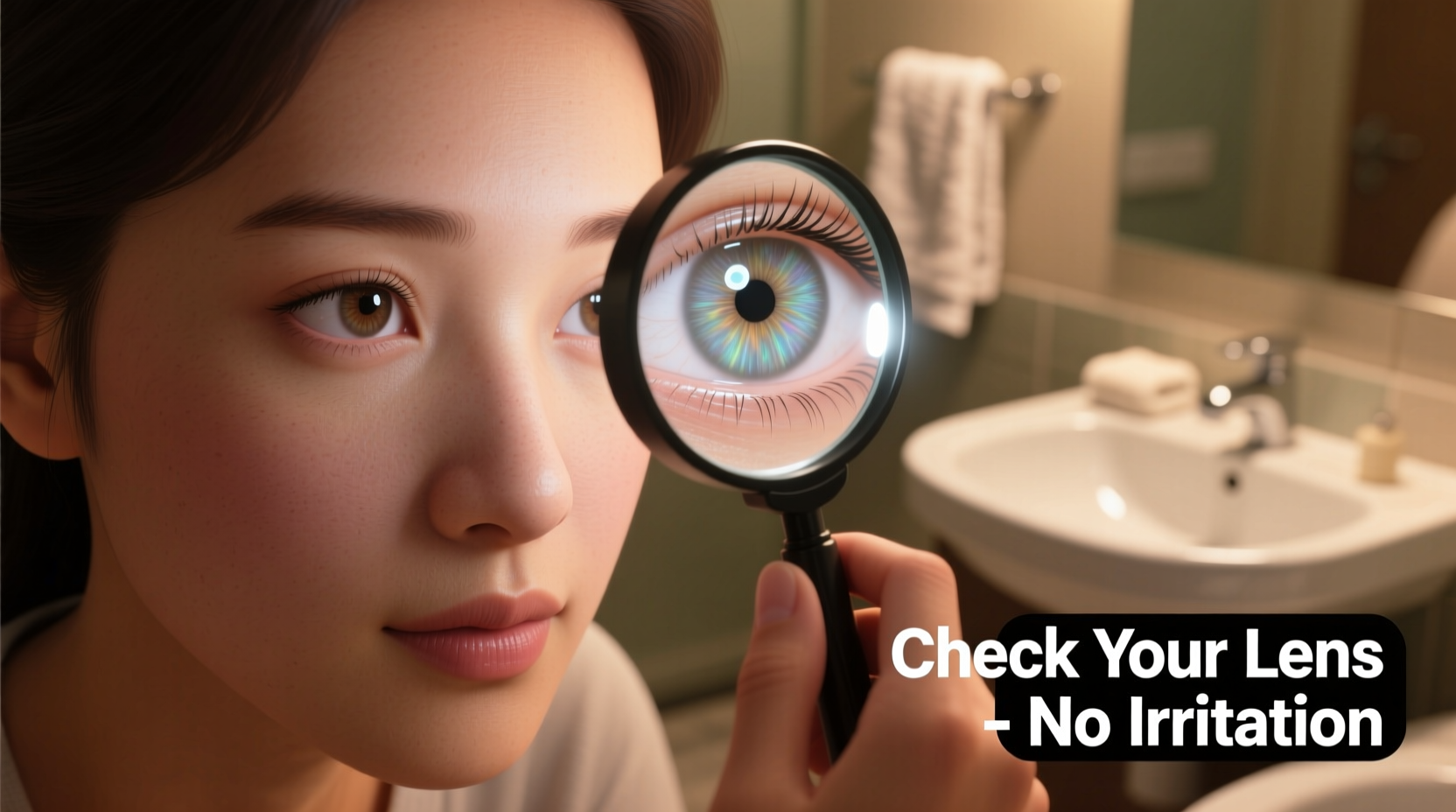
Contact lenses rest on the tear film that covers the cornea, the clear front surface of the eye. They’re designed to stay centered due to natural suction and blinking mechanics. However, lenses can shift, fold, or become trapped under the upper eyelid—especially during sleep or after rubbing the eyes. Contrary to common fear, a contact lens cannot “go behind the eye.” The conjunctiva, a thin membrane covering the white of the eye and lining the inside of the eyelids, forms a sealed sac that prevents objects from migrating behind the eyeball.
When a lens moves out of place, it often folds or tucks under the upper eyelid. In such cases, it may not cause pain but can result in blurred vision, a sensation of something being present, or increased tearing. Recognizing these subtle signs early helps avoid prolonged discomfort.
Step-by-Step Guide to Locating a Missing Contact Lens Safely
Finding a contact lens without irritating your eye requires patience and methodical steps. Follow this sequence to minimize risk:
- Stay calm and wash your hands. Anxiety leads to rapid blinking and rubbing. Clean hands reduce the chance of introducing bacteria.
- Assess vision in each eye. Cover one eye at a time. If vision is clear in the eye where the lens might be missing, the lens is likely still present and functional.
- Use a mirror with bright, indirect lighting. Position yourself close to a well-lit mirror. Natural daylight or soft LED light works best to reduce glare.
- Pull down the lower eyelid. Gently pull the lower lid downward to inspect the space between the lid and the eye. A displaced lens may rest here.
- Check under the upper eyelid. Tilt your head back, look down, and gently lift the upper eyelid by pulling the lashes upward. A small folded lens can hide here.
- Blink repeatedly or roll your eyes. Sometimes, gentle blinking or moving your eyes in circular motions can reposition a shifted lens into view.
- Apply rewetting drops. Dry lenses may stick to the eye’s surface. Lubricating drops can loosen the lens and make it easier to locate or remove.
If the lens remains unfound after these steps, do not probe deeper. It may be better to leave it temporarily than risk corneal abrasion.
Do’s and Don’ts When Checking for a Contact Lens
| Do’s | Don’ts |
|---|---|
| Wash hands thoroughly before touching your eyes | Use fingernails near the eye surface |
| Use preservative-free saline or rewetting drops | Rub your eyes aggressively |
| Inspect both eyes systematically | Use cotton swabs or tools to search |
| Seek professional help if uncertain | Wear the other contact lens if one is missing |
| Blink slowly to reposition a shifted lens | Forcefully flip the upper eyelid multiple times |
Expert Insight: What Eye Care Professionals Recommend
Ophthalmologists and optometrists emphasize caution when dealing with missing lenses. Dr. Lena Patel, an optometric physician with over 15 years of clinical experience, explains:
“Patients often panic when they think a lens is lost in the eye, but in most cases, it’s either still present or has fallen out unnoticed. The biggest risk comes from rough handling. I’ve seen several cases of micro-abrasions from people using dirty fingers or excessive pressure trying to ‘feel’ for the lens.”
She advises: “If you can’t locate the lens within 10–15 minutes using gentle methods, stop. Wear glasses and schedule an appointment. A slit lamp exam can detect even a tiny folded lens under the eyelid in seconds.”
Real Example: A Common Scenario Unfolded
Sophie, a 28-year-old graphic designer, wore daily disposables to work. One evening, after a long screen session, she noticed her left eye felt gritty. She assumed her lens had dried out. After washing her hands, she checked her vision—blurry in the left eye, sharp in the right. Using a magnifying mirror, she pulled down her lower lid: nothing. Then, tilting her head back and lifting her upper lid, she spotted a small, translucent fold near the inner corner. With rewetting drops and slow blinking, the lens unfolded and drifted to center, allowing safe removal.
Sophie avoided rubbing or forcing the lid open wider. Her systematic approach prevented injury and resolved the issue in under five minutes. This case illustrates how combining visual checks with simple techniques can yield results without harm.
When to Seek Professional Help
While most lens-related concerns can be managed at home, certain red flags require prompt attention from an eye care provider:
- Persistent pain or stinging after lens removal
- Redness that worsens over time
- Sensitivity to light or excessive tearing
- Feeling of a foreign body that doesn’t resolve
- Decreased vision not corrected by glasses
These symptoms could indicate a scratched cornea, infection, or a retained lens fragment. Only a trained professional with specialized equipment should perform deep inspection or removal.
Preventive Checklist for Contact Lens Wearers
Minimize the risk of losing track of a lens with these proactive habits:
- Insert and remove lenses over a clean, well-lit surface with a towel to catch falls
- Always verify both lenses are accounted for after removal
- Use consistent lens cases and replace them monthly
- Avoid sleeping in lenses unless prescribed for extended wear
- Carry backup glasses or an extra pair of dailies
- Label solutions clearly to avoid confusion
- Attend annual eye exams to assess fit and eye health
FAQ
Can a contact lens get stuck behind my eye?
No. The anatomy of the eye prevents this. The conjunctival sac forms a continuous barrier that stops objects from moving behind the eyeball. A lens may shift under the upper eyelid but cannot go “behind” the eye.
What should I do if I find a folded lens under my eyelid?
Apply a few drops of sterile saline or rewetting solution, then blink slowly. Most folded lenses will unfold and float to the surface naturally. Once visible, gently remove it with clean fingers. If it doesn’t release within a few minutes, stop and consult your eye doctor.
How can I tell if my lens fell out without me noticing?
If your vision suddenly becomes blurry in one eye and improves when you cover the other, the lens may have been lost. Also, if you don’t feel the lens but experience no discomfort, it may have already slipped out during blinking or while removing makeup.
Conclusion
Checking for a missing contact lens doesn’t require force or guesswork. With calm assessment, proper lighting, and a structured approach, you can determine the lens’s location safely. Remember: irritation is a warning sign, not a challenge to overcome with more pressure. Trust your instincts—if something feels wrong, pause and reassess. Your eyes are too valuable to risk on DIY fixes.




 浙公网安备
33010002000092号
浙公网安备
33010002000092号 浙B2-20120091-4
Comments
No comments yet. Why don't you start the discussion?