
A Blackstone griddle is a powerhouse in outdoor cooking—ideal for searing steaks, flipping pancakes, or grilling vegetables with even heat distribution. However, when rust appears on the surface, it can compromise both performance and food safety. The good news: rust doesn’t mean the end of your griddle’s life. With proper cleaning, restoration, and maintenance, you can revive its non-stick surface and extend its lifespan for years. This guide walks through scientifically sound and field-tested methods to bring your rusty Blackstone griddle back to peak condition.
Understanding Rust on Your Griddle
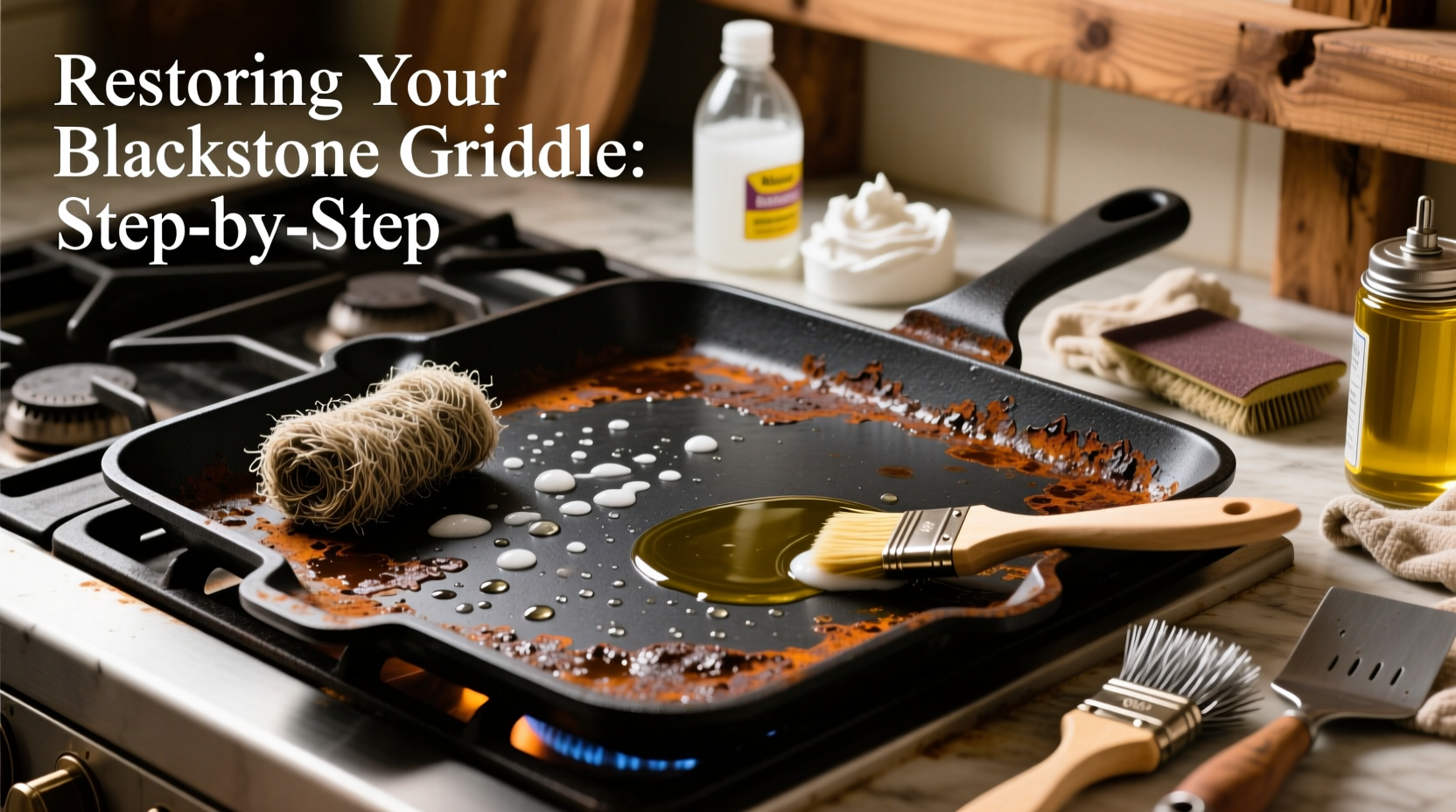
Rust forms when iron or steel is exposed to moisture and oxygen over time—a process known as oxidation. Blackstone griddles are made from cold-rolled steel, which is highly conductive but prone to rust if not properly seasoned and stored. Occasional surface rust isn't dangerous; it's simply an indicator that the protective seasoning layer has degraded.
The key to restoring your griddle lies not just in removing rust, but in re-establishing a durable polymerized oil layer (seasoning) that protects the metal from future corrosion. Skipping this step leaves the surface vulnerable to rapid re-rusting.
Step-by-Step Guide to Restoring a Rusty Blackstone Griddle
Restoration requires patience and precision. Follow these steps carefully to ensure complete de-rusting and optimal re-seasoning.
- Cool and Clean the Surface: Ensure the griddle is completely cool. Wipe off loose debris with a paper towel. Avoid using water at this stage if possible.
- Scrape Off Loose Residue: Use a metal scraper or putty knife to remove any flaking seasoning or carbon buildup.
- Apply a Rust Dissolver (Optional): For light to moderate rust, a vinegar solution (equal parts white vinegar and water) can help loosen oxidation. Soak a cloth in the mixture and lay it on rusted areas for 15–30 minutes.
- Scrub with a Steel Wool Pad or Grill Brick: Using #0000-grade steel wool or a pumice-based grill brick, scrub the entire cooking surface in circular motions. Focus on discolored or rough spots until shiny metal appears.
- Rinse and Dry Thoroughly: After scrubbing, wipe the surface with clean water to remove residue. Immediately dry with a lint-free cloth, then place the griddle on low heat for 10–15 minutes to evaporate any remaining moisture.
- Re-Season the Griddle: Apply a thin layer of high-smoke-point oil (e.g., flaxseed, canola, or vegetable oil) using a paper towel. Heat the griddle to 375°F (190°C) for one hour. Let it cool, then repeat 2–3 times.
- Final Test: After seasoning, test the surface by frying an egg. If it slides easily without sticking, the restoration was successful.
“Rust removal is only half the battle. The real protection comes from consistent, high-quality seasoning.” — James Roderick, Culinary Equipment Technician
Do’s and Don’ts of Griddle Maintenance
| Do’s | Don’ts |
|---|---|
| Use high-smoke-point oils for seasoning | Use olive oil—it burns too easily and creates sticky residue |
| Scrub while the griddle is warm (not hot) | Soak the griddle in water—this accelerates rust |
| Store covered with a fitted lid or cover | Leave outdoors uncovered, especially after rain |
| Re-season monthly under heavy use | Use harsh chemical cleaners like oven degreasers |
| Wipe down after every use | Allow food residue to sit overnight |
Real Example: Reviving a Neglected Backyard Griddle
Daniel from Austin, Texas, hadn’t used his 36-inch Blackstone in nearly nine months. Stored in an open patio during winter, the surface developed patchy rust and flaking seasoning. He assumed it was beyond repair—until he tried the vinegar-and-steel-wool method. After two hours of careful scrubbing and three rounds of seasoning with flaxseed oil, the griddle looked factory-fresh. “I was amazed,” Daniel said. “Now I cook on it twice a week, and I’ve started covering it religiously after each use.” His experience underscores that even heavily oxidized griddles can be restored with persistence and the right technique.
Essential Tools and Supplies Checklist
To effectively clean and restore your griddle, gather these items before beginning:
- Metal scraper or bench knife
- #0000 fine steel wool or grill cleaning brick
- Lint-free microfiber cloths or paper towels
- High-smoke-point oil (canola, grapeseed, or flaxseed)
- White vinegar (for stubborn rust spots)
- Heat-resistant gloves
- Griddle cover or weatherproof enclosure
- Bottle spray (optional, for even oil application)
Having these tools ready streamlines the process and prevents interruptions mid-restoration.
Frequently Asked Questions
Is rust on a Blackstone griddle dangerous?
Small amounts of surface rust are not toxic, but they can affect food taste and texture. Ingesting trace rust isn’t harmful for most people, but it’s best removed for hygiene and performance. Deep pitting or structural corrosion, however, may indicate irreversible damage.
Can I use a wire brush on my Blackstone?
While stainless steel wire brushes are effective, they carry risks. Bristles can break off and embed in food, posing a health hazard. Safer alternatives include brass brushes (softer on steel), grill bricks, or fine steel wool, which offer thorough cleaning without contamination risk.
How often should I season my griddle?
Under regular weekly use, re-season every 4–6 weeks. Heavy daily cooking demands re-seasoning every 2–3 weeks. After deep cleaning or rust removal, always perform at least three consecutive seasoning cycles to rebuild protection.
Prolonging Your Griddle’s Life Through Smart Habits
Prevention is far easier than restoration. Once your griddle is clean and seasoned, adopt habits that minimize rust risk. Wipe the surface with a thin coat of oil after each use—even if you plan to cook again tomorrow. Store it in a dry location, ideally indoors or under a waterproof cover with ventilation to prevent condensation.
If you live in a humid coastal area, consider placing a silica gel pack inside the cover to absorb ambient moisture. Also, avoid using citrus-based marinades directly on the surface for prolonged periods, as acidity can degrade seasoning faster.
“The number one mistake people make is treating their griddle like stainless steel. It’s reactive. It needs ongoing care like cast iron.” — Chef Marcus Lin, Outdoor Cooking Instructor
Conclusion
A rusty Blackstone griddle isn’t a lost cause—it’s a call to action. With the right tools, techniques, and commitment to maintenance, you can restore its performance and enjoy consistent, high-quality cooking for years. The effort invested in cleaning and re-seasoning pays off in better flavor, easier cleanup, and longer equipment life. Don’t let rust discourage you; see it as part of the griddle’s lifecycle, one you now have the knowledge to manage confidently.




 浙公网安备
33010002000092号
浙公网安备
33010002000092号 浙B2-20120091-4
Comments
No comments yet. Why don't you start the discussion?