
In an era where personal data is constantly tracked, shared, and sometimes exploited, protecting your phone number—especially when linked to a Microsoft account—has become essential. Your Microsoft account often connects to Outlook, OneDrive, Xbox, and Windows devices, making it a central hub for both productivity and personal life. If your associated phone number is exposed, you risk spam calls, phishing attempts, identity theft, or unwanted tracking. Fortunately, there are proven strategies to conceal your Microsoft-linked mobile number while maintaining full functionality and security.
Why Protecting Your Microsoft Phone Number Matters
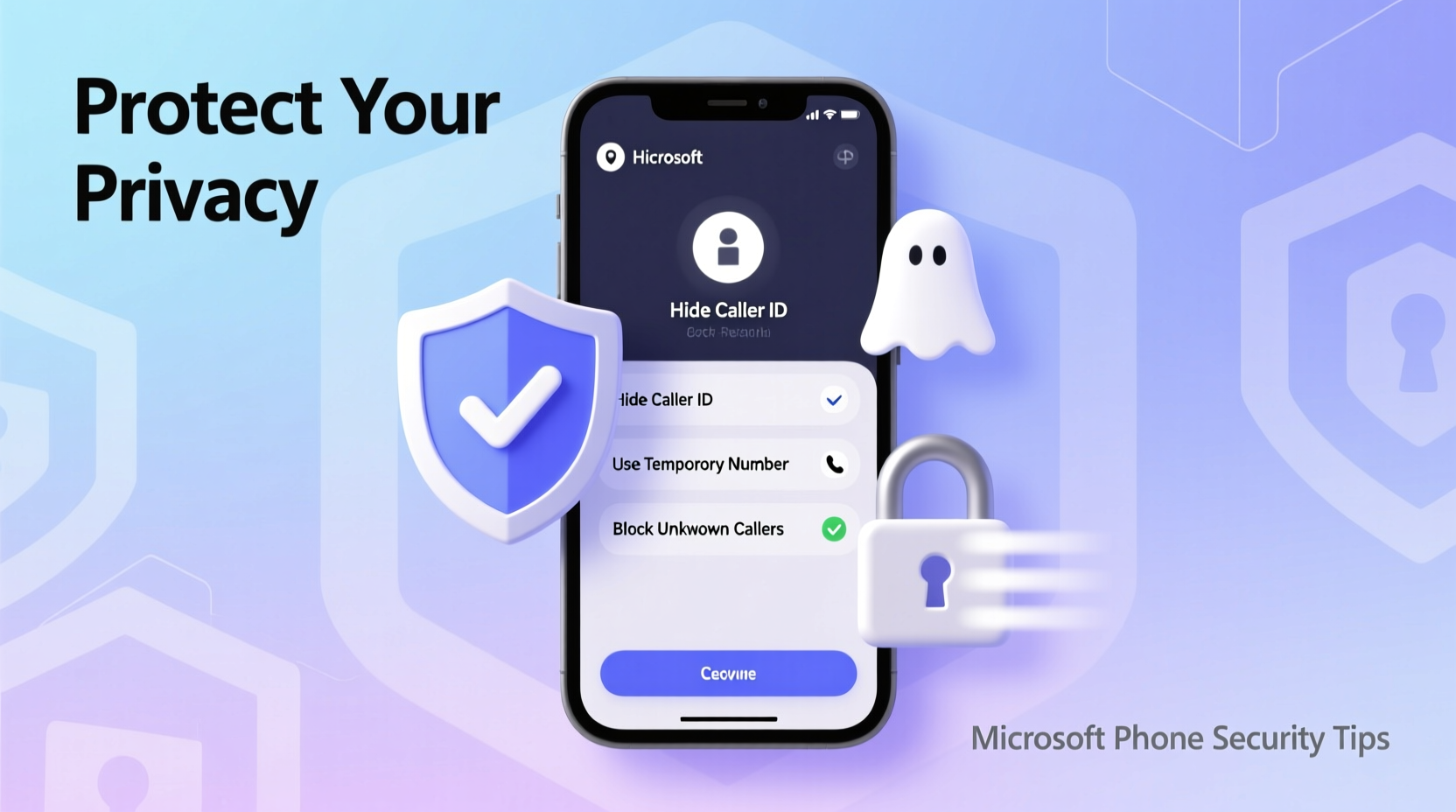
Your phone number tied to a Microsoft account isn't just a recovery option—it's a gateway. Microsoft uses it for two-factor authentication (2FA), password resets, marketing outreach, and even syncing across devices. Once compromised, attackers can intercept verification codes, hijack accounts, or impersonate you in communications. Even without malicious intent, companies may harvest and resell phone numbers collected through service sign-ups.
Microsoft’s own privacy policy allows sharing data under certain conditions, including legal requests or third-party partnerships. While the company implements strong encryption and security protocols, the weakest link often remains user behavior and exposure of contact details.
“Phone numbers are increasingly treated as identifiers rather than mere contact tools. Hiding yours from public view is no longer optional—it’s a baseline privacy practice.” — Dr. Lena Torres, Cybersecurity Researcher at the Digital Trust Institute
Step-by-Step Guide to Concealing Your Number on Microsoft Services
You don’t need to sacrifice account security to protect your privacy. Follow this structured approach to minimize exposure while retaining control:
- Remove or Replace Your Real Number in Account Settings: Log into your Microsoft account, go to “Security,” then “Update info.” Under “Phone number,” remove your current mobile number if not strictly necessary. Consider using an alternate email for recovery instead.
- Use a Secondary Number for Verification: If 2FA via SMS is required, use a virtual number (VoIP) from services like Google Voice, TextNow, or MySudo. These act as buffers between your real number and online platforms.
- Disable Public Directory Listings: If you use Microsoft 365 for business, ensure your profile isn’t listed in public address books. In the Admin Center, adjust directory settings so only internal users can see contact details.
- Review App Permissions: Third-party apps connected to your Microsoft account might request access to your profile, including phone number. Audit these regularly under “Privacy” > “Manage apps.” Revoke access from untrusted sources.
- Enable Advanced Security Options: Switch from SMS-based 2FA to authenticator apps (e.g., Microsoft Authenticator, Authy) or hardware keys. This removes the need to expose your number during login verification.
Comparison: Direct vs. Protected Microsoft Account Setup
| Feature | Standard Setup (Exposed Number) | Secure Setup (Concealed Number) |
|---|---|---|
| Recovery Method | SMS to personal mobile | Email + Authenticator app |
| 2FA Delivery | Text message | Push notification or TOTP code |
| Public Visibility | Potentially visible in org directories | Hidden or restricted |
| Risk Level | Moderate to High | Low |
| Spam Exposure | Likely over time | Minimal |
Real Example: How a Professional Secured Their Microsoft Identity
Jamal, a freelance developer based in Austin, used his personal phone number across all Microsoft-linked accounts—Outlook, Azure, and GitHub (which integrates with Microsoft). After receiving repeated scam calls following a software submission to a public repository, he realized his number was scraped from metadata logs exposed via API documentation.
He took immediate action: First, he replaced his real number in his Microsoft profile with a Google Voice number dedicated solely to tech verifications. Then, he migrated all 2FA processes to Microsoft Authenticator. Finally, he created a new professional email alias (contact@jamaldev.io) synced to Outlook but disconnected from his personal mobile. Within two weeks, unsolicited calls ceased, and his account alerts became more secure and centralized.
This case underscores how interconnected systems amplify exposure—and how deliberate separation of identities mitigates risk.
Essential Privacy Checklist for Microsoft Users
- ✅ Remove personal phone number from Microsoft account recovery options
- ✅ Set up Microsoft Authenticator or another TOTP app for 2FA
- ✅ Use a VoIP number if SMS verification is mandatory
- ✅ Audit third-party app permissions monthly
- ✅ Disable directory visibility in Microsoft 365 admin settings (if applicable)
- ✅ Create separate Microsoft accounts for personal, professional, and temporary use
- ✅ Regularly review recent sign-in activity for anomalies
Frequently Asked Questions
Can I use Microsoft services without providing any phone number?
Yes, in most cases. While Microsoft encourages adding a phone number for security, it’s not always mandatory. You can rely on alternate recovery methods such as secondary email addresses and authenticator apps. Some features (like certain Xbox Live functions or regional restrictions) may still prompt for a number, but workarounds exist using virtual numbers.
Is using a VoIP number safe for Microsoft verification?
Generally, yes—but with caveats. Services like Google Voice are widely accepted by Microsoft. However, some VoIP providers may be blocked due to abuse patterns. Avoid free, short-term number services that lack reliability. Paid options like MySudo or Burner offer better consistency and support enhanced privacy controls.
Will hiding my number affect my ability to recover my account?
Only if you fail to set up alternative recovery paths. The key is redundancy: combine trusted devices, recovery codes, and backup emails. Microsoft allows storing multiple recovery methods. As long as you maintain at least two reliable ones (e.g., authenticator app + recovery email), removing your phone number does not weaken account safety.
Final Recommendations for Sustainable Privacy
Protecting your Microsoft-associated phone number isn’t about paranoia—it’s about proportionality. Just as you wouldn’t hand out your home address to every online form, your mobile number deserves the same level of discretion. Start by auditing your current Microsoft profile: what information is visible, who has access, and whether each permission is truly necessary.
Adopt the principle of minimal disclosure: share only what’s essential, when it’s essential. Use role-based accounts (personal, work, project-specific), leverage modern authentication tools, and stay informed about evolving threats. Privacy isn’t a one-time fix; it’s an ongoing habit.




 浙公网安备
33010002000092号
浙公网安备
33010002000092号 浙B2-20120091-4
Comments
No comments yet. Why don't you start the discussion?