
Letting go of clothing is more than a logistical challenge—it’s often an emotional one. A sweater worn on a first date, a dress from a milestone birthday, or jeans that fit perfectly during a time of confidence can all become silent keepers of memory. These garments don’t just occupy space; they carry stories, emotions, and sometimes, unresolved feelings. For many, this emotional connection turns a simple closet clean-out into an overwhelming task. Yet, holding onto items out of sentimentality often leads to cluttered spaces, decision fatigue, and a wardrobe that no longer serves the person you are today.
The goal isn’t to erase memories, but to honor them in ways that don’t compromise your present well-being. With thoughtful strategies, it’s possible to create a functional, peaceful closet while still respecting the emotional significance of your clothes. The process requires patience, self-awareness, and a shift in perspective—from viewing clothing as irreplaceable relics to seeing them as part of a larger narrative of growth.
Understanding Emotional Attachment to Clothing
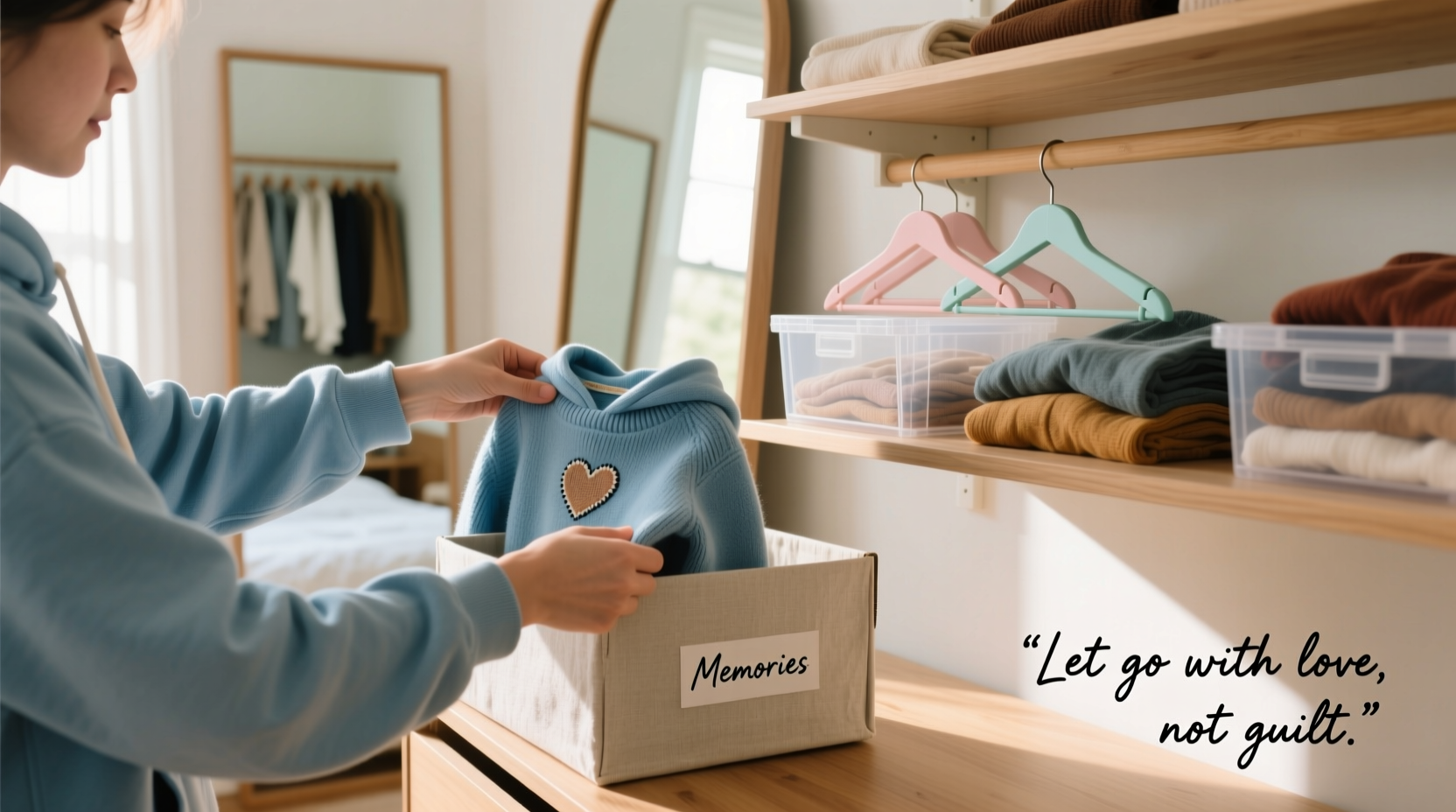
Clothes are rarely neutral objects. They are woven into the fabric of our lives—literally and metaphorically. We wear them during pivotal moments: weddings, graduations, job interviews, breakups, travel adventures. Over time, these garments absorb not just stains and smells, but meaning. Psychologists refer to this as “material symbolism”—the idea that physical objects become containers for identity, memory, and emotion.
Attachment can manifest in different forms:
- Nostalgia: Holding onto pieces because they remind you of a happier or simpler time.
- Guilt: Keeping gifts from loved ones, even if you never wear them.
- Identity preservation: Clinging to clothes that represent who you used to be (e.g., “skinny jeans” from a past size).
- Future fantasy: Storing items you “might wear someday,” like maternity clothes after pregnancy or formalwear for rare events.
While these attachments are natural, they can hinder practical living. A closet full of unworn clothes creates visual noise, reduces accessibility to favorite pieces, and reinforces emotional stagnation. Recognizing the root of your attachment is the first step toward making intentional choices.
A Step-by-Step Guide to Mindful Closet Decluttering
Decluttering with emotional intelligence doesn’t mean rushing through your closet with trash bags. It means moving slowly, with purpose. Follow this six-phase approach to reduce overwhelm and preserve emotional integrity.
- Pause and Prepare
Choose a calm day when you’re not rushed. Clear a few hours, put on music that grounds you, and gather supplies: three bins labeled “Keep,” “Donate/Sell,” and “Reevaluate.” Have a notebook nearby to jot down thoughts. - Remove Everything
Take every item out of your closet. Seeing your entire collection laid out creates awareness of volume and patterns. Lay clothes on your bed or floor by category: tops, bottoms, dresses, outerwear. - Sort by Use, Not Emotion
Ask objective questions first: Have I worn this in the past year? Does it fit comfortably? Is it in good condition? This initial pass separates the clearly usable from the ambiguous. - Engage with the Emotional Items
Set aside pieces that spark strong feelings. Sit with each one. Ask: What memory does this hold? Is keeping the item the only way to honor that memory? Could I photograph it instead? - Make Thoughtful Decisions
For items tied to people (gifts, inherited clothing), consider whether the giver would want you to suffer storage burden. For identity-linked clothes, reflect: Am I honoring my past self, or resisting my present one? - Close with Ritual
After sorting, thank the items you’re letting go of. Say aloud: “Thank you for serving me. I release you with gratitude.” Then bag them immediately to prevent second-guessing.
This method balances logic and empathy, ensuring you don’t suppress emotions nor let them dominate decisions.
Alternative Ways to Honor Sentimental Clothing
You don’t have to keep a garment to honor its meaning. Transforming sentimental items into new forms allows you to preserve memories without clutter.
| Item Type | Preservation Idea | Storage Benefit |
|---|---|---|
| Wedding dress | Framed swatch or turned into jewelry pouch | Saves 3–5 sq ft of hanging space |
| T-shirts from events | Quilt or pillow cover | Reduces stack of 20 shirts to 1 decorative item |
| Childhood clothes | Mini shadowbox display | Displays memory without bulk |
| Gift sweaters | Photograph styled on mannequin, then donate | Keeps memory visible, not stored |
These alternatives shift the focus from possession to intentionality. As textile historian Dr. Lena Pruitt notes:
“Clothing was made to be worn, not archived. When we transform garments into art or keepsakes, we acknowledge their story while freeing ourselves to live in the present.” — Dr. Lena Pruitt, Cultural Material Studies, University of Edinburgh
Checklist: Preparing for Your Emotional Declutter
Use this checklist in the days leading up to your session to ensure mental and logistical readiness.
- ☐ Schedule a distraction-free time block (2–4 hours)
- ☐ Gather bins: Keep, Donate/Sell, Maybe
- ☐ Charge your phone/camera for documenting special items
- ☐ Identify local donation centers or resale platforms
- ☐ Write down your reasons for decluttering (e.g., “I want a calmer morning routine”)
- ☐ Choose a grounding playlist or podcast
- ☐ Set a post-session reward (tea, walk, episode of a show)
Completing this list builds momentum and reduces last-minute hesitation. The act of preparation itself fosters a sense of control.
Real Example: Sarah’s Journey Through Her Mother’s Wardrobe
Sarah, 54, held onto her late mother’s winter coat for eight years. It wasn’t about use—the coat didn’t fit—but about presence. “Every time I saw it, I felt like she was still here,” she shared. Attempts to donate it triggered anxiety and tears. When she finally decided to confront it, she followed a modified version of the mindful decluttering process.
She began by wearing the coat for an afternoon, sitting in her mother’s favorite chair. She took photos of herself in it, wrote a letter thanking her mother for the warmth—both literal and emotional—and then cut a small square from the lining to sew into a bookmark. The rest, she donated to a women’s shelter, attaching a note: “This coat has loved someone deeply. May it serve you well.”
“Letting go didn’t erase her,” Sarah said. “It taught me that love isn’t stored in wool and buttons. It’s in how I live now.”
Her experience underscores a key truth: emotional release often follows action, not precedes it. You don’t need to feel ready to begin.
Do’s and Don’ts of Emotional Decluttering
To avoid common pitfalls, refer to this guide when making decisions.
| Do | Don’t |
|---|---|
| Start with less emotionally charged categories (socks, workout gear) | Begin with high-sentiment items like wedding attire or heirlooms |
| Take photos of meaningful clothes before letting go | Keep items “just in case” you might need them someday |
| Donate to causes that align with the item’s history (e.g., professional attire to job programs) | Throw away gently used clothes—waste intensifies guilt |
| Allow yourself to keep a few symbolic pieces (limit: 3–5) | Justify keeping everything “because it’s special” |
| Revisit the “Maybe” bin in 30 days | Leave undecided items in your closet indefinitely |
Frequently Asked Questions
What if I regret donating something later?
Regret is common but often short-lived. Most people find that once an item is gone, the anticipated grief doesn’t materialize. If you truly miss a piece, remember: you’re allowed to buy something similar in the future. Letting go now doesn’t close the door forever.
How do I handle gifts I never liked but feel obligated to keep?
Obligation is different from appreciation. Ask: Did the giver intend for me to be burdened? Likely not. You honor the relationship by living authentically, not by hoarding unused items. Consider discreetly passing such items to others who might benefit.
Can I keep clothes from a past size without feeling shame?
Yes—if you reframe them. Instead of “proof I’ll return to that body,” see them as evidence of a chapter lived fully. Store one item mindfully (not hung prominently), and let the rest go. Your worth isn’t measured by a tag number.
Conclusion: Create Space for Who You Are Now
Decluttering a closet filled with emotional attachments isn’t about discarding the past. It’s about making room for the present. Every garment released is an act of trust—in your ability to remember without possessing, to honor without holding on. The most compassionate thing you can do for both your past and future self is to live in alignment with who you are today.
Your closet should reflect your current life: what you wear, value, and enjoy. By approaching the process with patience and creativity, you transform clutter into clarity, and sentimentality into sustainable meaning. Start small. Be kind to yourself. And know that every item you release with gratitude makes space for peace, ease, and the freedom to move forward.




 浙公网安备
33010002000092号
浙公网安备
33010002000092号 浙B2-20120091-4
Comments
No comments yet. Why don't you start the discussion?