
Clear silicone iPhone cases are popular for their sleek look and protective qualities, but over time they accumulate grime, oils, and discoloration. What starts as a pristine, transparent shield often turns yellow, cloudy, or sticky. The good news: most of this damage is reversible. With the right cleaning techniques and consistent maintenance, you can restore your case to near-new condition—and keep it looking fresh longer.
Why Clear Silicone Cases Degrade Over Time
Silicone is naturally durable and flexible, but it’s not immune to environmental stressors. The primary causes of discoloration and buildup include:
- Skin oils and sweat: Daily handling transfers natural oils and bacteria onto the surface.
- Dust and pocket lint: Accumulates in crevices and under the edges.
- UV exposure: Prolonged sunlight accelerates oxidation, leading to yellowing.
- Plasticizers breaking down: Chemicals added for flexibility degrade over time, causing stickiness.
- Contact with makeup, lotions, or detergents: These substances react with silicone and leave residues.
Understanding these factors helps in selecting the right cleaning method and preventing future deterioration.
“Silicone may seem low-maintenance, but like any material in constant contact with skin and environment, it needs regular care to retain clarity and texture.” — Dr. Lena Park, Materials Scientist at TechGrip Labs
Step-by-Step Guide to Deep Cleaning Your Silicone Case
A thorough cleaning process removes embedded dirt, kills bacteria, and restores transparency. Follow this detailed sequence for best results:
- Remove the case from your phone. Power off your device first and gently pry the case off. Set the phone aside in a safe place.
- Rinse under lukewarm water. This loosens surface debris without risking warping (hot water can damage some silicones).
- Create a cleaning paste: Mix one tablespoon of baking soda with two teaspoons of water to form a thick paste. Baking soda acts as a gentle abrasive and deodorizer.
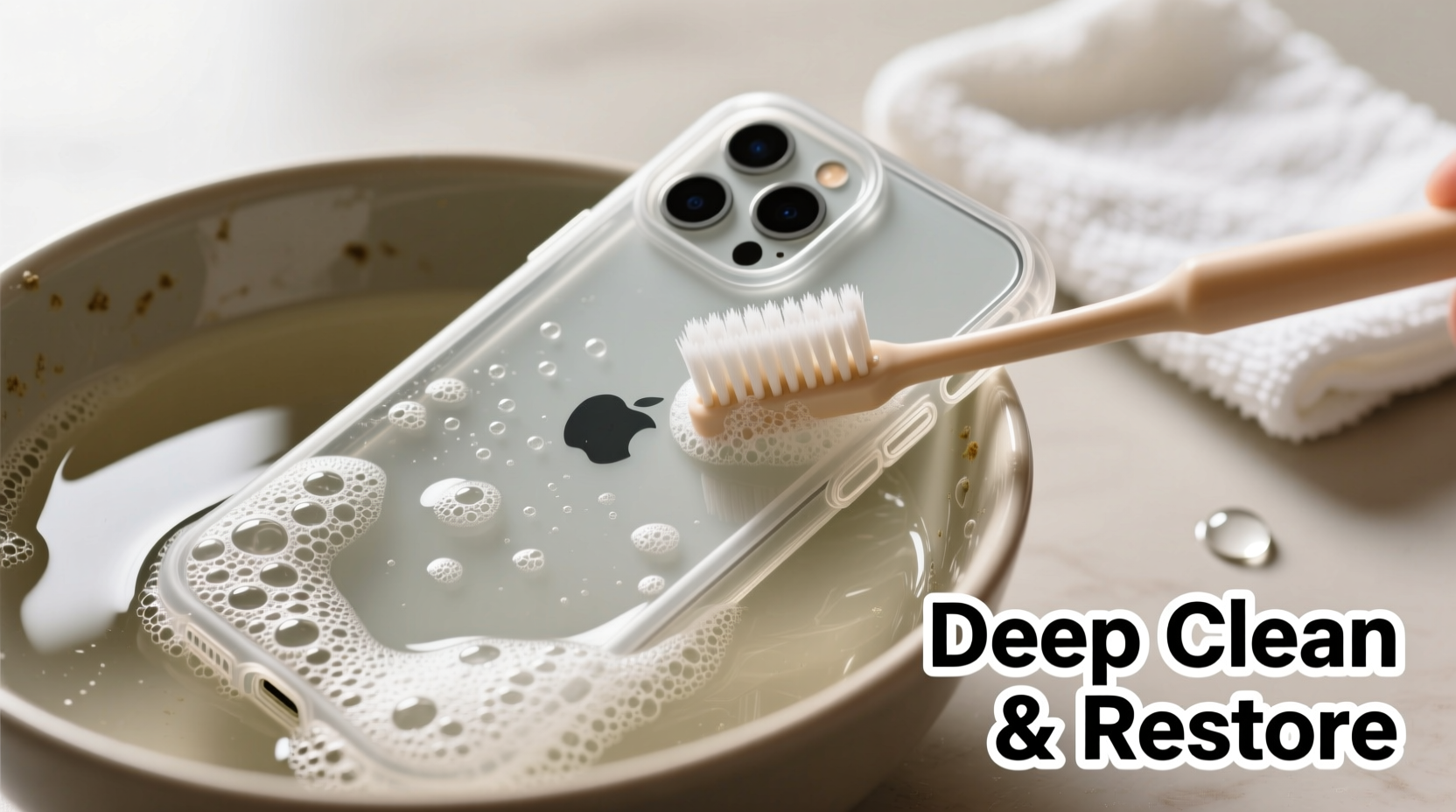
- Scrub with a soft-bristle toothbrush. Apply the paste and work it into all areas, especially corners, button covers, and camera cutouts. Use circular motions to lift grime.
- Soak in isopropyl alcohol (70% solution) for 5–10 minutes. This kills germs and dissolves oily residues. Do not exceed 10 minutes to avoid weakening the material.
- Rinse thoroughly again. Ensure no cleaning agents remain, as residue can attract more dust.
- Air-dry on a lint-free towel. Place the case flat or hang it (using a clothespin) in a shaded, well-ventilated area. Avoid direct sunlight to prevent yellowing.
- Inspect and repeat if necessary. For heavily stained or yellowed cases, repeat the process once more before trying advanced restoration methods.
Advanced Restoration Techniques for Yellowed or Sticky Cases
If your case has developed a persistent yellow tint or feels tacky to the touch, basic cleaning won’t be enough. These advanced methods target deeper degradation.
Method 1: Hydrogen Peroxide & Sunlight (The “Retr0Brite” Approach)
This technique leverages UV light and hydrogen peroxide to reverse oxidation—the main cause of yellowing.
- Submerge the case in 3% hydrogen peroxide in a clear container.
- Place the container in direct sunlight for 2–6 hours. Monitor every 30 minutes to avoid overexposure.
- Rinse and dry thoroughly.
The UV rays catalyze the bleaching effect of hydrogen peroxide, safely restoring clarity without damaging the silicone.
Method 2: Rubbing Alcohol Wipe-Down for Sticky Surfaces
Stickiness usually indicates that plasticizers have migrated to the surface. Isopropyl alcohol (90% or higher) can dissolve this layer.
- Dampen a cotton pad with high-concentration isopropyl alcohol.
- Gently wipe the entire surface, focusing on sticky areas.
- Repeat until the pad comes away clean.
- Follow with a baking soda scrub to neutralize any remaining film.
Do’s and Don’ts of Silicone Case Maintenance
| Do’s | Don’ts |
|---|---|
| Clean your case weekly with mild soap and water | Use bleach or acetone-based cleaners (they break down silicone) |
| Store in a cool, dark place when not in use | Leave the case in a hot car or under direct sunlight |
| Use a soft toothbrush for textured areas | Scrub aggressively with steel wool or abrasive pads |
| Rotate between multiple cases to reduce wear | Put a damp case back on your phone (promotes mold) |
| Apply a tiny drop of silicone conditioner (optional) | Mix unknown chemicals hoping for faster results |
Real Example: Reviving a 6-Month-Old iPhone Case
Samantha, a graphic designer from Portland, noticed her once-clear iPhone 14 case had turned amber around the edges and felt increasingly sticky after six months of daily use. She avoided replacing it due to cost and environmental concerns.
She followed the hydrogen peroxide sun treatment: soaked the case in a glass of 3% peroxide, placed it on a windowsill for four hours, then rinsed and dried it. Afterward, she wiped it down with 90% isopropyl alcohol to remove residual stickiness.
The result? A visibly clearer case with a smooth, non-tacky finish. “I couldn’t believe it was the same one,” she said. “It looks almost brand new. I’ll definitely deep clean it every two months now.”
Checklist: Monthly Silicone Case Care Routine
Stay ahead of grime and yellowing with this simple monthly checklist:
- ☐ Remove case and inspect for cracks or warping
- ☐ Wash with warm water and gentle dish soap
- ☐ Scrub with baking soda paste using a soft brush
- ☐ Disinfect with 70% isopropyl alcohol soak (5 min)
- ☐ Air-dry completely before reattaching to phone
- ☐ Store in a breathable pouch if not immediately reused
- ☐ Evaluate need for advanced restoration (every 3–4 months)
Frequently Asked Questions
Can I put my silicone case in the dishwasher?
No. Dishwashers expose silicone to high heat and harsh detergents that can warp the shape, accelerate yellowing, and degrade the material over time. Hand washing is always safer and more effective.
How often should I replace my clear silicone case?
With proper care, a high-quality silicone case can last 12–18 months. Replace it if you notice permanent yellowing, cracking, loss of elasticity, or persistent stickiness even after cleaning.
Will vinegar damage my silicone case?
Plain white vinegar is generally safe for occasional use as a disinfectant, but it’s less effective than alcohol for oil removal. Avoid prolonged soaking, and always rinse thoroughly afterward to prevent odor retention.
Conclusion: Restore Clarity, Extend Lifespan
Your clear silicone iPhone case doesn’t have to succumb to yellowing and stickiness. With regular attention and the right cleaning techniques, you can maintain its original look and function for months longer. Deep cleaning isn’t just about appearance—it improves hygiene and ensures your phone stays protected.




 浙公网安备
33010002000092号
浙公网安备
33010002000092号 浙B2-20120091-4
Comments
No comments yet. Why don't you start the discussion?