
Canvas tote bags are a staple in sustainable living—versatile, durable, and stylish. But frequent use exposes them to dirt, spills, sweat, and environmental grime. Over time, stains accumulate, odors develop, and fabric weakens if not properly maintained. While it might be tempting to toss your tote into the washing machine or scrub it aggressively, improper cleaning can lead to shrinkage, color fading, fraying seams, or weakened straps. The key is a deep clean that removes buildup while preserving structural integrity. With the right techniques, you can restore your tote to near-new condition safely and consistently.
Understanding Canvas Fabric and Its Vulnerabilities
Canvas is typically made from tightly woven cotton or a cotton-polyester blend, known for its strength and breathability. However, untreated cotton canvas absorbs moisture easily, making it prone to mildew and odor retention when stored damp. It may also shrink when exposed to high heat or excessive agitation. Most commercially available totes are pre-washed or treated to resist shrinking, but repeated exposure to harsh conditions still degrades fibers over time.
Dyes used in colored or printed totes can bleed during washing, especially in hot water. Embellishments like leather trims, metal hardware, or screen prints require special consideration—they may warp, corrode, or crack under improper cleaning methods. Recognizing these vulnerabilities allows you to tailor your approach based on material composition and construction details.
“Many people ruin their favorite canvas bags by treating them like ordinary laundry. A gentle, targeted method preserves both appearance and longevity.” — Lena Torres, Textile Care Consultant at EcoClean Labs
Step-by-Step Guide: How to Deep Clean Your Canvas Tote Safely
A thorough deep clean involves more than surface wiping. Follow this six-step process to eliminate embedded dirt, neutralize odors, and maintain fabric resilience.
- Empty and Inspect: Remove all contents and check pockets. Look for loose threads, damaged stitching, or existing stains. Address minor repairs before washing to prevent further tearing.
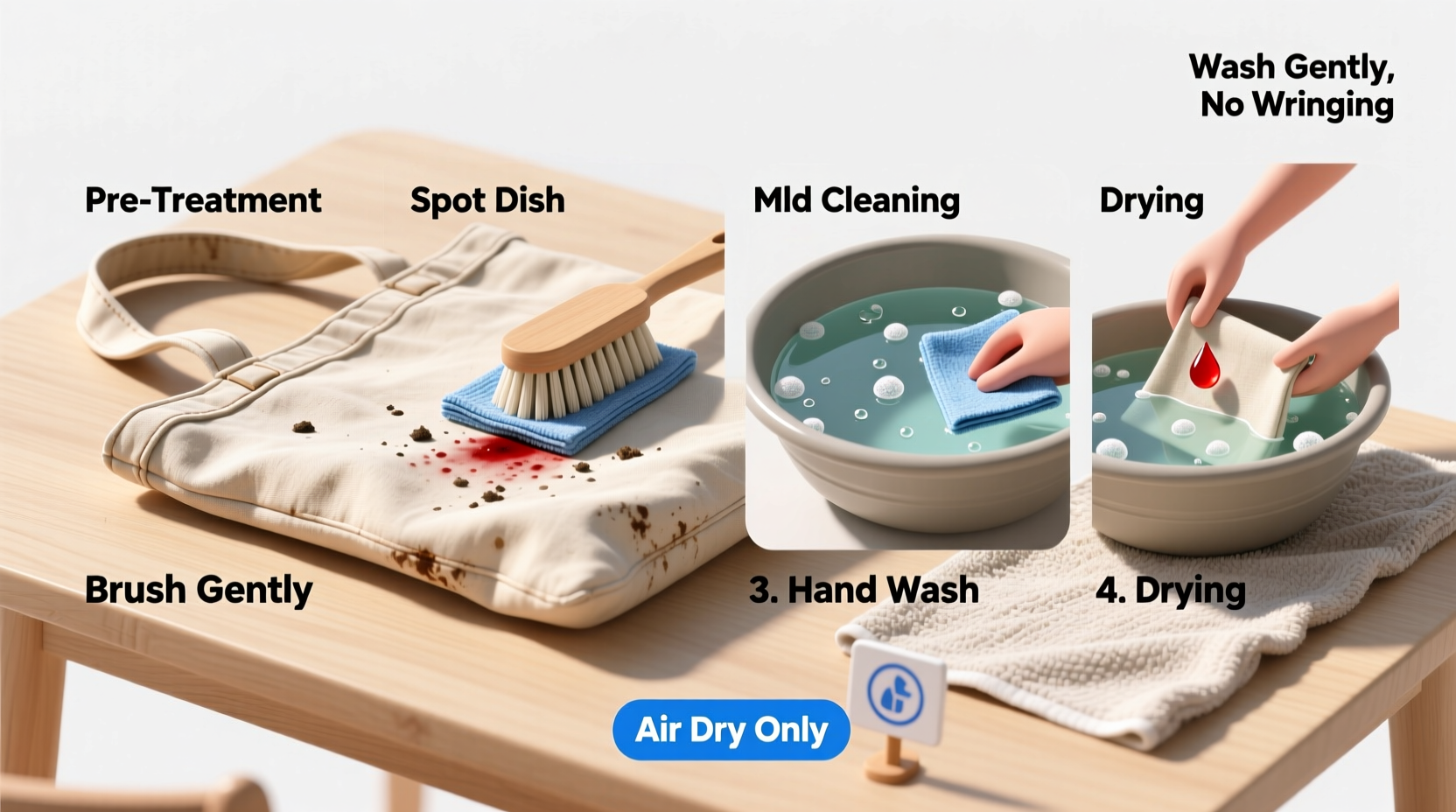
- Pre-Treat Stains: Use a soft-bristle brush or cloth to apply a paste of baking soda and water (2:1 ratio) directly to stained areas. Let sit for 15–30 minutes. For oil-based stains, sprinkle cornstarch first to absorb grease, then brush off before applying cleaner.
- Prepare Cleaning Solution: Mix one tablespoon of mild liquid detergent (free of bleach and optical brighteners) with one quart of lukewarm water. Avoid dish soap—it’s too harsh for fabrics and can leave residue.
- Hand Wash Gently: Submerge the tote in the solution or use a clean sponge to wipe down both interior and exterior surfaces. Focus on high-contact zones like handles and bottom corners. Do not soak for longer than 10 minutes to prevent fiber saturation.
- Rinse Thoroughly: Hold under cool running water until suds disappear. Squeeze gently—never wring—to remove excess moisture. Wringing stresses seams and distorts shape.
- Dry Flat and Away from Heat: Lay the tote on a clean towel in a well-ventilated area out of direct sunlight. Reshape while damp to maintain original form. Flip after a few hours to ensure even drying. Full drying may take 6–12 hours depending on humidity.
Do’s and Don’ts: Best Practices for Canvas Care
| Do’s | Don’ts |
|---|---|
| Use cold or lukewarm water only | Use hot water or boiling liquids |
| Spot test cleaners on an inconspicuous area | Apply undiluted detergents or vinegar |
| Clean every 4–6 weeks with moderate use | Wait until the bag looks visibly dirty |
| Store completely dry in a breathable cotton bag | Keep in plastic bins where moisture traps |
| Rotate multiple totes to reduce wear | Overload beyond recommended capacity |
Real Example: Reviving a Coffee-Stained Market Tote
Sophie, a weekly farmers’ market shopper, noticed her favorite navy-blue canvas tote had developed brown stains along the inner lining from repeated coffee thermos leaks. After months of wiping only the surface, she found a musty smell lingering even when empty. She followed the hand-washing method outlined above, adding half a cup of white vinegar to the rinse water to neutralize odor. After air-drying flat on her balcony (shaded from sun), the smell disappeared and stains faded significantly. Two weeks later, she reported no sign of mildew or warping, and the tote regained its fresh look. Her mistake earlier? Rinsing under tap water without detergent, which failed to break down organic residue.
Alternative Methods and When to Use Them
While hand washing is ideal for most canvas totes, certain situations call for alternative approaches.
- Machine Washing (Use with Caution): Only attempt if the care label explicitly permits it. Place the tote in a mesh laundry bag, use cold water and gentle cycle, and skip the dryer. Even then, risk remains for distortion or seam stress.
- Vinegar Soak for Odor Removal: For persistent smells, soak the tote in a solution of 1 part white vinegar to 4 parts water for 30 minutes before rinsing and drying. Vinegar acts as a natural disinfectant and deodorizer without bleaching fabric.
- Steam Cleaning for Sanitization: A handheld garment steamer can refresh the surface without wetting the fabric deeply. Ideal between deep cleans for spot maintenance.
Frequently Asked Questions
Can I put my canvas tote in the dryer?
No. High heat causes cotton fibers to contract, leading to shrinkage and stiffness. Air drying is the only recommended method to maintain shape and softness.
How do I remove mildew from a canvas bag?
Mix equal parts water and white vinegar, spray onto affected areas, and let sit for 20 minutes. Scrub gently with a soft brush, rinse thoroughly, and dry completely in direct sunlight if possible—UV rays help kill remaining spores.
Will baking soda damage printed designs on my tote?
Generally no, if used correctly. Baking soda is mildly abrasive but safe for most fabric prints when applied as a paste and not scrubbed aggressively. Always test on a small edge first.
Checklist: Your Canvas Tote Deep-Cleaning Routine
- ☐ Empty all compartments and inspect for damage
- ☐ Pre-treat visible stains with baking soda or cornstarch
- ☐ Mix mild detergent with lukewarm water
- ☐ Hand wash inside and out using a sponge
- ☐ Rinse thoroughly with cool water
- ☐ Press out water—do not wring
- ☐ Dry flat, reshaped, away from sunlight
- ☐ Store only when fully dry in a ventilated space
“Deep cleaning isn’t just about appearance—it’s preventive maintenance. Removing dirt early prevents fiber breakdown and extends usability by years.” — Dr. Marcus Lin, Sustainable Textiles Researcher, GreenWeave Institute
Final Thoughts: Make Care a Habit, Not a Chore
Deep cleaning your canvas tote doesn’t need to be complicated or time-consuming. By integrating simple, consistent practices into your routine, you protect your investment and support eco-friendly habits. A well-maintained tote resists wear, stays odor-free, and continues to serve you reliably for shopping, travel, or daily use. Think of each cleaning session as a small act of sustainability—preserving resources by extending product life.




 浙公网安备
33010002000092号
浙公网安备
33010002000092号 浙B2-20120091-4
Comments
No comments yet. Why don't you start the discussion?