
In an age where communication is instant but anonymity is common, receiving a call or message from an unknown number can spark curiosity—or concern. Whether it’s a missed call from a potential employer, a suspicious text, or a long-lost contact trying to reconnect, identifying the owner of a phone number can be crucial. While privacy laws limit access to personal data, several legitimate and effective methods exist to uncover a name linked to a number. This guide outlines practical, ethical, and legally compliant approaches to help you trace a phone number to its owner.
Understanding the Legal and Ethical Boundaries
Before diving into investigative techniques, it’s essential to recognize the legal framework surrounding personal data. In most countries, including the U.S. under the Telephone Consumer Protection Act (TCPA) and the EU under the General Data Protection Regulation (GDPR), accessing someone’s personal information without consent for malicious purposes is prohibited. However, using publicly available data or reverse lookup services for personal safety, verification, or reconnecting with contacts is generally acceptable.
Always ensure your intent is non-malicious. Using these methods to stalk, harass, or defraud is illegal and unethical. Stick to transparent, lawful tools designed for caller identification and fraud prevention.
“Responsible use of reverse lookup tools protects both your rights and others’ privacy.” — Sarah Lin, Digital Privacy Advocate at the Center for Cybersecurity Awareness
Step-by-Step Guide to Identifying a Name from a Phone Number
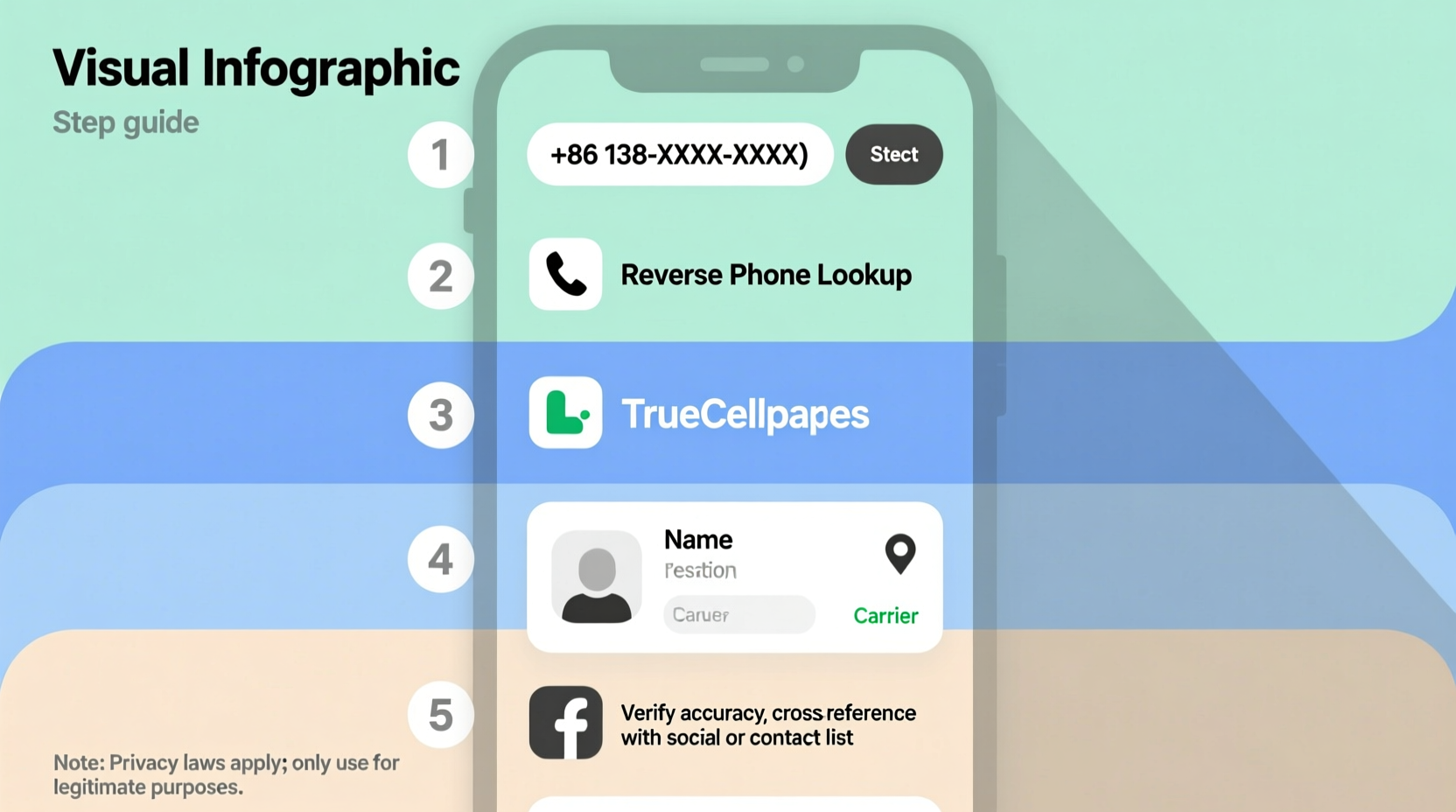
Finding a name associated with a phone number doesn’t require technical expertise—just the right approach. Follow this structured process to maximize your chances of success while staying within legal boundaries.
- Record the Full Number Accurately: Ensure you have the complete number, including the country code (e.g., +1 for the U.S.) and area code. A single digit error can lead to false results.
- Check Your Own Contacts and Social Networks: Before external searches, cross-reference the number in your phone’s contact list, email accounts, or messaging apps like WhatsApp. You might already have it saved under a different name.
- Perform a Reverse Phone Lookup: Use reputable online services that specialize in identifying unknown callers.
- Search Social Media Platforms: Many people link their phone numbers to social profiles. Search the number on Facebook, Instagram, LinkedIn, or Google.
- Verify Results Across Multiple Sources: Cross-check any name you find to avoid misidentification, especially if the number is unlisted or spoofed.
Top Tools and Services for Reverse Phone Lookups
Not all reverse phone lookup services are created equal. Some offer free basic results, while others provide detailed reports for a fee. Below is a comparison of reliable platforms based on accuracy, data depth, and user experience.
| Service | Free Option? | Paid Report Cost | Data Provided | Best For |
|---|---|---|---|---|
| Truecaller | Yes | $4.99/month | Name, location, spam score, carrier | Mobile numbers globally |
| Whitepages | Limited | $24.99 one-time | Full name, address history, relatives | U.S.-based landlines and mobiles |
| Spokeo | No | $14.95/month | Social media links, background checks | Comprehensive identity tracing |
| ZabaSearch | Yes | N/A | Basic public records | Quick U.S. lookups |
| BeenVerified | No | $23.88/month | Criminal records, email addresses | Detailed background insights |
For casual inquiries, start with Truecaller or ZabaSearch. If deeper investigation is needed—such as verifying a business contact or checking a suspicious caller—paid services like Whitepages or BeenVerified offer more thorough reports.
Real-World Example: Reconnecting with a Forgotten Contact
Jamal received a call from a Washington D.C. number late one evening. The caller didn’t leave a message, but something about the area code reminded him of an old colleague, Marcus, from a past job. Jamal didn’t recognize the number, but he suspected it could be important.
He opened Truecaller and entered the number. The app returned “Marcus R.” along with a profile photo and location tagged in Arlington, VA. To confirm, Jamal searched the number on LinkedIn and found a match—same name, same former company. He sent a message through LinkedIn: “Hi Marcus, was that you calling? Got your number but not sure if I should reach out.”
Marcus responded within hours: “Yes! Trying to organize a reunion with the team. Glad you found me.” By using a simple reverse lookup and social verification, Jamal reconnected without awkward guessing or privacy violations.
Common Mistakes to Avoid
Even well-intentioned searches can go wrong if you’re not careful. Here are frequent pitfalls and how to avoid them:
- Trusting unverified free sites: Many websites claim to offer free reverse lookups but deliver outdated or fabricated data. Stick to established platforms with user reviews.
- Assuming all numbers are listed: Unlisted, VoIP (like Google Voice), or burner numbers may not return accurate names.
- Ignoring international formats: Numbers outside the U.S. may not appear in American databases. Use region-specific tools when possible.
- Over-sharing during follow-up: Once you identify a person, avoid revealing how you found them unless necessary. Focus on context: “I saw your number come through and thought it might be you.”
FAQ: Frequently Asked Questions
Can I find a name from a cell phone number for free?
Yes, but with limitations. Free services like Truecaller, ZabaSearch, or Facebook search can sometimes reveal names, especially if the number is linked to a public profile. However, detailed reports usually require a paid subscription.
What if the number is private or blocked?
If a number appears as “Private” or “Blocked,” standard lookup tools won’t work. In such cases, let the caller leave a voicemail or message. Alternatively, use call-return services like *69 (in the U.S.) to redial the last incoming number, though this only works for landlines in many areas.
Are reverse phone lookups legal?
Yes, as long as you use publicly available information for lawful purposes. Using these tools for harassment, stalking, or unauthorized background checks violates privacy laws and can result in penalties.
Action Checklist: How to Identify a Phone Number Owner
Follow this concise checklist to efficiently and ethically trace a name from a number:
- ✅ Write down the full phone number with country and area code.
- ✅ Search the number in your phone contacts and messaging apps.
- ✅ Try a free reverse lookup via Truecaller or ZabaSearch.
- ✅ Enter the number into Google or social media search bars.
- ✅ If needed, purchase a report from Whitepages or BeenVerified.
- ✅ Verify the name across multiple sources before reaching out.
- ✅ Contact the person respectfully, providing context for your inquiry.
Conclusion: Take Smart, Respectful Action
Finding a name from a phone number is no longer a mystery reserved for detectives. With the right tools and a respectful approach, anyone can identify unknown callers safely and legally. Whether you're reconnecting with an old friend, screening for scams, or verifying a business contact, the key lies in using credible resources and maintaining ethical standards.




 浙公网安备
33010002000092号
浙公网安备
33010002000092号 浙B2-20120091-4
Comments
No comments yet. Why don't you start the discussion?