
Cat ownership brings companionship, comfort, and occasional challenges—none more persistent than the lingering odor of cat urine. Even after what seems like thorough cleanup, the smell often returns, especially on humid days or when entering certain rooms. The issue isn’t always visible; cat urine can seep into carpets, baseboards, upholstery, and even subflooring, making it difficult to detect without the right approach. Left unaddressed, these odors not only affect indoor air quality but may also encourage repeat marking behavior from your cat. The key to eliminating the problem lies in accurate detection and targeted treatment.
Understanding Why Cat Urine Smells Persist
Cat urine contains uric acid, which bonds strongly with porous materials like wood, drywall, and carpet fibers. Unlike surface stains, this compound can remain dormant for months and recrystallize when exposed to moisture or humidity. Standard cleaning agents often fail because they mask the odor rather than break down the chemical structure of the urine. Enzymatic cleaners are more effective because they contain bacteria that digest uric acid, but their success depends on first locating the exact contamination sites.
Additionally, cats use scent marking as a form of communication. If they detect their own odor—even faintly—they may re-mark the area. This cycle makes precise identification essential, not just for cleanliness, but for behavioral management.
Step-by-Step Guide to Locating Hidden Cat Urine
Finding concealed urine deposits requires systematic inspection and the right tools. Follow this timeline to methodically uncover problem areas:
- Start with high-risk zones: Focus on corners, behind furniture, near litter boxes, and along walls where cats tend to spray.
- Inspect at eye level and lower: Cats often mark vertically. Check baseboards, door frames, and furniture legs.
- Use your senses: Crouch down and sniff closely. Human noses can detect concentrated urine, particularly in enclosed spaces like closets or under beds.
- Check flooring transitions: Gaps between floorboards, under thresholds, and around heating vents can trap odors.
- Examine upholstered furniture: Cats sometimes urinate on sofas or chairs, especially if stressed or unwell.
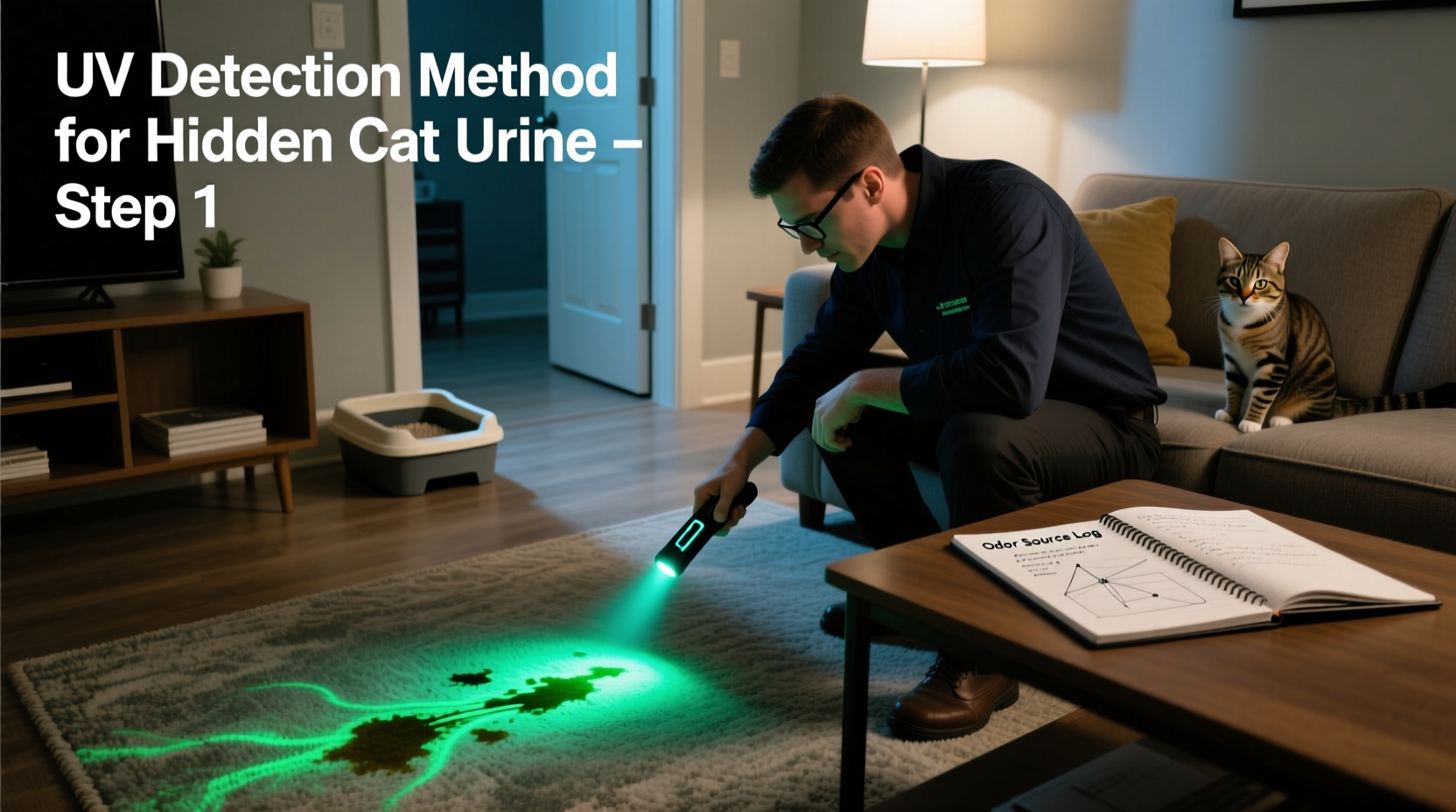
- Test suspect areas with a blacklight: In a darkened room, shine a UV flashlight (395–400 nm wavelength) across surfaces. Dried urine will fluoresce with a pale yellow or greenish glow.
- Confirm with enzymatic test sprays: Apply a small amount of enzymatic cleaner to invisible spots. If the smell temporarily intensifies before fading, it confirms urine presence.
Using Blacklights Effectively: What You Need to Know
A blacklight is one of the most accessible tools for detecting old or hidden urine stains. However, false positives are common. Certain plastics, laundry detergents, and even some paints also fluoresce under UV light. To increase accuracy:
- Use a high-quality UV flashlight with at least 395 nm wavelength.
- Turn off all lights and allow your eyes to adjust to darkness.
- Hold the light at a low angle to enhance shadow contrast.
- Look for granular or spattered patterns typical of spraying, or pooled shapes consistent with squatting.
- Verify findings with smell or enzymatic testing.
“UV lights are helpful screening tools, but they’re not diagnostic. Always confirm with odor assessment or chemical testing.” — Dr. Laura Gonzalez, DVM, Feline Behavior Consultant
Do’s and Don’ts When Investigating Cat Urine Odors
| Do | Don’t |
|---|---|
| Use an enzymatic cleaner designed for pet urine | Use steam cleaners on unknown stains—they can set the odor permanently |
| Wear gloves and a mask during deep cleaning | Assume the smell is gone just because you can’t detect it |
| Remove cushions and inspect beneath furniture | Scrub aggressively—this spreads contaminants deeper |
| Mark confirmed spots with tape before cleaning | Use bleach—it reacts with urine to create toxic fumes |
| Replace contaminated padding under carpets if needed | Ignore recurring smells—they indicate missed sources |
Real Example: Solving a Lingering Bathroom Smell
Sarah, a cat owner in Portland, noticed a persistent ammonia-like odor in her guest bathroom despite weekly cleaning. Her 8-year-old male cat had no history of elimination issues, but the smell worsened after showers. Using a blacklight, she discovered faint fluorescence along the bottom edge of the shower curtain and behind the toilet tank. Closer inspection revealed tiny droplets splashed upward—a sign of spraying. After cleaning the tiles, plastic curtain liner, and grout with an enzymatic solution and replacing the liner, the odor disappeared completely. Sarah later learned that recent plumbing noises had stressed her cat, triggering subtle marking behavior. Addressing both the environmental trigger and the hidden contamination resolved the issue long-term.
Comprehensive Checklist for Eliminating Hidden Urine Odors
Follow this checklist to ensure no spot is overlooked:
- ✅ Walk through each room after dark with a UV flashlight
- ✅ Inspect behind and under furniture, especially near walls
- ✅ Check vertical surfaces up to 3 feet high for spray marks
- ✅ Lift carpet edges and examine padding and subfloor
- ✅ Sniff inside closets, under beds, and behind doors
- ✅ Test suspicious spots with enzymatic cleaner samples
- ✅ Clean confirmed areas with appropriate enzyme-based products
- ✅ Allow treated areas to dry fully—moisture traps odors
- ✅ Monitor for recurrence over the next 7–10 days
- ✅ Consult a vet if marking continues—medical issues may be involved
Frequently Asked Questions
Can I rely solely on my nose to find cat urine?
Your sense of smell can help, but it's unreliable. Over time, humans become desensitized to constant odors, and diluted or old urine may not emit a strong scent. Combine olfactory checks with visual tools like blacklights for better results.
What if the smell persists after cleaning?
Persistent odors suggest either incomplete treatment or an untreated source. Re-inspect the area with a blacklight and consider whether urine has penetrated beneath flooring or into wall cavities. In severe cases, professional remediation or replacement of affected materials may be necessary.
Is cat urine dangerous to human health?
In large concentrations, yes. Cat urine emits ammonia fumes that can irritate the respiratory system, especially in children, elderly individuals, or those with asthma. Long-term exposure should be avoided. Always ventilate areas during cleanup and wear protective gear when handling contaminated materials.
Final Steps and Ongoing Prevention
Once you’ve located and treated all identified sources, focus on prevention. Maintain a clean, accessible litter box—ideally one per cat plus one extra. Reduce stressors in your home, such as loud noises or new pets, which can trigger marking. Consider using synthetic feline pheromone diffusers (like Feliway) in high-traffic areas to promote calmness. Regular vacuuming and non-toxic maintenance help prevent residue buildup.
If your cat continues to eliminate outside the litter box, consult your veterinarian. Conditions like urinary tract infections, kidney disease, or diabetes can cause sudden changes in bathroom habits. Medical evaluation should always precede behavioral assumptions.
“The first step in solving a urine problem isn’t cleaning—it’s finding. You can’t fix what you can’t see.” — Dr. Rebecca Thompson, Veterinary Dermatology Specialist
Take Action Today for a Fresher, Healthier Home
Hidden cat urine doesn’t have to be a permanent problem. With careful observation, the right tools, and a methodical approach, you can reclaim your home’s freshness and protect your cat’s well-being. Start tonight: grab a flashlight, walk through your space, and uncover the truth behind lingering odors. Your nose—and your cat—will thank you.




 浙公网安备
33010002000092号
浙公网安备
33010002000092号 浙B2-20120091-4
Comments
No comments yet. Why don't you start the discussion?