
Recording phone conversations can be essential for business professionals, journalists, or individuals seeking clarity in personal communications. While the iPhone 6 does not support native call recording due to Apple’s privacy policies and iOS restrictions, several effective workarounds exist. This guide explores practical, legal, and technically sound methods to capture calls on your iPhone 6 without compromising quality or compliance.
Understanding the Limitations of iPhone 6 Call Recording
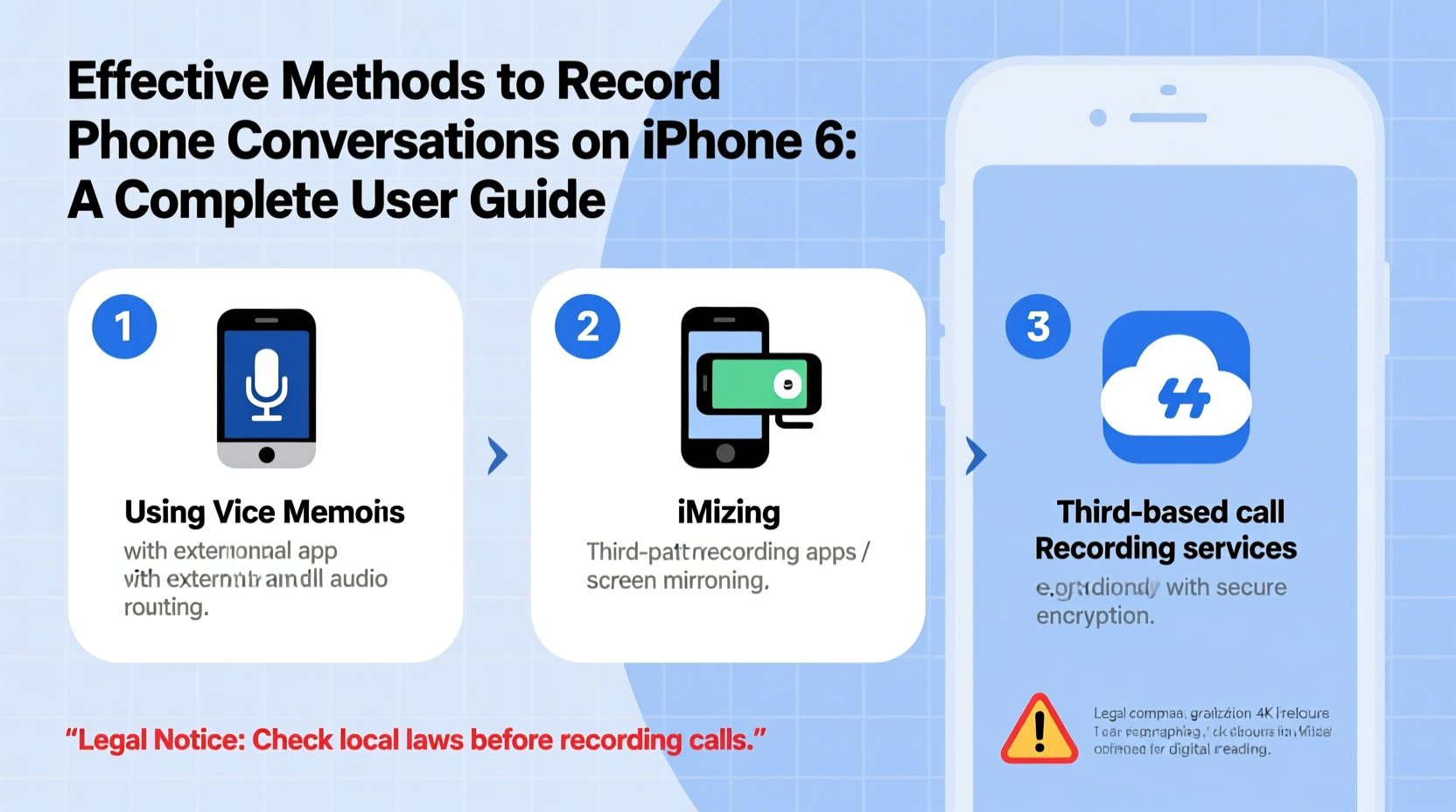
The iPhone 6 runs on iOS versions that do not allow direct call recording through the default Phone app. Unlike some Android devices, iOS blocks third-party access to microphone input during calls for security reasons. This means you cannot simply install an app that records both sides of a conversation from within the call interface.
However, this limitation doesn’t mean recording is impossible—it just requires alternative strategies. The key lies in using external tools, VoIP services, or leveraging Bluetooth and speakerphone setups to capture audio effectively.
“Apple prioritizes user privacy, which is why native call recording isn't supported. But with the right tools and awareness of local laws, users can still document conversations responsibly.” — David Lin, Mobile Security Analyst at TechPrivacy Labs
Legal Considerations Before Recording Any Call
Before attempting to record any phone conversation, it's critical to understand the legal landscape. Laws vary significantly by country and even by U.S. state:
- One-party consent states: Only one person (you) needs to consent to the recording. Examples: New York, Illinois, and Colorado.
- All-party consent states: All participants must be informed and agree to the recording. California, Washington, and Florida fall into this category.
Failing to comply can lead to civil penalties or criminal charges. Always disclose that the call is being recorded, especially if the discussion involves sensitive topics like financial agreements or personal data.
Effective Methods to Record Calls on iPhone 6
Despite hardware and software limitations, here are four reliable approaches to record calls on your iPhone 6.
Method 1: Use a Third-Party Call Recording App with Call Forwarding
This method uses specialized services that act as intermediaries between callers. When you initiate a call through these apps, the service connects both parties and records the conversation on its servers.
Popular options include:
- TapeACall Pro
- Rev Call Recorder
- Google Voice (limited functionality on iPhone)
Steps to use TapeACall Pro:
- Download and install TapeACall from the App Store.
- Create an account and subscribe to a plan (free trials available).
- Open the app and tap \"Record a Call.\"
- Enter the contact number or select from your contacts.
- The app will call you first, then connect to the recipient.
- Once connected, press *1 to start recording.
- Press *2 to stop when the call ends.
- Access recordings in the app or via email.
Audio quality depends on network stability, but most users report clear playback suitable for documentation or review.
Method 2: Use VoIP Services Like Skype or WhatsApp
Voice over IP (VoIP) platforms often allow call recording because they operate outside the traditional phone system. Since these apps manage both audio input and output internally, they bypass iOS restrictions.
Recommended Apps:
- Skype (with Microsoft’s built-in recording feature)
- WhatsApp (use screen recording while on voice call)
- Zoom (for voice-only meetings)
To record a WhatsApp voice call:
- Start a voice call with your contact.
- Use the native Screen Recording function (enable via Control Center).
- Swipe down from the top-right corner, long-press the screen record button, and ensure microphone audio is enabled.
- Tap record, conduct your call, then stop and save.
Note: This method only captures your side of the conversation unless the other party speaks loudly enough to be picked up clearly.
Method 3: External Audio Recording Using Speakerphone and Another Device
If digital solutions aren't viable, go analog. Place your iPhone 6 on speakerphone and use a secondary device—like another smartphone, digital recorder, or tablet—to capture the audio.
Best practices:
- Use a quiet room to minimize background noise.
- Position the recording device close to the iPhone’s speaker.
- Test volume levels before the actual call.
- Use a high-quality voice recorder app (e.g., Just Press Record, Voice Memos).
This method ensures full control over the recording process and avoids app permissions or subscription costs.
Method 4: Use iCloud-Based Transcription Services
Some advanced tools combine recording with AI-powered transcription. For example, Otter.ai integrates with Zoom and other conferencing tools to record and transcribe calls automatically.
While Otter cannot directly record standard phone calls, you can:
- Host a Zoom meeting instead of a regular call.
- Invite the participant via phone number (Zoom supports dial-in).
- Enable auto-recording and transcription in your Zoom settings.
- Save the transcript and audio file to your iCloud or email.
This approach works well for interviews, client consultations, or team check-ins where scheduling flexibility allows.
Comparison of Call Recording Methods on iPhone 6
| Method | Audio Quality | Cost | Two-Sided Recording? | Legal Compliance Support |
|---|---|---|---|---|
| TapeACall Pro | High | Subscription-based ($5–$15/month) | Yes | Includes disclosure prompts |
| WhatsApp + Screen Record | Moderate | Free | Limited (your side only) | No built-in disclaimer |
| External Recorder | Variable (depends on environment) | Free (if using existing device) | Possible with good acoustics | User responsible |
| Zoom + Otter.ai | Excellent | Free tier available; premium $10+/month | Yes | Can add verbal notice |
Checklist: Preparing to Record a Call Safely and Legally
- ✅ Confirm whether your location requires one-party or all-party consent.
- ✅ Choose a quiet environment to ensure clear audio capture.
- ✅ Test your chosen recording method before the actual call.
- ✅ Inform all participants at the beginning of the call.
- ✅ Store recordings securely—preferably encrypted or password-protected.
- ✅ Delete recordings when no longer needed to protect privacy.
Mini Case Study: Small Business Owner Uses Call Recording for Client Clarity
Sarah Thompson, a freelance graphic designer based in Austin, Texas, began recording client calls after repeated misunderstandings about project scope. Operating in a one-party consent state, she started using TapeACall Pro to document initial briefings.
During a recent rebranding project, a client claimed the deliverables didn’t match expectations. Sarah retrieved the recorded call where the client had verbally approved the design direction. She shared a timestamped excerpt, resolving the dispute amicably.
“Having that recording saved my reputation and payment,” she said. “Now I record every new client call—it takes seconds and gives me peace of mind.”
Frequently Asked Questions
Can I record calls on iPhone 6 without installing any apps?
No direct method exists within iOS to record regular phone calls without third-party tools. However, you can use a separate recording device while placing the iPhone on speaker mode to capture the conversation externally.
Are there free ways to record iPhone calls?
Yes, but with limitations. You can use screen recording with WhatsApp or FaceTime Audio, or use Google Voice (on compatible accounts). Free tiers of apps like Otter.ai or Rev offer limited minutes per month. Note: Truly free apps that claim full call recording often violate App Store policies and may compromise security.
Will call recording drain my iPhone 6 battery faster?
Yes, especially when using screen recording, VoIP apps, or Bluetooth accessories. Running multiple processes simultaneously increases power consumption. Ensure your device is charged or plugged in during long calls.
Conclusion: Take Control of Your Communication with Confidence
Although the iPhone 6 lacks native call recording, the combination of smart apps, VoIP alternatives, and external tools makes capturing conversations entirely feasible. By understanding legal requirements, selecting the right method, and preparing properly, you can maintain accurate records for professional, personal, or legal purposes.




 浙公网安备
33010002000092号
浙公网安备
33010002000092号 浙B2-20120091-4
Comments
No comments yet. Why don't you start the discussion?