
Voicemails often contain important information—messages from doctors, job offers, or personal updates from loved ones. Accidentally deleting one can be stressful, especially if it wasn’t backed up. Unlike text messages or photos, voicemails are not always stored directly on your device, making recovery more complex. However, with the right approach, many deleted voicemails can still be retrieved. This guide outlines practical, proven methods to help you recover lost voicemails on Android phones, leveraging carrier services, app features, and system settings.
Understanding How Voicemails Are Stored
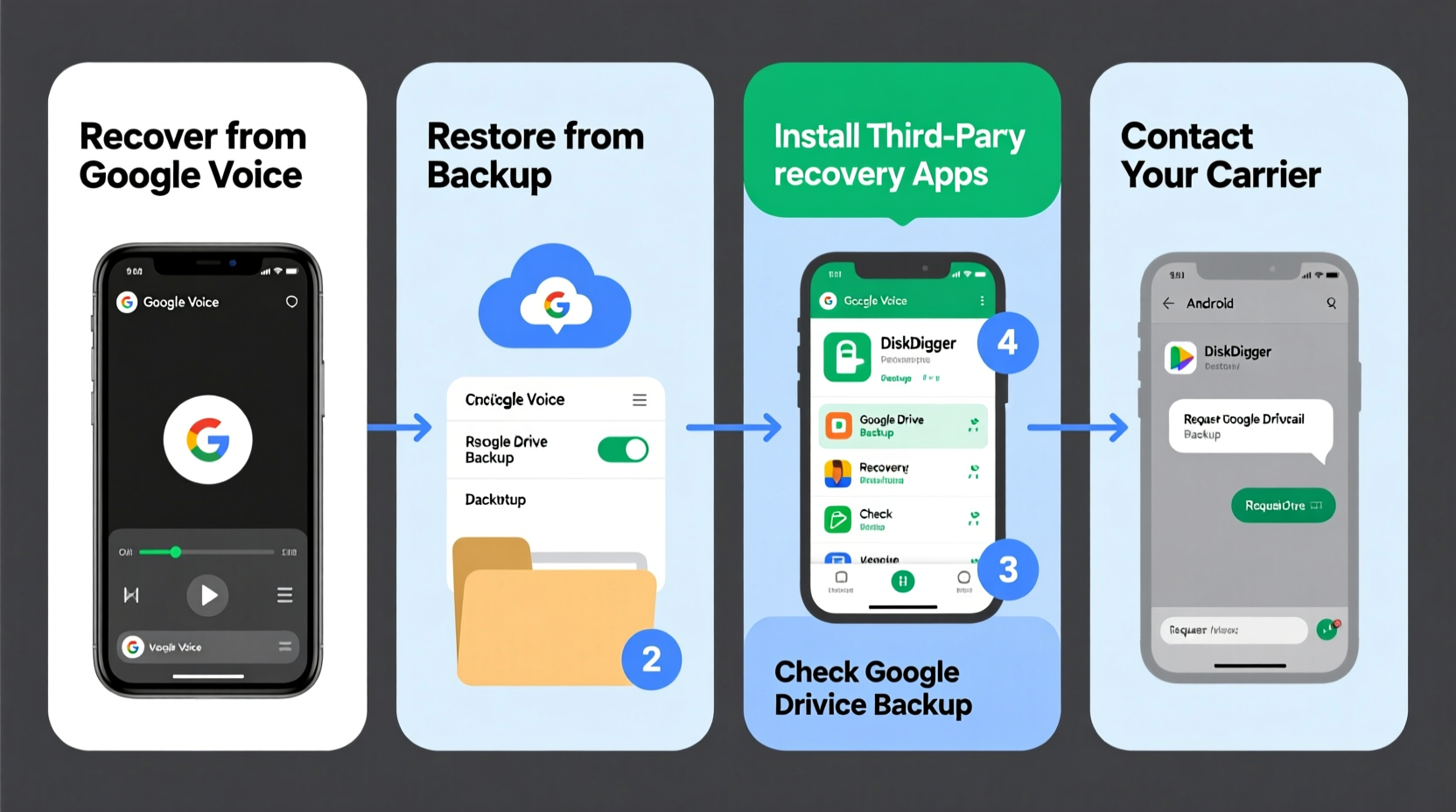
Before attempting recovery, it’s essential to understand where voicemails live. On most Android devices, voicemails are not stored locally like other media files. Instead, they are hosted on your mobile carrier’s server or managed through Google Voice or third-party apps. When you listen to a voicemail, your phone streams it from the server. Some phones may cache a temporary copy, but this is typically deleted after a short period.
This means that even if you’ve deleted a voicemail from your phone’s interface, it might still exist on your carrier’s system. The key to successful recovery lies in acting quickly and knowing which service manages your voicemails.
“Most carriers retain deleted voicemails for 30 days before permanent removal. Time is your biggest ally in recovery.” — Carlos Mendez, Mobile Data Recovery Specialist
Step-by-Step Guide to Recover Deleted Voicemails
Follow this structured process to maximize your chances of recovering a deleted voicemail. Each step targets a different potential source, starting with the simplest and most accessible options.
- Check Your Carrier’s Voicemail System: Dial your own number or use your carrier’s voicemail access code (often *86 or #1) to log into your voicemail inbox. Some carriers maintain a “Deleted Messages” folder accessible via phone menu.
- Use Visual Voicemail Apps: Open your phone’s default dialer or visual voicemail app. Navigate to settings or trash/recycle bin sections. T-Mobile, Verizon, and AT&T offer “Recently Deleted” folders in their apps.
- Contact Customer Support: If self-service fails, call your carrier. Provide your phone number, date of deletion, and approximate time of the message. Representatives may restore messages from backend servers.
- Check Google Voice (If Enabled): If you use Google Voice, deleted voicemails may still reside in the Google Voice trash. Log in at voice.google.com or open the app, go to Settings > Voicemail > Trash.
- Review Third-Party App Backups: If you used backup apps like Helium or Samsung Cloud, check if voicemail data was included in past backups—though rare, some configurations may preserve audio logs.
Carrier-Specific Recovery Options
Different carriers handle voicemail retention differently. Knowing your provider’s policy can save time and effort. Below is a comparison of major U.S. carriers and their voicemail recovery capabilities.
| Carrier | Retention Period | Recovery Method | Notes |
|---|---|---|---|
| Verizon | 30 days | Visual Voicemail app → Trash folder | Messages auto-delete after 30 days unless restored |
| AT&T | Up to 72 hours | Call *86 → Press 9 for deleted messages | Limited window; act immediately |
| T-Mobile | 30 days | T-Mobile App → Voicemail → Deleted folder | Includes cloud-based Magenta MAX voicemail |
| Sprint (now part of T-Mobile) | Variable (up to 30 days) | Contact support or use My Sprint App | Legacy accounts may have extended policies |
| Google Voice | 30 days | Web or app → Trash → Restore | Free service with robust recovery features |
Prevent Future Loss: Best Practices for Voicemail Backup
Once recovered—or to avoid future loss—take proactive steps to preserve critical voicemails. Since Android doesn’t natively back up voicemails, manual intervention is required.
- Download and Save Audio Files: In visual voicemail apps, look for a download or “save to device” option. Once saved, move the file to cloud storage like Google Drive or Dropbox.
- Enable Google Voice Forwarding: Link Google Voice to your number and set it to automatically record and store all voicemails online.
- Create Voice Memos: Play the voicemail on speaker and re-record it using your phone’s voice recorder app as a quick backup.
- Use Automation Tools: With apps like Tasker or IFTTT, automate saving new voicemails by triggering actions when a notification appears.
Mini Case Study: Recovering a Missed Job Offer
Sarah, a marketing professional, accidentally deleted a voicemail from a hiring manager after a long day. She didn’t realize its importance until she followed up and learned the message contained interview details. Panicked, she tried her Visual Voicemail app but found no trace. Remembering her carrier was Verizon, she opened the app and navigated to the “Deleted” folder under voicemail settings. To her relief, the message was there, preserved for 30 days. She restored it, rescheduled the interview, and eventually landed the job.
Sarah’s experience highlights two key points: first, carrier apps often include hidden recovery tools; second, awareness of these features matters. Had she waited another week, the message might have been permanently erased.
Frequently Asked Questions
Can I recover a voicemail deleted months ago?
It’s unlikely. Most carriers delete voicemails from their servers within 30 days. Google Voice also purges trash after 30 days. If too much time has passed, recovery is generally not possible unless you had previously saved the file externally.
Does backing up my Android phone save voicemails?
No. Standard Android backups (via Google One or OEM tools like Samsung Cloud) do not include voicemail data. These messages are tied to your carrier account or Google Voice, not local storage, so they won’t transfer during device backup or restore.
Are third-party recovery apps effective for voicemails?
Most are not. Apps claiming to recover deleted voicemails often lack real functionality because voicemails aren’t stored in the same way as SMS or photos. Many such apps are misleading or potentially harmful. Stick to carrier tools and official apps like Google Voice for reliable results.
Checklist: Recover & Protect Your Voicemails
Use this actionable checklist to recover and safeguard important voicemails:
- ✅ Immediately check your carrier’s visual voicemail app for a “Deleted” or “Trash” folder
- ✅ Dial your voicemail number and navigate the audio menu for deleted messages
- ✅ Log in to Google Voice (if linked) and check the Trash section
- ✅ Call your carrier’s customer support and request restoration
- ✅ Download and save important voicemails to cloud storage
- ✅ Set up Google Voice to auto-archive future voicemails
- ✅ Educate household members on voicemail preservation
Conclusion: Take Control of Your Digital Messages
Deleted voicemails don’t have to be lost forever. By understanding how they’re stored and acting swiftly, you can often retrieve them using built-in carrier tools or Google Voice. The real lesson lies in prevention—treat important voicemails like any other critical data. Download them, back them up, and store them securely. Technology should serve you, not leave you scrambling after a simple mistake. Start treating your voicemails with the same care as emails or documents, and you’ll never face the stress of irreversible loss again.




 浙公网安备
33010002000092号
浙公网安备
33010002000092号 浙B2-20120091-4
Comments
No comments yet. Why don't you start the discussion?