
Dried slime on clothing is more than just a sticky nuisance—it can feel like a permanent stain if not handled correctly. Whether it's from a child’s science experiment gone wrong or a prank that backfired, slime has a way of embedding itself into fabric fibers. The challenge lies in removing it effectively without compromising the integrity of the material. Many people resort to harsh chemicals or excessive scrubbing, which often leads to pilling, fading, or even holes. Fortunately, with the right approach, you can restore your garments to their original condition using safe, accessible methods.
Understanding Slime Composition and Fabric Sensitivity
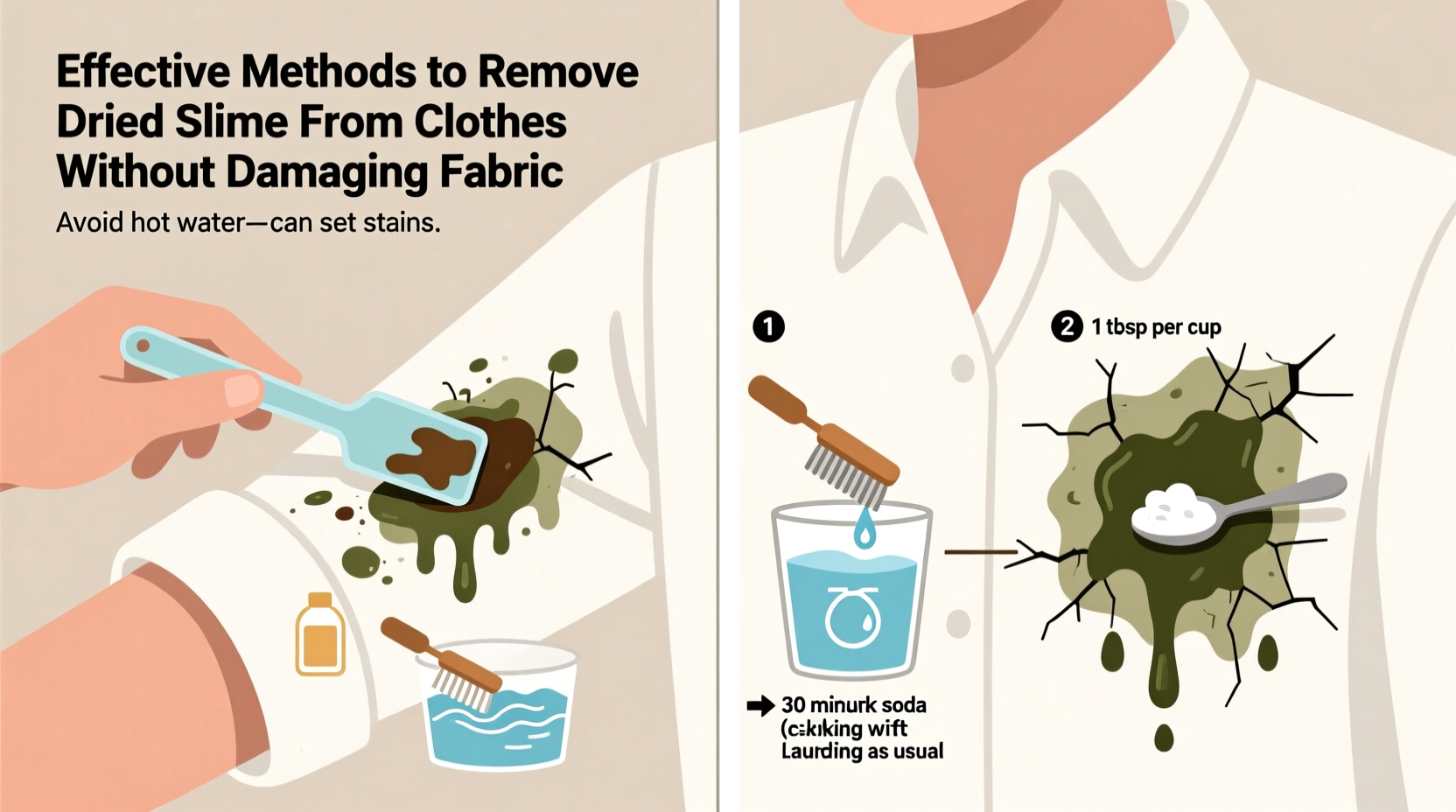
Slime typically contains ingredients like glue (PVA), borax or saline solution (activator), water, and sometimes food coloring or glitter. When it dries, the water evaporates, leaving behind a hardened polymer matrix that adheres tightly to fabric. This makes mechanical removal difficult, especially on delicate materials such as cotton blends, wool, or synthetic knits.
The key to successful removal is understanding both the chemical nature of the residue and the sensitivity of the fabric. Aggressive solvents like acetone may dissolve the slime but also damage dyes or weaken fibers. Instead, gentle yet effective agents—such as heat, oil, or enzymatic cleaners—are preferable for breaking down the bond between slime and cloth.
Step-by-Step Guide to Remove Dried Slime Safely
- Scrape off excess: Use a butter knife or spoon to gently lift large chunks of dried slime. Work from the outer edge inward to avoid spreading.
- Freeze the area (optional): Place the garment in the freezer for 30–60 minutes. Cold temperatures make the slime brittle and easier to flake off.
- Apply a softening agent: Choose one of the following based on fabric type:
- Vegetable oil or baby oil for cotton or polyester
- Mayonnaise for delicate blends (the oil content loosens adhesive)
- Hairspray (alcohol-based) for tough residues on durable fabrics
- Let it sit for 5–15 minutes: Allow time for the agent to penetrate and soften the slime.
- Gently rub with a soft cloth or toothbrush: Use circular motions to lift residue without abrading the fabric.
- Wash according to care instructions: Use warm water and regular detergent. For stubborn remnants, add ½ cup of white vinegar to the rinse cycle.
- Inspect before drying: Heat sets stains. If traces remain, repeat treatment before placing in the dryer.
Comparison of Removal Methods by Fabric Type
| Fabric Type | Recommended Method | Avoid |
|---|---|---|
| Cotton | Oil application + washing | Excessive scrubbing |
| Polyester | Hairspray or rubbing alcohol | Bleach unless necessary |
| Wool/Blends | Cold freeze + gentle oil wipe | Hot water or agitation |
| Silk | Freezing only + professional cleaning | Any solvent or DIY method |
| Denim | All methods except bleach spot treatment | Over-saturation with liquid |
Real Example: Removing Slime from a Child’s School Sweatshirt
A parent once contacted a textile repair service after their child returned from a STEM camp with a thick layer of neon green slime dried across the front of a favorite hoodie. Initial attempts with soap and water had smeared the residue further. The fabric was a cotton-polyester blend, relatively durable but prone to pilling.
The technician recommended freezing the garment overnight. Afterward, they applied a small amount of olive oil to the affected zone and let it sit for 10 minutes. Using a soft-bristled toothbrush, they worked the softened slime outward in gentle strokes. Most of the mass lifted cleanly. A second round addressed faint stickiness. The hoodie was then washed in warm water with detergent and half a cup of baking soda. Upon inspection post-wash, no residue remained, and the fabric showed no signs of wear or discoloration.
This case underscores the importance of patience and progressive treatment over forceful intervention.
“Attempting to rip off dried slime is the most common mistake. It’s not about strength—it’s about smart breakdown of adhesion.” — Dr. Lena Patel, Textile Chemist at CleanWell Labs
Do’s and Don’ts When Treating Slime Stains
- Do act quickly—even when slime is dry, early attention improves outcomes.
- Do use household items like oil or ice; they’re often more effective than commercial stain removers.
- Do launder normally after treatment, but air-dry until you confirm the stain is gone.
- Don’t use hot water initially—it can set the adhesive further.
- Don’t place in the dryer until fully clean—heat bonds remaining residue permanently.
- Don’t use undiluted bleach or acetone on unknown fabrics.
Frequently Asked Questions
Can I use WD-40 to remove dried slime?
While WD-40 can break down adhesives, it leaves behind a greasy, potentially toxic residue and may degrade certain synthetic fibers. It's not recommended for clothing worn close to the skin. If used in desperation, apply sparingly, blot immediately, and wash thoroughly with degreasing detergent.
Will vinegar alone remove dried slime?
Vinegar is mildly effective due to its acidity, but it works best in combination with other methods. Soaking in a vinegar-water solution (1:3 ratio) for 30 minutes can help loosen edges, but full removal usually requires mechanical action or oil-based softening.
What if the slime has left a colored stain?
If dye remains after slime removal, treat it as a separate issue. For protein-based dyes, use an enzyme cleaner. For synthetic colors, a mix of oxygen bleach and warm water (safe for whites and colorfast fabrics) can lift residual pigments. Always follow product instructions carefully.
Essential Checklist for Slime Removal Success
- Identify fabric type and consult care label
- Scrape off bulk residue with a dull tool
- Freeze garment (if feasible) to embrittle slime
- Apply appropriate softening agent (oil, mayo, or alcohol)
- Wait 5–15 minutes for penetration
- Blot or gently brush away loosened material
- Wash in suitable water temperature with detergent
- Check result before drying—repeat if needed
- Air-dry until confident the stain is fully gone
Conclusion: Preserve Your Clothes with Smart, Gentle Care
Removing dried slime doesn't require expensive products or drastic measures. With a clear understanding of fabric behavior and adhesive chemistry, most stains can be resolved using simple household items and careful technique. The goal isn't just cleanliness—it's preservation. Every garment saved from improper treatment extends its usable life and reduces waste.




 浙公网安备
33010002000092号
浙公网安备
33010002000092号 浙B2-20120091-4
Comments
No comments yet. Why don't you start the discussion?