
Diesel fuel is sometimes dyed red to indicate it's intended for off-road use and hasn't paid federal road taxes. Accidentally putting red-dyed diesel into a vehicle licensed for on-road use can lead to legal penalties and engine complications. While there’s no approved method to \"undye\" diesel in a regulatory sense, some individuals seek ways to clean or restore contaminated fuel—especially in emergency or rural situations. One commonly discussed household remedy involves using cat litter. This article explores the science, practicality, and safety of using cat litter to remove red dye from diesel fuel at home.
Understanding Red-Dyed Diesel and Why It Matters
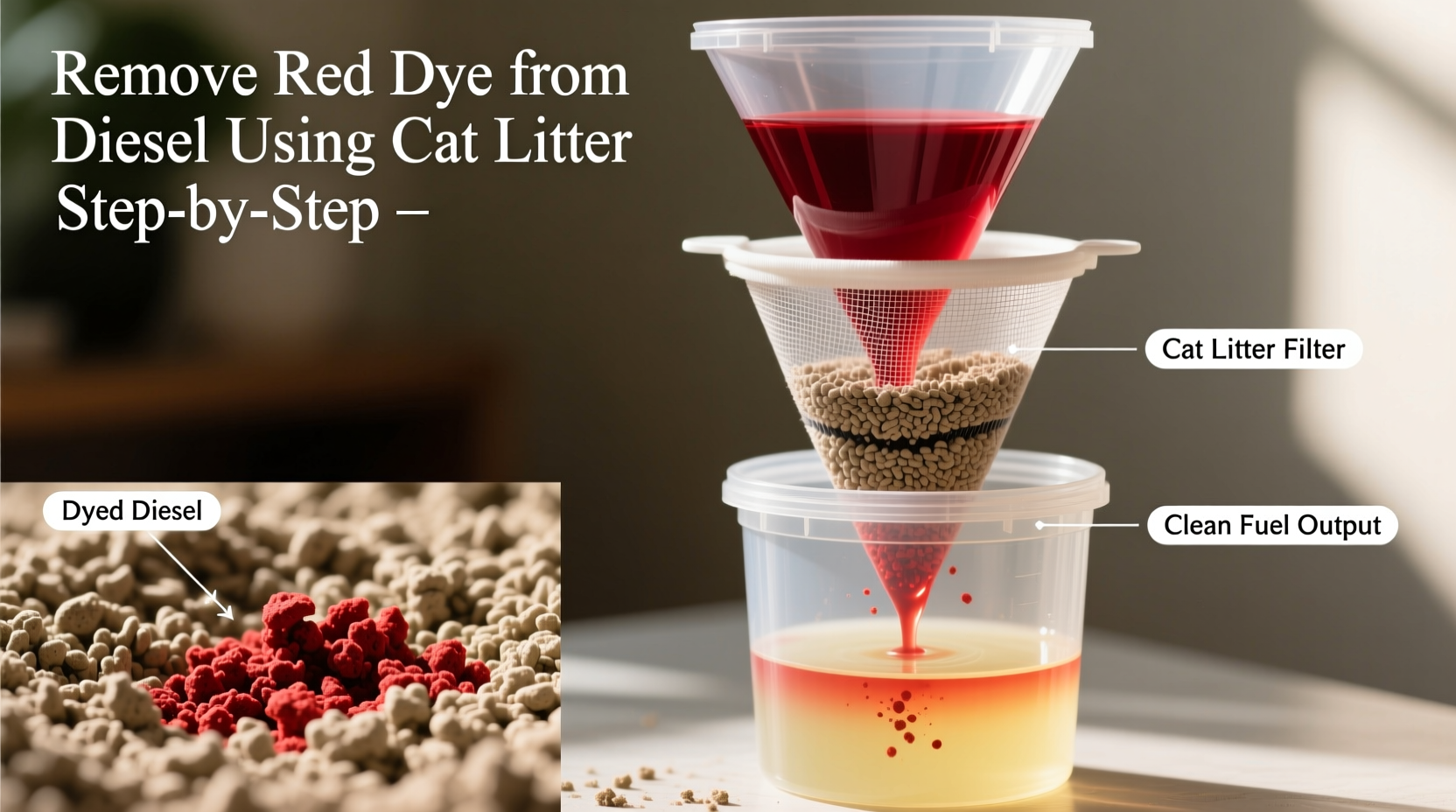
Red-dyed diesel contains Solvent Red 26 or similar azo dyes added by tax authorities to distinguish untaxed fuel used in agriculture, construction, and heating systems from taxed on-road diesel. Using red diesel in highway vehicles is illegal in most jurisdictions and can result in fines exceeding $1,000 per violation.
The dye itself is oil-soluble and chemically stable, making it difficult to remove through simple filtration. However, its organic structure allows certain absorbent materials—like specific types of clay-based cat litter—to interact with the dye molecules under controlled conditions.
“While cat litter isn’t a refinery-grade solution, its high surface area and polar properties can help reduce visible dye concentration in small-scale fuel recovery efforts.” — Dr. Alan Reeves, Environmental Chemist, University of Montana
How Cat Litter Interacts With Diesel Dye
Most conventional cat litters are made from sodium bentonite or calcium montmorillonite clays, which have strong adsorption capabilities. These clays attract and bind polar compounds, including certain aromatic hydrocarbons found in dyes.
Solvent Red 26 contains nitrogen-based structures that exhibit mild polarity, allowing partial interaction with charged sites on clay surfaces. When mixed thoroughly with diesel, fine clay particles in cat litter can trap some dye molecules, effectively reducing color intensity.
It’s important to emphasize: this process does not eliminate all traces of the dye nor makes the fuel legally compliant for on-road use. It may only reduce visual detection, but chemical testing will still identify the presence of the dye compound.
Step-by-Step Guide: Removing Red Dye from Diesel Using Cat Litter
- Prepare a clean, non-reactive container: Use a sealed metal or HDPE plastic drum (5–10 gallon capacity) with minimal headspace to reduce oxidation.
- Measure the fuel volume: Record how much dyed diesel you’re treating. This helps track efficiency and manage expectations.
- Add cat litter at a 1:5 ratio: For every gallon of diesel, add approximately 1.5 cups (about 350 ml) of powdered, clay-based cat litter.
- Mix thoroughly: Use a drill-mounted paint mixer at low speed for 10–15 minutes. Ensure full dispersion without creating excessive foam.
- Let settle for 24–48 hours: Store the container in a cool, dark place. The clay will sink, carrying absorbed dye with it.
- Decant carefully: Siphon the upper layer of fuel slowly, avoiding disturbance of the sediment at the bottom.
- Filter again (optional): Pass the decanted fuel through a two-stage filter—a 10-micron paper filter followed by activated charcoal—for further clarity.
- Test results: Pour a sample into a clear glass jar and compare against known clear diesel under natural light.
This method typically reduces visible red tint by 40–70%, depending on initial dye concentration and contact time. Complete removal is unlikely.
Do’s and Don’ts: Best Practices Table
| Do’s | Don’ts |
|---|---|
| Use only plain, clay-based cat litter without perfumes or additives | Never use scented or crystal-based litters—they release chemicals into fuel |
| Allow sufficient settling time (minimum 24 hours) | Don’t rush the process; incomplete separation leaves residue |
| Work in a well-ventilated area away from ignition sources | Don’t perform near open flames or electrical sparks |
| Wear gloves and eye protection when handling fuel | Don’t pour treated fuel directly into engines without filtration |
| Dispose of spent cat litter as hazardous waste | Don’t compost or dump used litter—it contains toxic hydrocarbons |
Real Example: A Farmer’s Fuel Emergency
In rural North Dakota, a farmer accidentally filled his pickup truck with red diesel from a farm supply tank. Facing an unexpected state inspection within days, he sought a temporary mitigation strategy. With no access to professional fuel cleaning services, he used 4 gallons of cat litter in a 55-gallon drum over 36 hours, followed by dual filtration.
The resulting fuel appeared nearly colorless in daylight. Though he later drained the tank and refilled with legal diesel before the inspection, the treatment gave him time to avoid immediate penalties. He noted that engine performance didn’t suffer during the interim, but stressed he wouldn’t rely on this method long-term.
Limitations and Legal Considerations
No home treatment, including cat litter, removes 100% of red dye. Regulatory agencies use fluorometric analysis capable of detecting parts per billion of Solvent Red 26. Even if the fuel looks clear, it remains legally dyed.
Intentionally removing dye to evade fuel taxes is illegal in the United States under IRS Code Section 4082 and similar laws in Canada and the EU. Penalties include heavy fines, license suspension, and criminal charges in extreme cases.
The cat litter method should only be considered for accidental contamination where disposal is impractical, and even then, only for non-road machinery use afterward. It is not a workaround for taxation.
Frequently Asked Questions
Can cat litter completely remove red dye from diesel?
No. While cat litter can reduce visible color by adsorbing some dye molecules, trace amounts remain detectable via laboratory testing. Complete removal requires industrial distillation or chemical extraction unavailable at home.
Is it safe to use treated diesel in my tractor or generator?
Possibly, but with caution. If the fuel has been properly filtered after treatment and shows no particulate matter, it may be usable in off-road equipment. However, residual clay dust can clog injectors over time. Use a final 2-micron filter before introduction to any engine.
What kind of cat litter works best?
Unscented, clay-based, non-clumping varieties are optimal. Brands containing sodium bentonite show better adsorption than those with quartz or silica. Avoid “natural” or plant-based litters—they lack the necessary mineral structure.
Final Checklist Before Attempting This Method
- ☑ Confirm you're using clay-based, unscented cat litter
- ☑ Work outdoors or in a ventilated garage with fire extinguisher nearby
- ☑ Use protective gear: nitrile gloves, goggles, and respirator if mixing large batches
- ☑ Label all containers clearly to avoid future misuse
- ☑ Plan for proper disposal of contaminated litter at a hazardous waste facility
- ☑ Understand that this does not legalize the fuel for on-road use
Conclusion
Using cat litter to reduce red dye in diesel is a makeshift technique rooted in basic chemistry, not a reliable or legal solution for fuel compliance. It may offer limited utility in remote settings where disposal options are scarce, but it comes with significant limitations and risks. The safest and most responsible approach is prevention: maintain strict separation between on-road and off-road fuel supplies.




 浙公网安备
33010002000092号
浙公网安备
33010002000092号 浙B2-20120091-4
Comments
No comments yet. Why don't you start the discussion?