
Clothes shrinking after a wash or dry cycle is a common household frustration. Whether it's a favorite cotton sweater that now fits like a crop top or a pair of jeans that suddenly end at the ankle, fabric shrinkage can feel irreversible. However, with the right knowledge and techniques, many garments can be carefully restored to near-original dimensions. Shrinkage typically occurs due to heat, agitation, or improper drying, especially in natural fibers like wool, cotton, and cashmere. The good news? Most of these fabrics have memory and elasticity that can be gently manipulated back into shape.
Understanding Fabric Shrinkage: Why It Happens
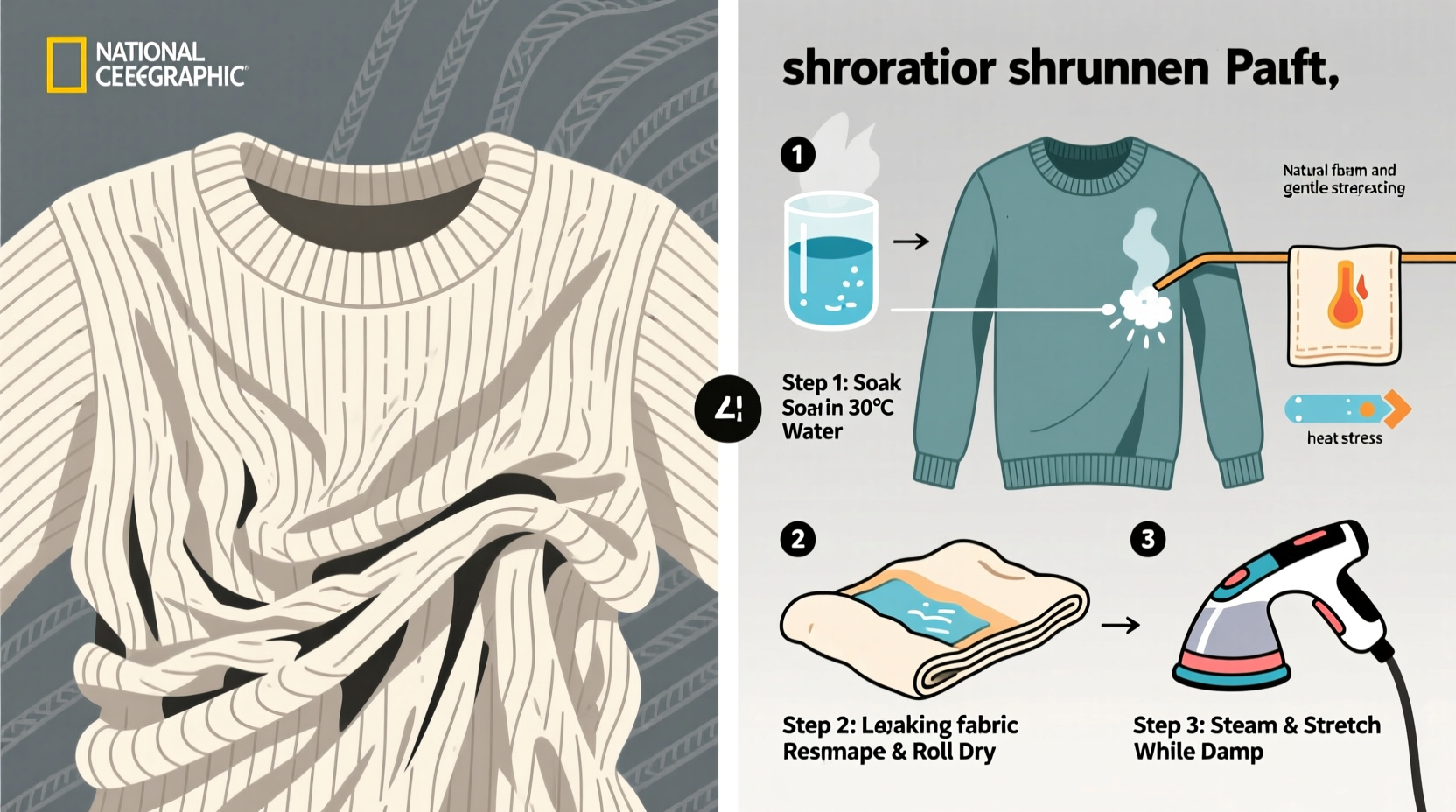
Fabric shrinkage is not random—it’s a physical reaction caused by stress on textile fibers. During manufacturing, yarns are stretched and tensioned before being woven or knitted into cloth. When exposed to heat, moisture, and mechanical action (like tumbling in a dryer), these fibers relax and contract, returning closer to their natural, unstretched state. This is especially true for untreated or loosely woven natural fibers.
Synthetic blends tend to resist shrinkage better than pure natural fabrics, but they aren’t immune—especially when exposed to high heat. Wool and cashmere are particularly vulnerable because their scaly fiber structure can felt under heat and friction, causing permanent matting. Cotton, while more forgiving, still loses tensile strength and elongation when over-dried.
“Most shrinkage occurs during the first few washes, but reactive restoration is possible if addressed early and correctly.” — Dr. Lena Torres, Textile Scientist at the Institute of Apparel Innovation
Step-by-Step Guide: Restoring Shrunk Garments at Home
Restoration hinges on relaxing the tightened fibers and gently coaxing them back into shape. Below is a universal method adaptable for most natural-fiber clothing. Always check the care label first to avoid damage.
- Fill a basin with lukewarm water (around 30–35°C). Avoid hot water, which may worsen shrinkage.
- Add two tablespoons of hair conditioner or baby shampoo. These contain emollients that lubricate fibers, making them more pliable.
- Submerge the garment completely and let it soak for 20–30 minutes. Gently press out air bubbles to ensure full saturation.
- Drain the water and lay the item flat on a clean towel. Roll the towel tightly to absorb excess moisture—do not wring.
- Unroll and place the garment on a dry surface, such as a drying rack or another towel.
- Gently stretch the fabric in all directions—lengthwise, widthwise, and diagonally—using your hands. Focus on areas that shrank most (e.g., sleeves, waistband).
- Maintain tension while reshaping. Use pins or small weights to hold edges in place if needed.
- Allow to air dry completely away from direct sunlight or heat sources.
Do’s and Don’ts When Dealing with Shrunk Clothes
| Do’s | Don’ts |
|---|---|
| Test restoration on a small area first | Use hot water or bleach |
| Stretch slowly and evenly | Wring or twist the fabric aggressively |
| Use fabric-specific conditioners | Put the garment back in the dryer immediately |
| Air dry flat to maintain shape | Hang heavy wet garments (they may stretch unevenly) |
| Repeat the process if necessary | Force stretch beyond natural limits (risk tearing) |
Real Example: Rescuing a Shrunken Cashmere Sweater
Sarah, a graphic designer from Portland, accidentally dried her favorite ivory cashmere turtleneck on high heat. After removing it, she found the sleeves had shortened by nearly three inches and the body had tightened around the chest. Distressed but unwilling to discard a $120 piece, she followed the soaking method using a lanolin-based wool wash. After soaking for 25 minutes, she laid the sweater flat and gradually pulled each sleeve outward, securing the cuffs with small books to maintain extension. Over 12 hours of drying time, the sweater regained about 85% of its original length. While not perfect, it was wearable again and retained its softness.
This case illustrates that even delicate fabrics can recover significantly with patience and proper technique. Immediate action increases success rates—waiting weeks allows fibers to fully set in their new form.
Alternative Methods for Different Fabrics
Not all fabrics respond to the same treatment. Here’s how to adapt the restoration process based on material:
- Cotton T-shirts and Jeans: Use the standard soak-and-stretch method. Cotton responds well to hydration and manual stretching. For jeans, focus on the leg length and waistband.
- Wool and Cashmere: Conditioner is essential here. These protein-based fibers need lubrication to slide past each other without breaking. Never hang wool to dry—gravity distorts the shape.
- Rayon and Viscose: Extremely fragile when wet. Soak briefly (10–15 minutes) and handle minimally. Stretch very gently; these fabrics tear easily.
- Blends (Cotton-Polyester): Less likely to shrink severely, but if they do, results vary. Polyester resists water-based restoration, so only the cotton portion may expand.
Prevention Checklist: Avoid Future Shrinkage
Once you’ve rescued a garment, protect your wardrobe with proactive habits:
- Always read and follow care labels
- Wash in cold water using a gentle cycle
- Turn clothes inside out to reduce fiber stress
- Air dry whenever possible—avoid tumble drying
- If machine drying is necessary, use low heat and remove while slightly damp
- Store folded garments flat, especially knits
- Invest in mesh laundry bags for delicates
Frequently Asked Questions
Can I unshrink clothes in the dryer?
No. Dryers apply heat and agitation, which cause shrinkage. Attempting to \"unshrink\" in a dryer will only worsen the problem. Restoration requires moisture, conditioning agents, and manual reshaping—not heat.
How many times can I attempt to restore a shrunken garment?
You can repeat the soak-and-stretch process 2–3 times safely. Beyond that, fibers may weaken, especially in delicate materials like silk or rayon. If no improvement occurs after two attempts, further efforts are unlikely to help.
Will vinegar help unshrink clothes?
Vinegar is often suggested, but it has no proven effect on reversing shrinkage. In fact, its acidity may damage protein fibers like wool or silk. Stick to pH-balanced conditioners or wool washes instead.
Conclusion: Take Action Before It’s Too Late
Shrunk clothes don’t have to be written off. With timely intervention and the right approach, many garments can regain enough size and comfort to remain part of your regular rotation. The key lies in understanding fabric behavior and acting gently but decisively. From everyday cotton tees to luxury knits, every piece deserves a second chance when treated with care.




 浙公网安备
33010002000092号
浙公网安备
33010002000092号 浙B2-20120091-4
Comments
No comments yet. Why don't you start the discussion?