
Polyester is a durable, wrinkle-resistant synthetic fabric widely used in everyday clothing, activewear, and outerwear. While its resilience is an advantage, it also makes polyester less forgiving when it comes to resizing. Unlike natural fibers such as cotton or wool, polyester doesn’t stretch easily—and once set during manufacturing, altering its dimensions can seem impossible. However, with the right techniques, it’s possible to gently enlarge polyester garments without compromising their integrity. This guide explores proven, low-risk methods to safely stretch polyester clothing while preserving fabric quality and appearance.
Understanding Polyester and Its Stretch Limitations
Polyester is created from petroleum-based polymers that are woven into strong, stable fibers. During production, these fibers are heat-set to lock in shape, which gives polyester its shape retention but limits elasticity. Pure polyester has minimal give—typically under 3% stretch—which means traditional washing and wearing won't loosen it significantly. Blends with spandex, elastane, or rayon offer more flexibility, but even then, overstressing the fabric can lead to pilling, distortion, or permanent deformation.
The key to enlarging polyester lies in manipulating fiber memory through controlled heat and moisture. When heated, polyester becomes temporarily malleable. If stretched at this stage and allowed to cool in the new shape, minor size increases are achievable. The process must be gradual and carefully monitored to avoid melting, shrinking, or weakening the material.
“Polyester responds best to low, consistent heat and tension. Sudden temperature changes or aggressive pulling will damage the fibers.” — Dr. Lena Peterson, Textile Scientist, MIT Materials Lab
Safe Methods to Enlarge Polyester Garments
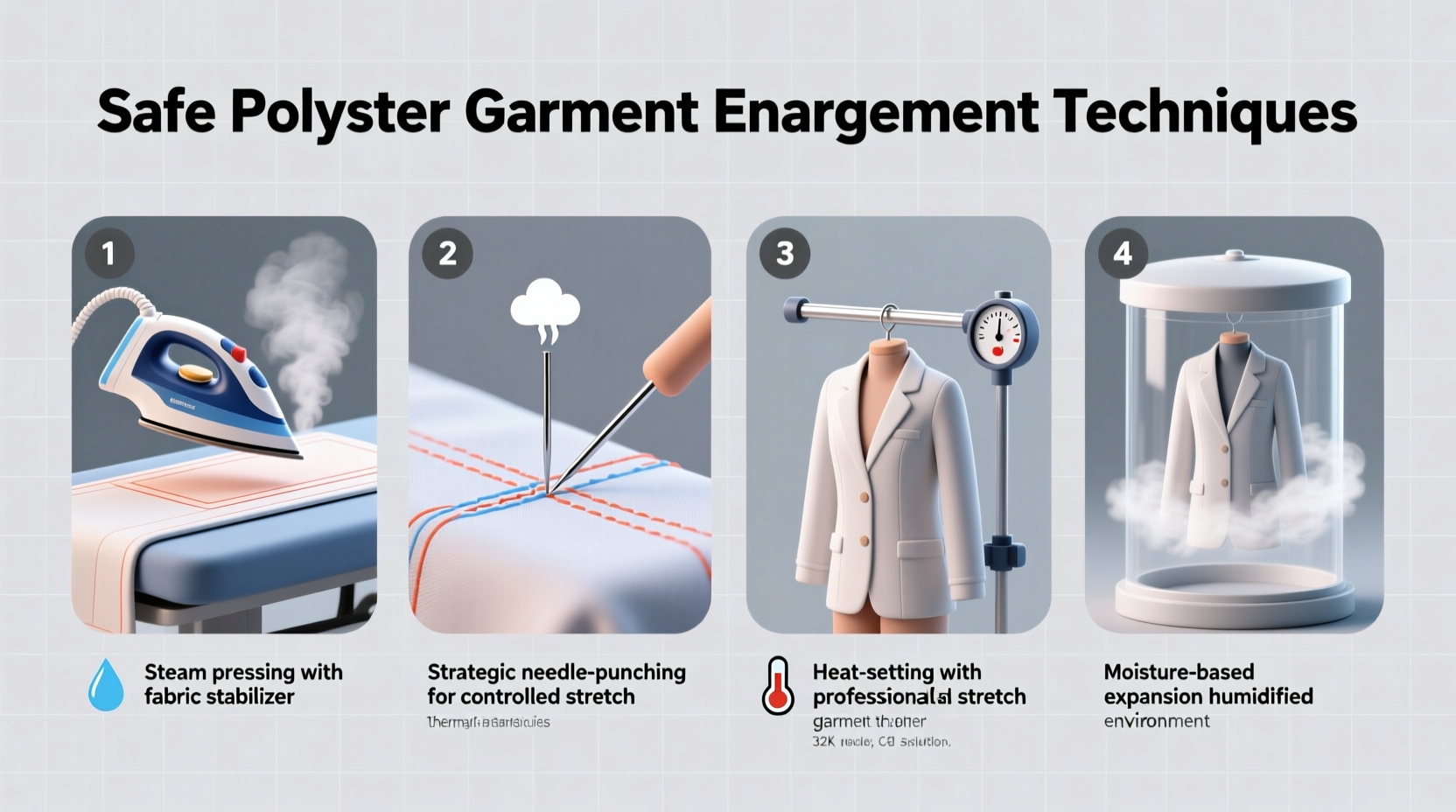
Enlarging polyester isn’t about brute force—it’s about patience and precision. Below are four scientifically supported techniques that allow for subtle yet noticeable expansion without harming the fabric.
1. Steam and Manual Stretching
Steam softens polyester fibers by penetrating the polymer structure, making them pliable. This method works well for localized adjustments like loosening tight cuffs, collars, or waistbands.
- Hang the garment on a sturdy hanger.
- Use a handheld steamer or iron with a steam setting to evenly moisten the area you want to enlarge.
- While the fabric is warm and damp, gently pull the target area outward using your hands.
- Maintain tension for 30–60 seconds, then let the garment air dry completely in the stretched position.
2. Warm Water Soak and Tension Method
This technique mimics professional textile reshaping and is ideal for shirts, dresses, or pants needing overall loosening.
- Fill a basin with warm (not boiling) water—ideally between 100°F and 110°F (38°C–43°C).
- Submerge the garment for 15–20 minutes to fully saturate the fibers.
- Lay the item flat on a clean towel and roll it up to remove excess water.
- Place it on a dry surface and manually stretch it to the desired dimensions, focusing on problem areas.
- Use clips or weights to hold the edges in place as it dries naturally—do not use a dryer.
3. Wear-and-Stretch Technique
For slight fit improvements, especially in blended fabrics, wearing the garment while damp can encourage natural expansion.
- Dampen the clothing slightly with a spray bottle or quick rinse.
- Put it on immediately and move around for 20–30 minutes—bending arms, squatting, or raising shoulders helps stretch high-tension zones.
- Remove the garment and lay it flat to dry in its new shape.
This method works best when combined with movement that mimics daily wear, allowing the fabric to adapt gradually.
4. Professional Resizing with Heat Press (Advanced)
For tailored garments or significant alterations, consider consulting a professional tailor with access to industrial heat presses. These machines apply uniform heat and pressure across the fabric, enabling controlled expansion. This method is particularly effective for sportswear and performance gear made from technical polyester blends.
Do’s and Don’ts of Stretching Polyester
| Do’s | Don’ts |
|---|---|
| Use warm, not hot, water or steam | Boil or use scalding water |
| Stretch gradually and evenly | Pull aggressively or unevenly |
| Allow garments to air dry in stretched form | Tumble dry immediately after stretching |
| Test methods on a small, hidden area first | Apply techniques to entire garments without testing |
| Combine moisture and low heat for best results | Expose polyester to open flames or high-heat settings |
Real-Life Example: Restoring a Fitted Blazer
Sarah, a project manager, inherited a tailored polyester-blend blazer from her sister. Though stylish, it was snug across the shoulders and chest, making it uncomfortable for long workdays. Rather than replacing it, she decided to try the warm water soak method.
She filled her bathtub with warm water, submerged the blazer for 18 minutes, then laid it on a padded table. Gently, she pulled the shoulder seams outward and down the sleeves, securing the edges with tape. She repeated the same motion across the back yoke and underarms. After 12 hours of drying, the blazer had gained nearly half an inch in the chest and felt noticeably looser in the shoulders. Sarah wore it the next day with comfort and confidence—proof that careful, informed effort can revive ill-fitting garments.
Step-by-Step Timeline for Best Results
To maximize success and minimize risk, follow this timeline over 24–48 hours:
- Day 1, Morning: Assess the garment and identify tight areas.
- Day 1, Afternoon: Perform a patch test using steam or warm water on an inside seam.
- Day 1, Evening: Apply chosen method (soak or steam), stretch gently, and secure in place.
- Day 2, Morning: Check the fit. If further adjustment is needed, repeat the process once more.
- Day 2, Afternoon: Evaluate final fit and wear normally.
Never attempt multiple stretching sessions in one day—overworking the fibers increases the risk of irreversible damage.
Frequently Asked Questions
Can I use a hairdryer to stretch polyester?
Yes, but only with caution. Use the hairdryer on a low heat setting with steam (via a damp cloth held between the dryer and fabric). Continuously move the dryer to prevent overheating any single spot. Combine this with manual stretching for best results.
Will stretching polyester cause it to shrink later?
If done correctly, no. However, exposing a stretched polyester garment to high heat (e.g., hot washes or dryers) can trigger re-shrinking because heat resets fiber memory. Always wash in cold water and air dry afterward.
How much can I realistically enlarge a polyester garment?
Typically, you can achieve a 5–10% increase in circumference—about half to one full size—especially in blended fabrics. Pure polyester may only expand by 3–5%, and results vary based on weave tightness and prior heat treatment.
Checklist: Safely Enlarge Your Polyester Clothing
- ☐ Identify the tight areas needing adjustment
- ☐ Check the care label for blend composition
- ☐ Test method on an inconspicuous area
- ☐ Use warm (not hot) water or steam
- ☐ Stretch slowly and hold tension for 30+ seconds
- ☐ Secure garment in new shape during drying
- ☐ Air dry completely before assessing fit
- ☐ Repeat only if necessary, with 24-hour intervals
Final Thoughts: Patience Pays Off
Resizing polyester garments isn’t about dramatic transformations—it’s about thoughtful, incremental improvements. With the right combination of moisture, warmth, and gentle force, you can extend the life and comfort of your favorite pieces. Whether reviving a sentimental item or adapting clothes to changing body needs, these methods empower you to care for your wardrobe sustainably and intelligently.




 浙公网安备
33010002000092号
浙公网安备
33010002000092号 浙B2-20120091-4
Comments
No comments yet. Why don't you start the discussion?