
In an increasingly connected world, concerns about unknown callers, suspicious messages, or lost contacts have made location tracking a practical necessity. While many assume that tracking a phone number’s location requires downloading specialized apps or paying for premium services, several reliable, app-free methods exist. These approaches leverage publicly available data, search engines, and built-in telecommunication features—all without compromising your device’s security or privacy.
This guide explores proven, cost-free techniques to determine the geographic origin of a phone number. Whether you're verifying a delivery person’s route, identifying a spam caller, or checking in on a loved one who shared their number, these strategies offer actionable insights using only a web browser and basic digital literacy.
Understanding Phone Number Tracking Basics
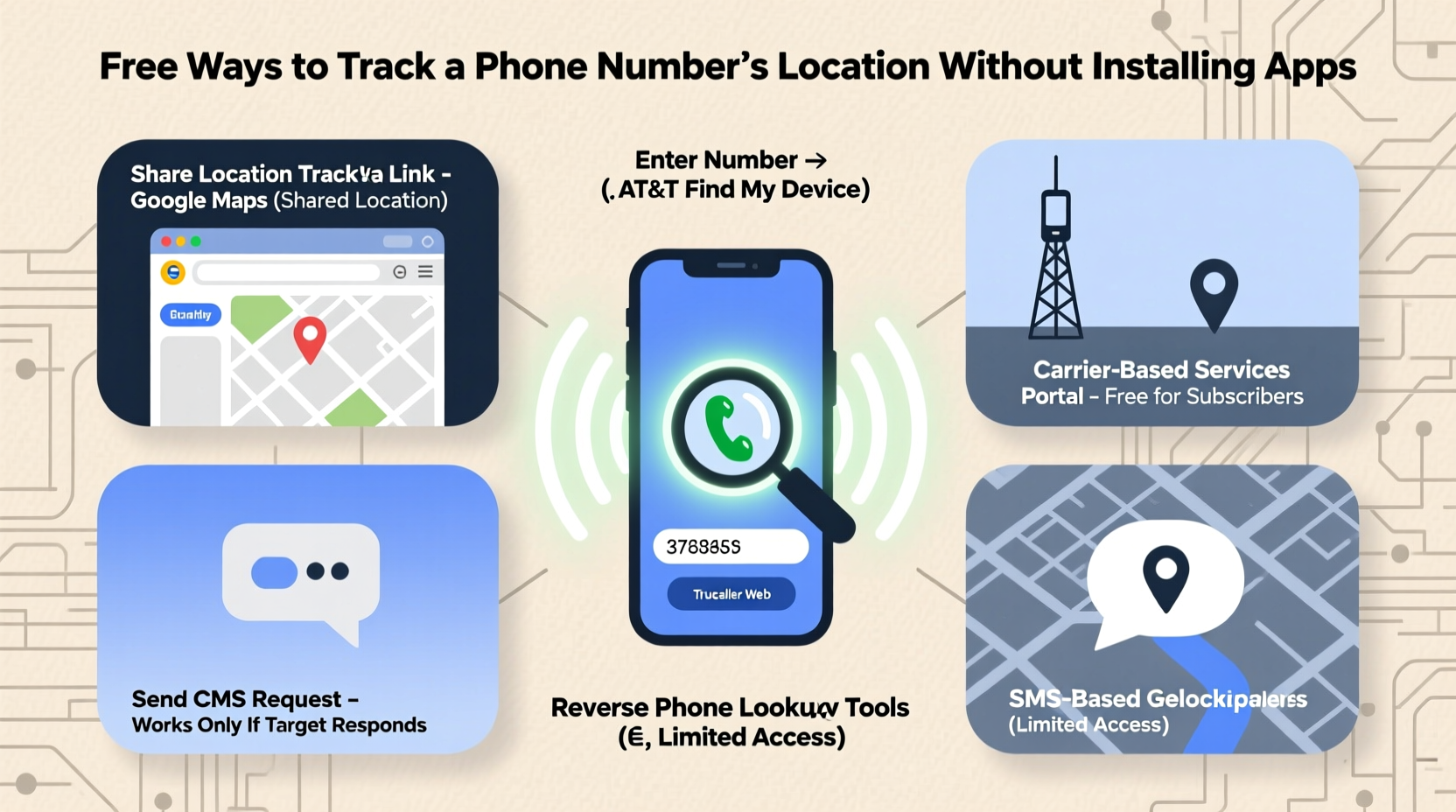
Before diving into specific tools, it's important to clarify what \"tracking a number’s location\" actually means. True real-time GPS tracking—such as seeing someone’s live movement on a map—is not possible without access to the target device or installed software. What is feasible without apps is determining the registered location of a number based on its area code, carrier data, or digital footprint.
Most landline and mobile numbers are tied to a geographic region during registration. This information is stored in public databases managed by telecom providers and regulatory bodies. By accessing this data through free online tools, you can often pinpoint the city, state, or country associated with a number.
“While real-time surveillance isn’t legally or technically accessible without consent, location inference from number metadata is both legal and widely used for fraud prevention.” — Dr. Alan Reyes, Cybersecurity Analyst at NetWatch Labs
Free Online Tools for Location Identification
Several reputable websites allow users to input a phone number and retrieve associated location details. These platforms aggregate data from public directories, carrier records, and user-submitted reports. Here are some of the most effective options:
- Truecaller Web (truecaller.com): Offers a browser-based version that reveals the caller’s name, ISP, and approximate location based on community-sourced data.
- Whitepages.com: Provides detailed reports for U.S.-based numbers, including address history and carrier info.
- NumLookup (numlookup.com): A simple interface that identifies area codes and gives general location down to the city level.
- OpenCelliD.org: A crowdsourced database showing cell tower locations, which can help estimate a number’s general vicinity if linked to tower data.
Step-by-Step Guide to Track a Number Without Apps
Follow this sequence to maximize the chances of obtaining accurate location information:
- Note the full number, including country code (e.g., +1 for the U.S.). Accuracy depends on complete input.
- Check the area code using a free area code lookup tool like AreaCode.org. This instantly narrows down the region.
- Search the number on Google. Enclose it in quotes (e.g., “+1 555 123 4567”) to find exact matches on forums, business listings, or social profiles.
- Visit Truecaller’s web portal and enter the number. If it’s been reported before, you’ll see location and user tags.
- Try Whitepages or Spokeo for U.S. numbers. These often show ZIP code-level detail and associated names.
- Analyze social media by pasting the number into Facebook, Instagram, or LinkedIn search bars. Some platforms index phone numbers for contact discovery.
- Review scam reporting sites like 800notes.com or Whocallsme.com, where users log suspicious calls with location notes.
Do’s and Don’ts of Number-Based Location Checks
| Do’s | Don’ts |
|---|---|
| Use official, encrypted websites (look for HTTPS) | Share personal information in exchange for results |
| Cross-verify findings across multiple sources | Assume real-time tracking is possible without consent |
| Respect privacy—only investigate when justified | Use data for harassment or illegal purposes |
| Save records if monitoring potential scams | Rely solely on automated results without critical thinking |
Real Example: Identifying a Suspicious Delivery Caller
Sarah received a call from an unknown number claiming to be her food delivery driver. The app showed the rider was nearby, but the voice sounded off. Concerned, she paused the call and opened her laptop.
She searched the number on Google and found a match on 800notes.com, where users flagged it as a “robocall from Florida.” She then checked Truecaller Web, which listed the number as registered in Miami, over 1,000 miles from her location. Realizing this wasn't her actual delivery person, she contacted the restaurant directly and confirmed no call had been made. Sarah avoided a potential phishing attempt using only free, app-free methods.
Enhancing Accuracy with Advanced Search Techniques
Standard searches may yield limited results. To dig deeper, use advanced Google operators:
intext:\"+1 555 123 4567\"– Finds pages containing the exact number.site:facebook.com \"+1 555 123 4567\"– Searches only Facebook for the number.\"555-123-4567\" \"New York\"– Combines the number with a suspected location for better filtering.
Additionally, check if the number appears on business directories like Yelp or Yellow Pages. A listing with a physical address strongly indicates the number’s operational base.
Checklist: Verify a Number’s Location in 5 Minutes
- Write down the full international number.
- Perform a Google search with the number in quotes.
- Visit Truecaller.com and enter the number.
- Check Whitepages or NumLookup for U.S. numbers.
- Search scam-reporting sites like 800notes.com.
- Look up the area code independently for regional confirmation.
Frequently Asked Questions
Can I track a mobile number’s real-time location for free without an app?
No legitimate method allows real-time GPS tracking of a mobile number without installing software on the target device or having account access. The techniques described here reveal registration-based location, not live movement.
Are free number lookup services safe to use?
Most reputable sites like Truecaller Web or Whitepages are safe if accessed via HTTPS and without entering personal details. Avoid platforms that demand credit card information or excessive permissions.
Why do some numbers show incorrect locations?
Voice over IP (VoIP) numbers, ported lines, and virtual phone services often display mismatched locations because they’re not tied to physical infrastructure. Carrier porting also updates ownership without changing geographic identifiers immediately.
Conclusion
Determining the origin of a phone number doesn’t require invasive tools or paid subscriptions. With careful use of online directories, search engines, and public databases, you can gather meaningful insights about a number’s likely location—all from your browser. These methods empower you to verify identities, avoid scams, and make informed decisions without compromising privacy or security.




 浙公网安备
33010002000092号
浙公网安备
33010002000092号 浙B2-20120091-4
Comments
No comments yet. Why don't you start the discussion?