
Cat owners love their feline companions, but few enjoy tracking down scattered litter across carpets, hardwood floors, or baseboards. While cats are naturally clean animals, their litter habits can quickly become a household nuisance. Litter dispersion isn’t just unsightly—it can be tracked into food areas, embedded in rugs, or even breathed in as dust. The good news is that with thoughtful planning and consistent practices, it’s entirely possible to minimize—and often eliminate—litter scatter. This guide outlines actionable, science-backed methods to contain litter where it belongs: inside the box.
Choose the Right Litter Box Design
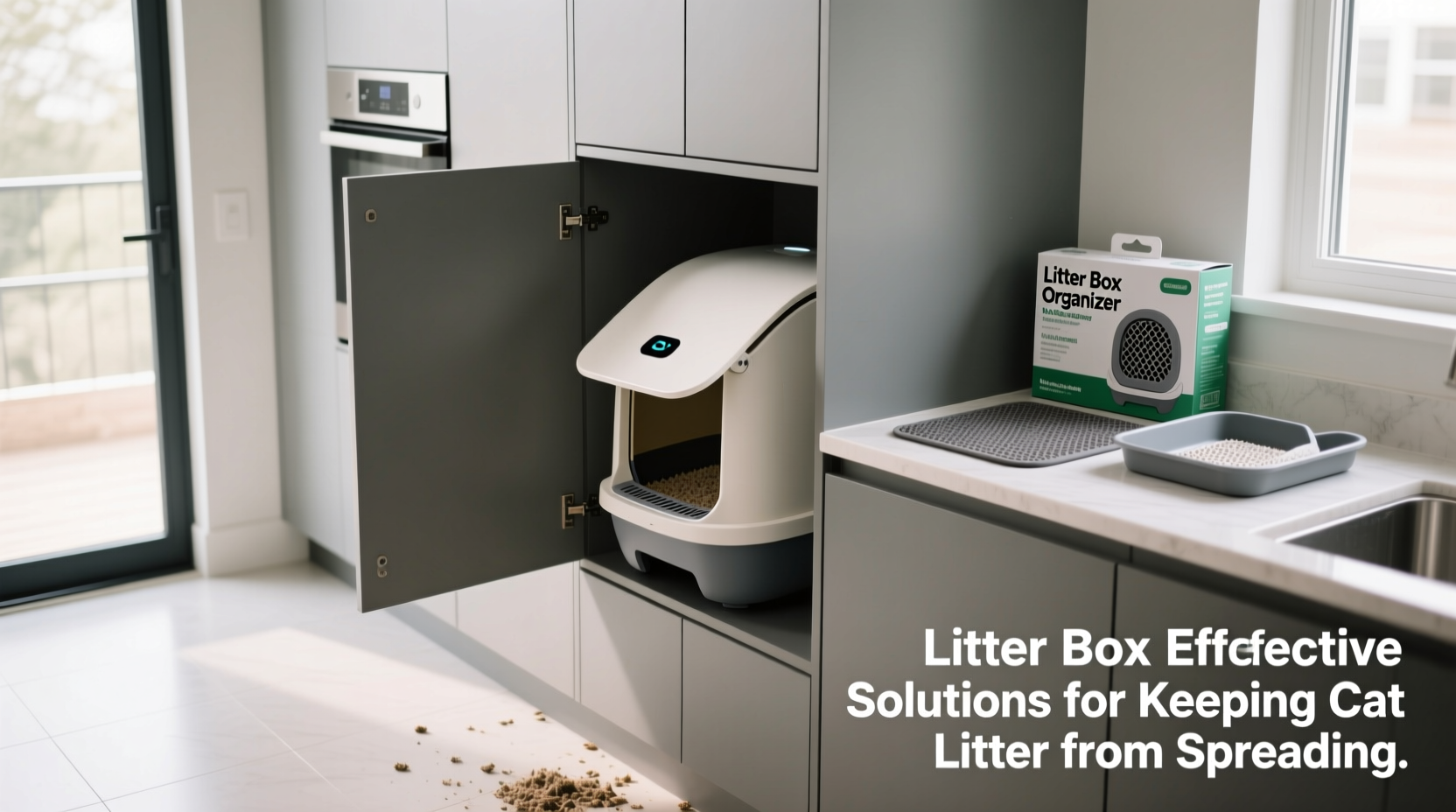
The foundation of any effective litter containment strategy starts with the litter box itself. Not all boxes are created equal when it comes to containing messes. Traditional open trays may allow litter to fly out during vigorous digging, while high-sided or covered models can help—but come with trade-offs.
- Top-entry boxes reduce side scatter because cats enter from above, limiting paw fling during exit.
- Large, rectangular boxes give cats space to move without kicking litter over the edges.
- Boxes with built-in ledges or ramps feature textured surfaces that help wipe paws before stepping onto clean flooring.
Experts emphasize size and accessibility. “Cats need room to turn around and dig comfortably,” says Dr. Lena Patel, a feline behavior specialist. “A cramped box encourages forceful digging, which increases litter ejection.”
“An oversized box is rarely a problem; an undersized one always is.” — Dr. Lena Patel, Feline Behavior Specialist
Use High-Walled or Hooded Boxes Wisely
Hooded litter boxes are popular for odor control, but they aren’t universally effective at reducing litter scatter. In fact, some cats kick litter backward forcefully enough to pile it against the back wall, where it eventually spills over.
To improve performance:
- Select hooded models with extra-tall sides (at least 18 inches).
- Ensure proper ventilation to prevent ammonia buildup, which deters use.
- Look for hoods with front baffles or tunnel entrances that trap escaping particles.
However, not all cats prefer enclosed spaces. Some feel trapped or anxious, leading to avoidance or inappropriate elimination. Monitor your cat’s behavior after switching styles. If they hesitate or eliminate outside the box, revert to an open model with added containment features.
Invest in a Litter Mat System
A high-quality litter mat is one of the most cost-effective tools for trapping stray granules. Mats work by capturing litter between ridges, grooves, or fibers as cats step off the box.
There are three primary types:
| Type | Pros | Cons |
|---|---|---|
| Rubber grid mats | Easy to clean, durable, traps large clumps | Less effective on fine dust |
| Furry fabric mats | High surface area captures micro-particles | Harder to clean, may retain odors |
| Multi-layer modular mats | Combines texture + catch tray; highly efficient | More expensive, bulkier footprint |
For maximum effectiveness, place the mat at least 36 inches wide beyond the box exit. This ensures both front and back paws get cleaned. Shake or vacuum the mat weekly, and rinse rubber versions monthly with mild soap and water.
Optimize Litter Type and Particle Size
The kind of litter you use plays a surprising role in how far it spreads. Lightweight litters, while convenient for scooping, are more prone to being kicked or blown across rooms.
Consider these factors:
- Weight: Heavier clay or silica-based litters resist airborne dispersal.
- Granule size: Medium to large颗粒 (2–4 mm) are less likely to stick to paws than fine dust.
- Dust level: Low-dust formulas improve air quality and reduce invisible residue on floors.
In a controlled home trial, switching from ultra-light crystal litter to a mid-weight clumping clay reduced visible floor litter by 68% over two weeks. One participant noted, “I used to sweep daily. Now I vacuum every third day and barely find anything.”
Mini Case Study: The Martinez Household
The Martinez family adopted a playful Maine Coon who loved burying waste with enthusiastic digs. Within days, litter coated their kitchen linoleum. They tried standard mats and corner placement with no success. After consulting a vet tech, they switched to a large, top-entry box paired with a heavy walnut-based litter and a dual-layer mat system. Within a week, visible litter tracks dropped by over 90%. “It’s not perfect,” admits Maria Martinez, “but now it’s manageable. We actually feel comfortable letting guests see the laundry room where we keep the box.”
Implement a Strategic Placement and Maintenance Routine
Location matters. Placing the litter box on carpet or uneven flooring increases instability and reduces mat efficiency. Instead:
- Position the box on hard, washable flooring like tile or vinyl.
- Leave at least 12 inches of clearance on all sides for easy access and cleaning.
- Avoid high-traffic zones to reduce stress and accidental kicks.
- Place the box away from noisy appliances (e.g., washing machines) that might startle your cat mid-use.
Maintenance is equally crucial. A dirty box invites erratic behavior. Scoop at least once daily, change litter completely every 2–4 weeks (depending on usage), and wash the box monthly with odor-neutralizing cleaners—never ammonia-based products, which mimic urine scent and repel cats.
Checklist: Litter Containment Action Plan
- ✅ Upgrade to a larger, high-walled or top-entry litter box
- ✅ Install a multi-surface litter mat extending beyond the box perimeter
- ✅ Switch to a heavier, low-dust litter with medium granule size
- ✅ Position the box on non-carpeted, stable flooring
- ✅ Clean the box weekly and replace litter regularly
- ✅ Observe your cat’s behavior and adjust setup if avoidance occurs
FAQ
Can I use two mats together for better results?
Yes. Combining a rubber grid mat with a low-fiber rug or secondary trap mat significantly improves capture rates. Just ensure the setup remains flat and safe to walk on.
Why does my cat kick litter out even after using a covered box?
This is natural burying behavior. Cats instinctively dig and cover waste. The solution isn’t to stop the behavior but to contain its fallout through better box design, litter choice, and matting.
Is there a litter that doesn’t track at all?
No litter is 100% track-proof, but heavier, coarser options like paper pellets or certain wood-based litters produce less airborne dust and cling less to paws. Pair them with a good mat for optimal results.
Final Thoughts and Call to Action
Keeping cat litter contained isn’t about perfection—it’s about progress. By combining smart equipment choices with consistent maintenance and behavioral awareness, you can transform a messy routine into a nearly invisible part of home life. Start with one upgrade—like adding a premium litter mat or switching to a heavier litter—and build from there. Small changes compound into cleaner floors, fresher air, and a more harmonious living space for both you and your cat.




 浙公网安备
33010002000092号
浙公网安备
33010002000092号 浙B2-20120091-4
Comments
No comments yet. Why don't you start the discussion?