
Dealing with postal service issues—whether it’s lost mail, delayed packages, damaged deliveries, or unprofessional conduct—can be frustrating. Many people assume complaints go unanswered or ignored, but that doesn’t have to be the case. When filed correctly, with the right documentation and through proper channels, your concerns can lead to resolution and even systemic improvements. The key lies in knowing how to escalate your issue effectively and persistently.
This guide walks you through actionable, proven steps to file a complaint about the post office and increase your chances of receiving a substantive response. Whether you're an individual sender, small business owner, or regular recipient, these strategies will help you navigate bureaucracy with confidence.
1. Gather and Organize Your Evidence
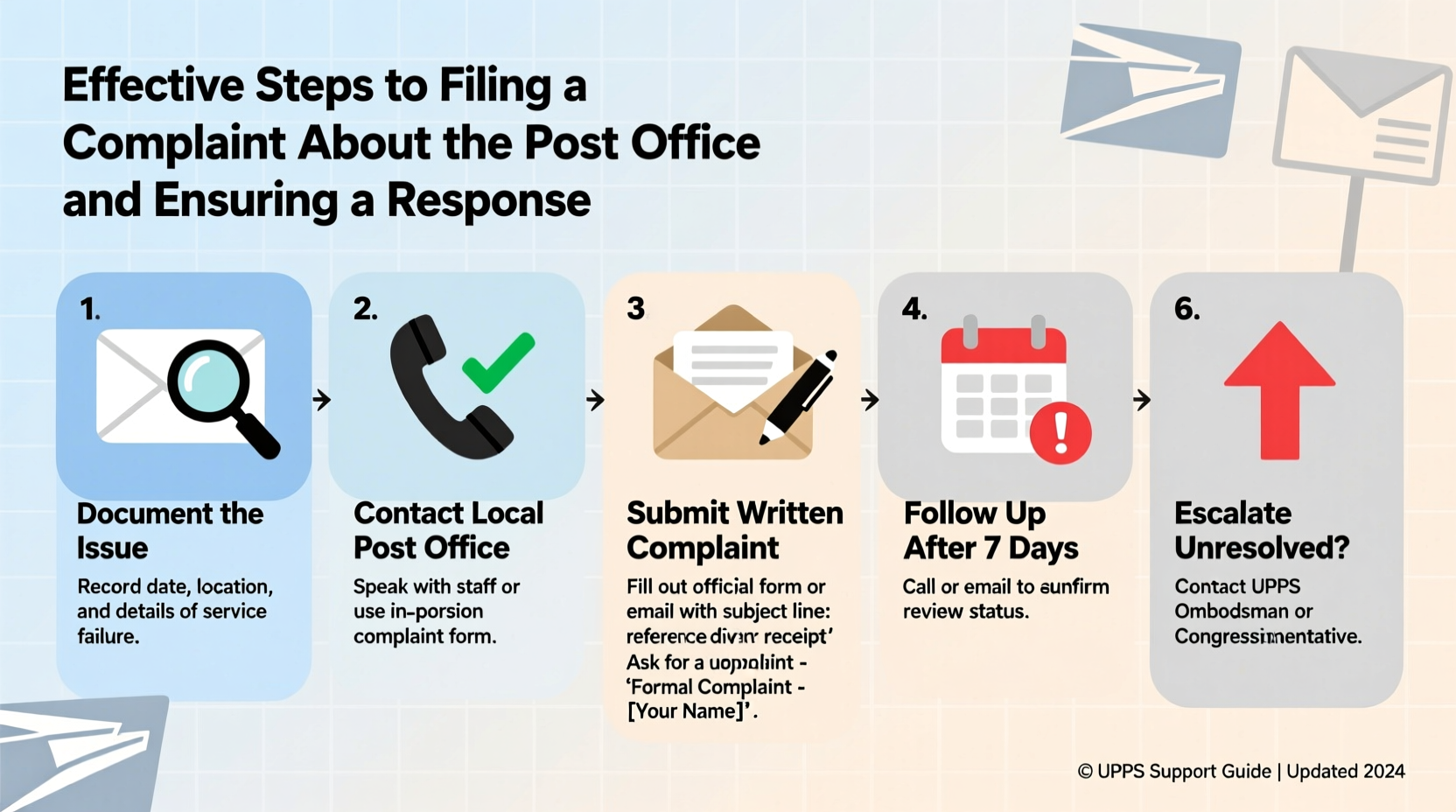
Before reaching out, compile all relevant information related to your issue. A well-documented complaint is far more likely to be taken seriously than a vague or emotional account.
Start by collecting:
- Tracking numbers (if applicable)
- Dates of mailing, expected delivery, and actual delivery (or non-delivery)
- Photos of damaged items or packaging
- Copies of receipts, labels, or proof of postage
- Names of postal workers involved (if known)
- Witness statements or third-party verification (e.g., security footage timestamps)
If your package was insured or required a signature, retrieve those records as well. The more concrete evidence you provide, the harder it is for your complaint to be dismissed.
2. Start with Direct Contact at the Local Post Office
Not every issue requires escalation. Often, speaking directly with the station manager at your local post office resolves the matter quickly. Visit during off-peak hours and request to speak with the Postmaster or Customer Service Supervisor.
Be polite but firm. Present your evidence clearly and state what outcome you’re seeking—refund, investigation, policy change, etc. Many local offices have discretion to issue refunds for missing mail or offer goodwill gestures like free shipping labels.
If you’re uncomfortable visiting in person, call the location and ask for the supervisor. Take note of the date, time, and name of the person you speak with.
“We resolve over 60% of customer concerns at the local level before they become formal complaints.” — U.S. Postal Service Customer Service Report, 2023
3. Escalate to USPS Official Channels
If the local office fails to respond adequately, escalate your complaint through official USPS channels. There are three primary methods:
- USPS Online Complaint Form: Available at usps.com/help/contact-us.htm. This form allows you to submit detailed descriptions, upload attachments, and track response timelines.
- Phone Hotline: Call 1-800-ASK-USPS (1-800-275-8777) and request to file a formal complaint. Ask for a reference number.
- Written Letter: Send a certified letter with return receipt to:
United States Postal Service
Attn: Consumer Affairs
475 L’Enfant Plaza SW, Room 4454
Washington, DC 20260-2200
Your written complaint should include:
- Your full name, address, and contact information
- A clear timeline of events
- Reference numbers (tracking, receipt, complaint ID)
- A specific request (e.g., “I request a refund of $18.50 for undelivered priority mail”)
- A statement that you expect a response within 10 business days
4. Follow Up and Track Response Timelines
USPS aims to respond to formal complaints within 5–10 business days. If you haven’t heard back by day 10, follow up via phone or email. Reference your original submission date and any tracking details.
When following up:
- Remain calm and professional
- Reiterate your request clearly
- Ask for the name and extension of the representative handling your case
Document every interaction. Note the date, time, and summary of each conversation. These logs become critical if further escalation is needed.
Timeline of Effective Action
| Day | Action |
|---|---|
| 0–2 | Contact local post office; gather evidence |
| 3–5 | Submit formal complaint via online form or certified letter |
| 6–10 | Wait for initial response; prepare follow-up |
| 11–12 | Follow up if no reply; escalate if necessary |
| 13+ | Consider external agencies if unresolved |
5. Know When and How to Escalate Beyond USPS
If USPS does not respond satisfactorily after two weeks, or if your issue involves potential legal violations (e.g., mail theft, discrimination), consider external avenues:
- Postal Regulatory Commission (PRC): An independent federal agency that oversees USPS operations. File a complaint at prc.gov.
- U.S. Senate or House Member: Congressional offices often intervene on behalf of constituents. Use your representative’s official website to submit a request for assistance.
- Federal Trade Commission (FTC): If fraud or scams are involved (e.g., fake USPS texts or phishing), report at reportfraud.ftc.gov.
Lawmakers’ offices are especially effective—they receive bulk requests from USPS and often get faster replies than individual consumers.
Mini Case Study: Recovering a Lost Inheritance Document
Sarah M., a resident of Portland, mailed an original will via Priority Mail with insurance and tracking. The package showed “delivered,” but no one at the recipient’s home had received it. After calling the local post office with no resolution, she filed an online complaint with USPS, attaching photos of the receipt and tracking history.
She followed up on day 11 with a certified letter and contacted her congressional representative. Within five days, USPS launched an investigation, confirmed the package was misdelivered, and located it at a nearby annex. Sarah received a full refund for the service and a written apology.
Her success came from persistence, documentation, and strategic escalation—not giving up after the first attempt.
Do’s and Don’ts of Filing a Postal Complaint
| Do’s | Don’ts |
|---|---|
| Keep copies of everything | Assume silence means resolution |
| Be specific about what you want | Use aggressive or threatening language |
| Escalate methodically | Wait indefinitely without follow-up |
| Request reference numbers | Forget to document calls and visits |
FAQ
How long should I wait for a response after filing a complaint?
USPS typically responds within 5–10 business days. If you haven’t heard back by day 10, follow up immediately.
Can I get a refund if my package is lost or significantly delayed?
Yes, if the item was insured or had paid services like Priority Mail Express, you may qualify for a refund. File a claim through the USPS claims portal or via your complaint submission.
Is it worth complaining about minor delays?
For occasional delays due to weather or volume, formal complaints may not yield results. However, if delays are frequent, pattern-based, or affect time-sensitive materials (medication, legal documents), reporting them contributes to broader service monitoring.
Checklist: Filing a Successful Post Office Complaint
- ✅ Gather all evidence (tracking, receipts, photos)
- ✅ Speak with local post office supervisor
- ✅ Submit formal complaint online or by certified mail
- ✅ Include clear description and desired resolution
- ✅ Record dates, names, and reference numbers
- ✅ Follow up after 10 business days if no response
- ✅ Escalate to PRC or congressional office if needed
Conclusion
Filing a complaint about the post office doesn’t have to be a dead-end effort. With organization, clarity, and persistence, you can turn frustration into action. The system works best when users engage it properly—documenting issues, escalating thoughtfully, and holding institutions accountable.
Your voice matters. Whether it’s a single lost letter or a pattern of unreliable service, taking the time to file a structured complaint contributes to better postal standards for everyone. Don’t let poor service go unnoticed. Take action today—your next package depends on it.




 浙公网安备
33010002000092号
浙公网安备
33010002000092号 浙B2-20120091-4
Comments
No comments yet. Why don't you start the discussion?