
A dog’s toenail can split or break during a walk, play session, or even during routine nail trimming. When the quick—the sensitive, blood-rich tissue inside the nail—is damaged, bleeding occurs. While it may look alarming, most cases are manageable at home with prompt action. The key is to stop the bleeding quickly and minimize the risk of infection. With the right knowledge and tools, pet owners can handle this common emergency confidently and effectively.
Why Dog Toenails Bleed and When It’s Serious
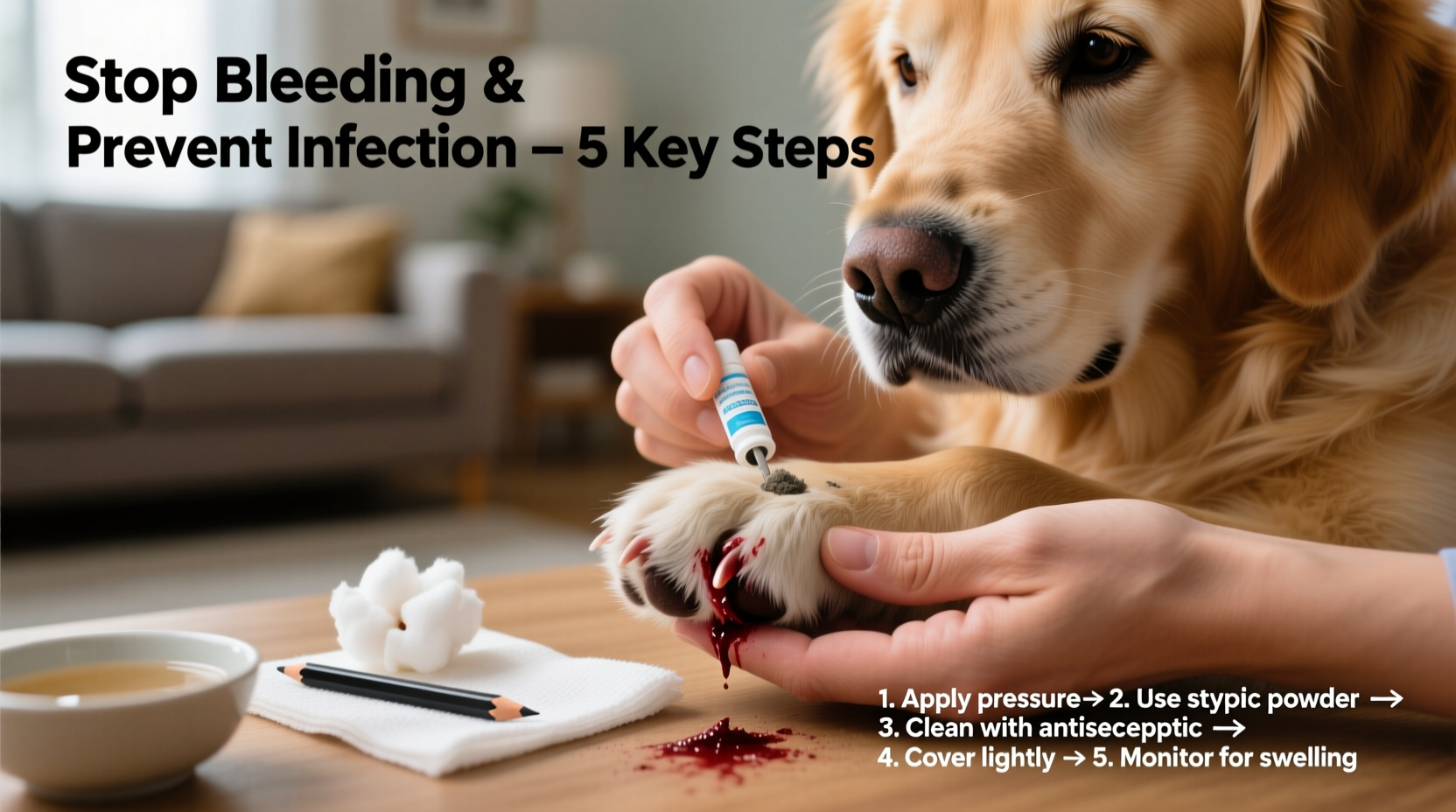
Dog toenails contain a central vein and nerve bundle known as the \"quick.\" In light-colored nails, the quick appears as a pinkish core. In dark nails, it’s harder to see, increasing the risk of cutting too close during grooming. Accidental over-trimming, snagging on carpet or furniture, or running on rough terrain can all cause a nail injury.
Bleeding from a broken or cut toenail is usually minor and stops within minutes with proper care. However, persistent bleeding beyond 20–30 minutes, signs of pain, limping, swelling, or visible bone exposure require immediate veterinary attention. Dogs with clotting disorders or those on certain medications may bleed more severely and need professional intervention.
“Even a small nail injury can become serious if bacteria enter the wound. Immediate first aid and aftercare reduce complications significantly.” — Dr. Laura Simmons, DVM, Small Animal Emergency Specialist
Step-by-Step Guide to Stop the Bleeding
Remaining calm is essential—your dog will pick up on your stress. Follow these steps in order to manage the injury efficiently:
- Restrain your dog gently. Place them on a non-slip surface. Have someone help hold them if needed, especially if they’re in pain or anxious.
- Inspect the nail. Look for breaks, splits, or partial avulsions. If the nail is hanging by a thread, do not pull it off—this can worsen bleeding and damage the nail bed.
- Apply direct pressure. Use a clean gauze pad or cloth and press firmly against the nail for 3–5 minutes without peeking. This allows clot formation.
- Use a styptic agent. If bleeding continues, apply a commercial styptic powder or gel (like Kwik-Stop). Dip the nail into the powder or use a cotton swab to press it onto the tip.
- Alternative solutions if styptic powder isn’t available:
- Flour or cornstarch: Press the nail into a small container of either.
- Pencil graphite: Rub the lead end of a pencil on the nail—historically used due to its mild coagulant properties.
- Bar soap: Gently press the nail into a dry bar of mild soap to form a temporary plug.
- Secure with a bandage if necessary. Once bleeding stops, wrap the paw lightly with a non-stick pad and cohesive wrap (e.g., Vetrap). Ensure it’s not too tight—check for swelling or cold toes every few hours.
Preventing Infection After the Injury
After stopping the bleeding, focus shifts to preventing bacterial contamination. The foot frequently contacts dirty surfaces, making infection a real concern.
- Clean the area daily with a dilute chlorhexidine solution (0.05%–0.1%) using a cotton ball. Avoid hydrogen peroxide or alcohol—they damage tissue and delay healing.
- Monitor for redness, swelling, discharge, or increased sensitivity around the toe.
- Limit outdoor activity and avoid muddy or wet environments for 3–5 days.
- If a bandage is used, change it daily or sooner if soiled.
- Discourage licking by using an Elizabethan collar (E-collar) or soft fabric alternative. Licking introduces bacteria and disrupts healing.
The nail will eventually grow back, but the exposed nail bed remains sensitive for up to two weeks. Full recovery typically takes 1–2 weeks, depending on severity.
Do’s and Don’ts: Quick Reference Table
| Do’s | Don’ts |
|---|---|
| Use styptic powder or cornstarch to stop bleeding | Use human antiseptics like iodine or alcohol |
| Apply gentle pressure for several minutes | Yank off a partially broken nail |
| Clean the area with mild chlorhexidine | Allow your dog to lick the injured toe |
| Bandage only if necessary and check circulation | Wrap the paw too tightly or leave bandages on for over 24 hours without changing |
| Seek veterinary help if bleeding lasts >30 minutes | Ignore signs of infection like pus or swelling |
Real-Life Example: A Late-Night Nail Break
Sophie, a 4-year-old Border Collie, broke a rear toenail while chasing a squirrel in the backyard. Her owner, Mark, noticed her limping and found blood on the patio. He brought her inside, wrapped her in a towel for restraint, and applied cornstarch with firm pressure. After five minutes, the bleeding slowed. He cleaned the area with diluted chlorhexidine, placed a light bandage, and used an E-collar overnight. By morning, Sophie was walking normally. Mark scheduled a vet visit just to be safe—no infection was found, and the nail healed fully in ten days.
This scenario highlights how staying calm and having basic supplies on hand can turn a stressful event into a manageable situation.
Checklist: What to Do When Your Dog’s Nail Starts Bleeding
- ✅ Stay calm and keep your dog quiet
- ✅ Restrain gently to prevent movement
- ✅ Inspect the nail without pulling or twisting
- ✅ Apply direct pressure with gauze for 3–5 minutes
- ✅ Use styptic powder, cornstarch, or flour if bleeding persists
- ✅ Clean the area with mild antiseptic once bleeding stops
- ✅ Apply a light bandage only if needed
- ✅ Prevent licking with an E-collar
- ✅ Monitor for signs of infection over the next week
- ✅ Contact your vet if bleeding doesn’t stop or swelling develops
Frequently Asked Questions
How long should I expect the bleeding to last?
In most cases, bleeding stops within 5–10 minutes with proper pressure and styptic agents. If it continues beyond 20–30 minutes despite treatment, contact your veterinarian immediately.
Can I trim the broken part of the nail myself?
No. Trimming a broken or jagged nail risks cutting into the exposed quick and restarting bleeding. Leave any adjustments to a professional groomer or veterinarian.
Is it normal for my dog to limp after a nail injury?
Yes, mild limping for 24–48 hours is common due to pain and sensitivity. If limping persists beyond three days or worsens, have your dog examined for possible deeper trauma or infection.
Conclusion: Be Prepared, Stay Calm, Act Fast
Accidents happen, but being prepared makes all the difference when your dog suffers a bleeding toenail. Knowing how to stop the bleeding quickly and protect the wound from infection ensures a faster, safer recovery. Keep a well-stocked first aid kit, learn your dog’s nail anatomy, and never underestimate the importance of prevention through regular trims and careful monitoring.
Every dog owner will likely face this situation at some point. By understanding the correct steps and avoiding common mistakes, you can provide immediate relief and peace of mind—for both you and your pet.




 浙公网安备
33010002000092号
浙公网安备
33010002000092号 浙B2-20120091-4
Comments
No comments yet. Why don't you start the discussion?