
Finding a job in today’s competitive market requires more than just sending out resumes. Success often depends on strategy, persistence, and knowing where to access the right support. Whether you're entering the workforce, re-entering after a break, or pivoting careers, leveraging effective tools and guidance can dramatically improve your chances. This guide outlines practical, real-world methods backed by career experts and proven outcomes.
1. Optimize Your Resume and Online Presence
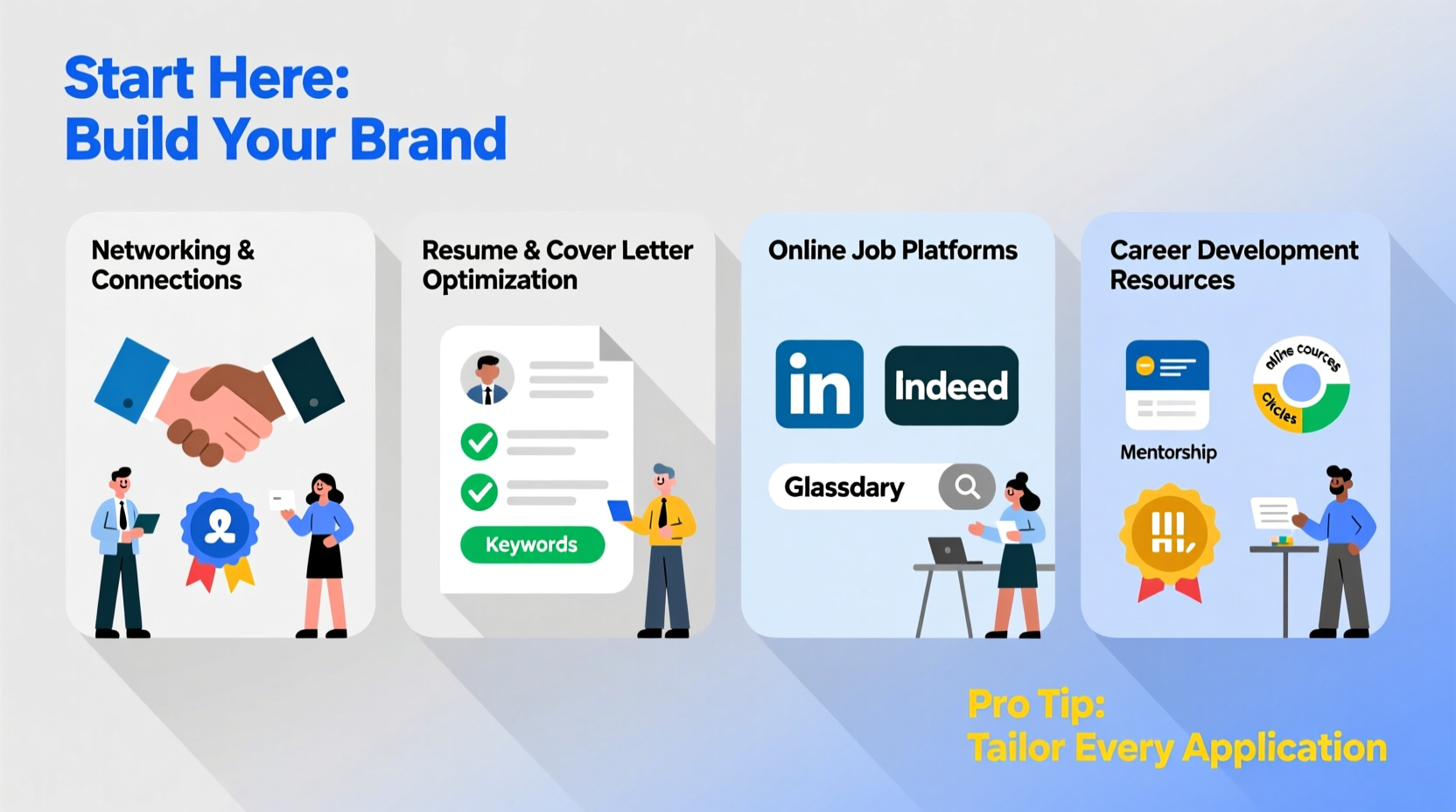
Your resume is often the first impression employers have of you. A well-crafted document that aligns with industry standards and applicant tracking systems (ATS) is non-negotiable. Tailor your resume for each role by incorporating keywords from the job description, highlighting measurable achievements, and using a clean, professional format.
Equally important is your online presence. Recruiters routinely search LinkedIn, personal websites, or even social media profiles. Ensure your LinkedIn profile is complete, up-to-date, and mirrors your resume—while also offering richer context through recommendations, project highlights, and activity posts.
| Do | Don’t |
|---|---|
| Tailor your resume to each job | Use a one-size-fits-all resume |
| Include quantifiable results (e.g., “Increased sales by 30%”) | List only duties without impact |
| Keep design clean and ATS-friendly | Use complex graphics or columns that confuse ATS |
2. Leverage Career Support Services and Resources
Many underutilized resources exist to support job seekers at every level. Government employment agencies, nonprofit organizations, and university alumni networks offer free workshops, resume reviews, mock interviews, and job fairs.
- Local Workforce Centers: Offer no-cost services including career counseling, training programs, and job matching.
- LinkedIn Learning & Coursera: Access skill-building courses often subsidized or free through public libraries or government programs.
- Nonprofits like Goodwill or Urban League: Provide targeted assistance for underserved populations, including digital literacy and interview coaching.
“Job seekers who engage with career centers are 40% more likely to secure employment within three months.” — U.S. Department of Labor, Employment and Training Administration
3. Build Strategic Professional Networks
Over 70% of jobs are filled through networking, according to LinkedIn data. Yet many job seekers focus solely on online applications, missing critical opportunities hidden in personal and professional circles.
Start by mapping your existing network: former colleagues, supervisors, classmates, and even friends’ connections. Reach out with personalized messages expressing your goals and asking for advice—not just job leads. Informational interviews can open doors while building relationships organically.
Attend industry events, virtual webinars, and local meetups. Engage thoughtfully on LinkedIn by commenting on posts, sharing insights, and joining relevant groups. Visibility increases your chances of being remembered when opportunities arise.
Mini Case Study: From Unemployed to Hired in 8 Weeks
Sarah, a marketing professional laid off during a company restructuring, initially applied to over 50 online postings with no responses. Frustrated, she enrolled in a free career workshop offered by her city’s workforce center. There, she rewrote her resume with ATS optimization tips, created a LinkedIn post detailing her skills and job goals, and attended a networking event.
She connected with a former colleague who introduced her to a hiring manager at a mid-sized agency. After an informational chat, Sarah was invited to apply for an open role. With coaching from the center, she aced the interview and received an offer two weeks later. Her success wasn’t luck—it was strategy combined with support.
4. Utilize Job Search Platforms Effectively
Not all job boards are created equal. While general platforms like Indeed and Glassdoor are useful, niche sites often yield better results. Consider these specialized resources:
- FlexJobs: Curated remote and flexible roles, ideal for those seeking work-life balance.
- AngelList: Startup-focused positions with equity opportunities.
- USAJobs.gov: Federal government roles with strong benefits and stability.
- Dice: Tech-specific roles with advanced filtering for skills and clearance levels.
To stand out, set up job alerts with precise keywords and save customized searches. Apply early—many recruiters make decisions within 48 hours of posting.
Step-by-Step Guide: Maximizing Job Board Success
- Identify 2–3 primary job boards relevant to your field.
- Create detailed, keyword-rich profiles on each platform.
- Set up email alerts for roles matching your target title, location, and experience level.
- Limit applications to 5 high-priority jobs per day, fully customizing each submission.
- Track applications in a spreadsheet (Company, Role, Date Applied, Contact, Follow-Up Date).
- Follow up with a polite email or LinkedIn message after 7–10 days if no response.
5. Prepare Thoroughly for Interviews and Assessments
Landing an interview is a milestone, but preparation determines success. Research the company’s mission, culture, recent news, and key challenges. Practice behavioral questions using the STAR method (Situation, Task, Action, Result) to deliver concise, impactful answers.
Many employers now use pre-employment assessments—personality tests, coding challenges, or situational judgment tests. Familiarize yourself with common formats through free practice tools on sites like JobTestPrep or HackerRank.
After the interview, send a personalized thank-you email within 24 hours, reiterating your interest and referencing a key discussion point.
“Candidates who send thoughtful follow-ups are twice as likely to be remembered positively—even if not selected.” — Lisa Chen, HR Director at TechForward Inc.
FAQ
How long does the average job search take?
The average job search lasts between 3 to 6 months, depending on industry, location, and experience level. However, structured efforts—such as daily applications, networking, and skill development—can shorten this timeline significantly.
Should I apply if I don’t meet all the job requirements?
Yes. Many job descriptions list ideal qualifications, not strict requirements. If you meet about 60–70% of the criteria and can demonstrate transferable skills, apply confidently. Recruiters often prioritize potential and cultural fit over exact matches.
Is it worth paying for a resume writing service?
It depends. Reputable services with certified writers (CPRW or PARW/CC credentials) can be valuable, especially for senior roles or career transitions. However, many free alternatives—like university career centers or platforms like Canva and Novoresume—offer high-quality templates and guidance at no cost.
Action Plan Checklist
- Update resume and LinkedIn profile
- Identify and contact 3 people in your network for advice
- Apply to 5 targeted jobs with customized materials
- Attend 1 virtual or in-person networking event
- Complete 1 free course to strengthen a key skill
- Practice 3 common interview questions aloud
- Set up job alerts on 2 major platforms
Conclusion
Finding a job doesn’t have to be a solitary struggle. By combining self-driven effort with smart use of resources—career centers, networking, optimized applications, and continuous learning—you position yourself for real success. The most effective job seekers aren’t just persistent; they’re strategic and supported.




 浙公网安备
33010002000092号
浙公网安备
33010002000092号 浙B2-20120091-4
Comments
No comments yet. Why don't you start the discussion?