
Study guides are more than just summaries—they are strategic tools that shape how the brain processes, organizes, and retrieves information. When built with intention and grounded in cognitive science, a well-crafted study guide can dramatically improve comprehension, accelerate review, and strengthen long-term retention. Yet many students approach them as last-minute notes or copy-paste sessions from textbooks, missing their full potential. The difference lies not in volume but in design: structure, clarity, and active engagement determine effectiveness.
Understand the Science Behind Effective Learning
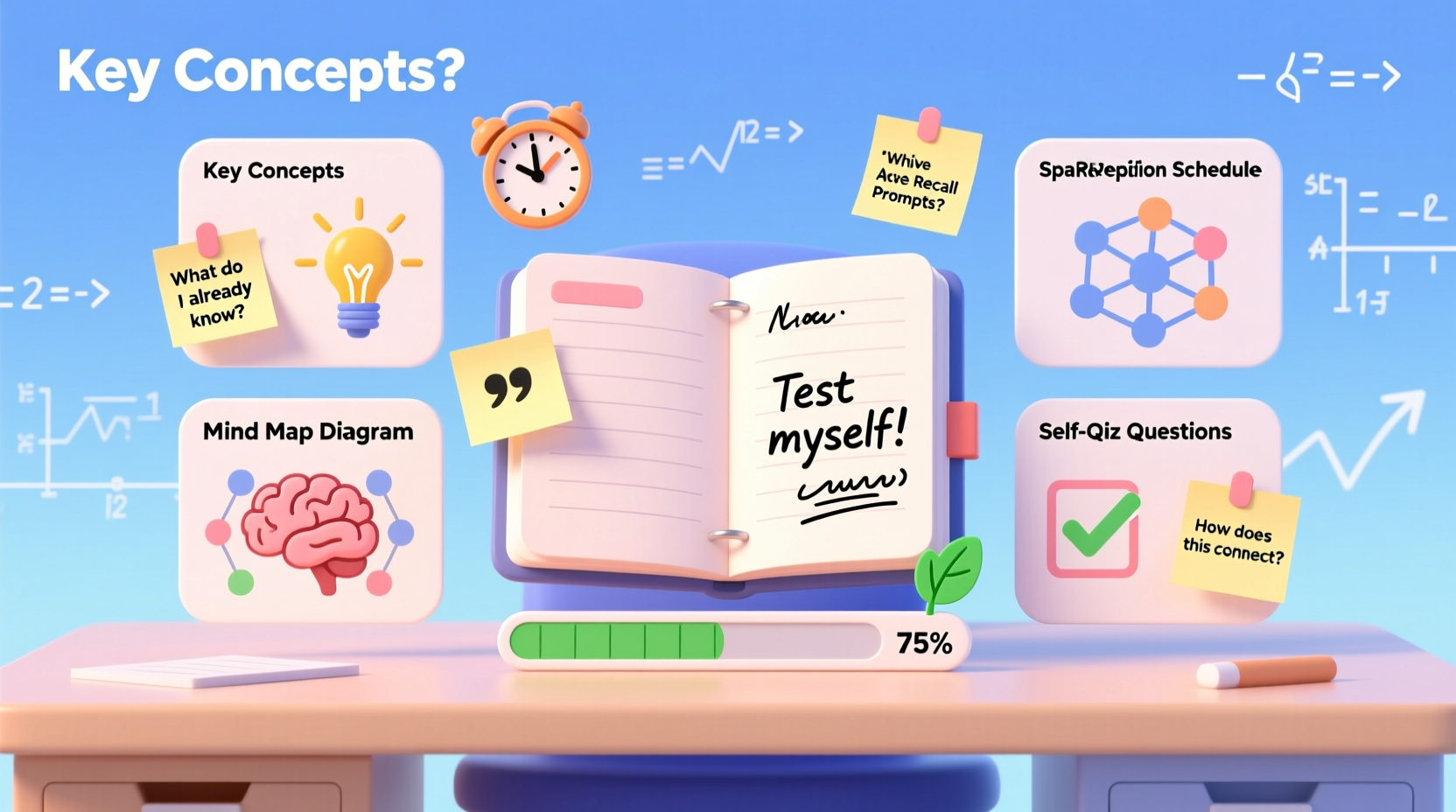
The most powerful study guides align with how the human brain learns best. Cognitive psychology identifies several key principles that enhance memory formation and recall. One of the most influential is the testing effect, which shows that actively retrieving information strengthens neural pathways more than passive rereading. Another is spaced repetition, where reviewing material at increasing intervals improves long-term retention. Additionally, elaborative encoding—linking new knowledge to existing mental frameworks—makes information easier to retrieve under pressure.
A study guide should not merely reflect what was taught; it should reframe it in ways that prompt retrieval, encourage connections, and simulate real-world application. This means avoiding verbatim copying and instead focusing on transformation: turning lectures into questions, diagrams, analogies, and self-tests.
“Passive review creates familiarity, but only active processing builds mastery.” — Dr. Barbara Oakley, Professor of Engineering and Author of *Learning How to Learn*
Step-by-Step Guide to Building High-Impact Study Guides
Creating an effective study guide is a deliberate process. Follow this structured approach to maximize learning outcomes:
- Extract Core Concepts: After each lecture or reading, identify 3–5 key ideas. Ask: What must I understand to explain this topic confidently?
- Organize Hierarchically: Group related concepts into categories. Use headings and subheadings to mirror course structure.
- Convert to Questions: Turn each concept into a question (e.g., “What causes synaptic plasticity?”). This primes your brain for retrieval practice.
- Summarize in Your Own Words: Avoid copying definitions. Paraphrasing forces deeper processing and reveals gaps in understanding.
- Incorporate Visuals: Sketch flowcharts, mind maps, or comparison tables. Visual organization aids pattern recognition.
- Add Examples and Applications: Include real-world scenarios or practice problems to contextualize abstract ideas.
- Build Self-Tests: At the end of each section, add 2–3 quiz questions you can use during spaced review sessions.
- Review and Revise Weekly: Update your guide regularly. Add insights from discussions, assignments, or mistakes on quizzes.
Optimize Structure with Purposeful Formatting
The layout of your study guide directly influences usability and cognitive load. A cluttered or disorganized format discourages review. Instead, apply formatting principles that support clarity and quick navigation.
| Element | Purpose | Best Practice |
|---|---|---|
| Headings & Subheadings | Create information hierarchy | Use consistent formatting (e.g., bold for topics, italics for subtopics) |
| Bullet Points | Break down complex ideas | Limited to 5–7 items per list; avoid long paragraphs |
| Tables | Compare and contrast concepts | Ideal for timelines, classifications, or pros/cons |
| Mind Maps | Show relationships between ideas | Best for interconnected topics like biological systems or historical events |
| Margin Notes | Highlight warnings, mnemonics, or personal insights | Use sparingly to draw attention to high-yield content |
Consistency matters. Whether digital or handwritten, maintain the same structure across subjects so your brain knows where to find specific types of information. This reduces friction during review and supports faster retrieval.
Real Example: From Struggling Student to Top Performer
Jamal, a second-year biology major, consistently scored in the low 70s on exams despite hours of rereading his notes. He decided to overhaul his approach before midterms. Instead of highlighting textbooks, he created a modular study guide for each unit. For the nervous system module, he began by listing core objectives from the syllabus. Then, he transformed each lecture slide into a question—such as “How does myelination affect signal transmission?”—and answered it in plain language beneath.
He added a flowchart showing neuron communication stages and used red ink only for common misconceptions (e.g., “Action potentials are not electrical currents like wires”). Every weekend, he covered the answers and tested himself. By exam day, Jamal could reconstruct the entire system from memory. His score jumped to 94%, and he cut total study time by nearly 40%. The change wasn’t effort—it was strategy.
Checklist: Build a Smarter Study Guide in One Session
- ☐ Identify the 3–5 most important concepts from the material
- ☐ Organize them under clear, descriptive headings
- ☐ Rewrite each concept as a question followed by a concise answer
- ☐ Insert at least one visual (diagram, chart, or table)
- ☐ Add 2–3 self-test questions at the end
- ☐ Highlight tricky areas or frequent mistakes in margin notes
- ☐ Save or store in a consistent location for future review
Frequently Asked Questions
How long should a study guide be?
There’s no fixed length, but aim for conciseness. A single-topic guide should fit on 1–2 pages. Prioritize clarity over completeness—your goal is to distill, not reproduce, the material.
Should I make study guides before or after class?
Use both approaches. Before class, create a skeleton guide based on assigned readings to prime your brain. After class, refine it with lecture insights. This dual-phase method reinforces attention and retention.
Are digital or paper study guides better?
It depends on preference and context. Digital guides allow easy editing, searchability, and integration with flashcards. Paper guides reduce distractions and may enhance memory through motor engagement. Choose the format that supports consistent use.
Conclusion: Turn Review into Mastery
A study guide is not a passive archive—it’s an active instrument of learning. When designed with cognitive principles in mind, it transforms studying from memorization to mastery. The strategies outlined here—question-based formatting, visual structuring, self-testing, and iterative revision—are not shortcuts, but upgrades to how you engage with knowledge. Start small: pick one upcoming topic and apply these steps deliberately. Over time, your ability to learn efficiently and retain deeply will grow not by chance, but by design.




 浙公网安备
33010002000092号
浙公网安备
33010002000092号 浙B2-20120091-4
Comments
No comments yet. Why don't you start the discussion?