
Family conflicts are inevitable. Whether it’s a disagreement over responsibilities, values, or personal boundaries, tensions at home can escalate quickly—especially when emotions run high. In some cases, the healthiest decision is to temporarily remove yourself from the environment to prevent further harm. Knowing how to exit a volatile situation calmly and return later with clarity is not a sign of weakness; it’s an act of emotional maturity and self-preservation. This guide outlines practical, proven strategies for disengaging from conflict safely, managing your emotions, and returning to resolve issues constructively.
When Leaving Home Is Necessary
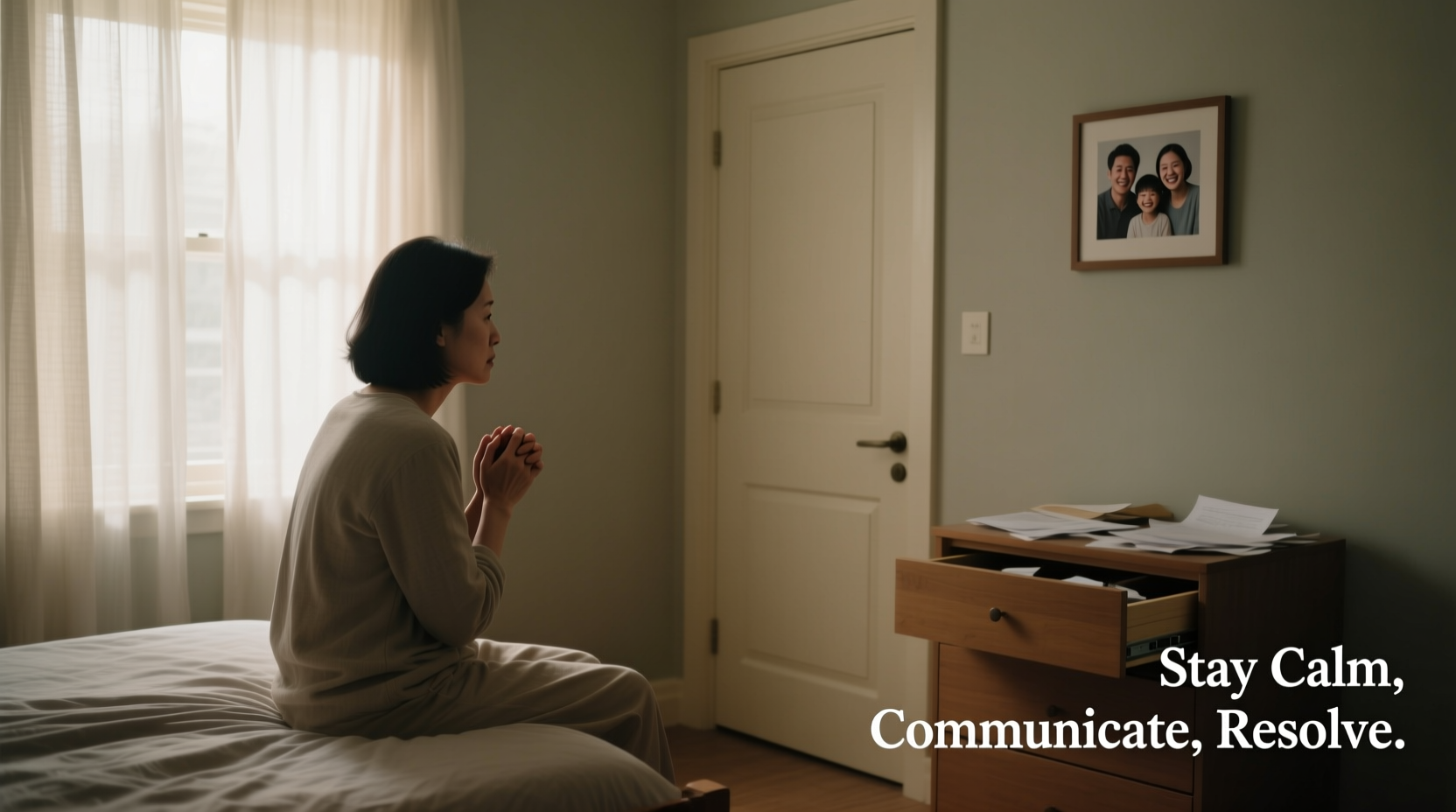
There are moments when staying in a heated household environment risks emotional or physical safety. This doesn’t mean abandoning responsibility—it means choosing de-escalation over confrontation. Temporary separation allows all parties space to cool down, reflect, and re-engage with a clearer mindset. This is particularly crucial in homes where communication patterns are reactive rather than reflective.
Leaving is appropriate when:
- Voices are raised to the point of shouting or screaming.
- Threats—verbal or implied—are made.
- You feel physically unsafe or emotionally overwhelmed.
- Repeated attempts to talk rationally are ignored.
“Creating physical distance during emotional flooding isn't avoidance—it's regulation. The brain cannot problem-solve under stress.” — Dr. Lena Torres, Clinical Psychologist
Step-by-Step Guide to Leaving Safely and Respectfully
Walking away from conflict requires intentionality. Done poorly, it can be perceived as abandonment or disrespect. Done well, it models emotional regulation and respect for boundaries. Follow this sequence to exit a tense situation without escalating it:
- Pause and breathe: Take three deep breaths before speaking. This interrupts the fight-or-flight response and creates mental space.
- Announce your intent clearly: Say, “I care about this conversation, but I’m too upset to speak well right now. I need 30 minutes to calm down. Can we talk after?”
- Choose a safe exit: If possible, go to another room. If the environment feels threatening, leave the house entirely—go for a walk, drive, or visit a trusted neighbor.
- Engage in grounding activities: Walk mindfully, listen to calming music, journal, or practice box breathing (inhale 4 sec, hold 4 sec, exhale 4 sec, hold 4 sec).
- Return with purpose: Re-engage only when you’re calm. Use “I” statements: “I felt overwhelmed earlier. I’d like to continue our talk if you’re ready.”
Conflict Resolution Strategies After Reconnecting
Returning to the conversation is where real resolution begins. The goal is not to win an argument but to understand and be understood. Use these techniques to foster peaceful dialogue:
- Active listening: Focus on understanding, not rebutting. Nod, maintain eye contact, and paraphrase what the other person says: “So you’re saying you felt disrespected when I left suddenly?”
- Use non-violent communication (NVC): Structure your message as Observation → Feeling → Need → Request. Example: “When I raised my voice (observation), I felt ashamed (feeling) because I value respect (need). Could we agree on a signal when one of us needs a break?”
- Avoid blame language: Replace “You always ignore me” with “I feel unheard when I’m interrupted.”
- Agree on ground rules: No yelling, no name-calling, no bringing up past grievances. Reset the tone before resuming discussion.
Do’s and Don’ts of Post-Conflict Communication
| Do | Don’t |
|---|---|
| Use “I” statements to express feelings | Say “you” statements that sound accusatory |
| Take breaks when emotions rise | Insist on finishing the conversation immediately |
| Validate the other person’s perspective | Dismiss their feelings as “overreacting” |
| Focus on solutions, not blame | Dwell on who started the argument |
| Follow up after resolution | Assume the issue is permanently closed |
Real Example: Calming the Storm in a Shared Household
Jamal, a 28-year-old living with his younger sister and mother, often found himself in arguments about cleanliness and shared responsibilities. One evening, after repeated reminders about dishes went unheeded, he raised his voice. His sister shouted back, and his mother intervened, escalating the tension.
Remembering a conflict resolution workshop, Jamal paused, said, “I need to step out—I don’t want to say something I’ll regret,” and walked to a nearby park. During his 40-minute walk, he journaled his frustration and identified his core need: fairness in chores. When he returned, he proposed a weekly chore chart using a shared app. The family agreed. Over time, open conversations replaced explosive arguments.
This shift didn’t happen overnight. But by modeling calm departure and constructive return, Jamal changed the household dynamic.
Essential Checklist for Peaceful Conflict Management
- ☑ Recognize early signs of emotional escalation (clenched jaw, rapid heartbeat)
- ☑ Announce your need for a break respectfully
- ☑ Leave the immediate space if necessary—walk, drive, or find a quiet place
- ☑ Practice a calming technique (breathing, mindfulness, movement)
- ☑ Return only when emotionally regulated
- ☑ Initiate conversation with empathy and openness
- ☑ Focus on mutual understanding, not winning
- ☑ Follow up within 24 hours to close unresolved loops
Frequently Asked Questions
Isn’t leaving during an argument just avoiding the problem?
No—when emotions are intense, the prefrontal cortex (responsible for rational thought) becomes impaired. Stepping away is not avoidance; it’s strategic regulation. Avoidance is failing to return to the conversation. Purposeful breaks enable better problem-solving later.
What if the other person won’t talk when I come back?
Respect their timing. Say, “I’m ready when you are,” and give space. You can also write a brief note expressing your willingness to listen. Pushing too hard can reignite conflict. Patience builds trust.
How do I know if it’s time to leave home permanently?
If conflict involves abuse—emotional, verbal, or physical—temporary exits may not be enough. Persistent fear, control, or danger signals a need for long-term change. Seek support from counselors, shelters, or trusted friends. Safety always comes first.
Conclusion: Turning Conflict into Connection
Leaving home during a conflict isn’t surrender—it’s strategy. The ability to disengage with dignity, regulate your emotions, and return with compassion transforms destructive cycles into opportunities for growth. Every household has friction, but peace isn’t the absence of conflict; it’s the presence of respectful repair.
Start small. Next time tension rises, try a five-minute pause. Breathe. Reflect. Return with kindness. These moments build resilience—not just for you, but for everyone in your home.




 浙公网安备
33010002000092号
浙公网安备
33010002000092号 浙B2-20120091-4
Comments
No comments yet. Why don't you start the discussion?