
In today’s fast-paced digital workplace, your inbox is a battleground for attention. A poorly written opening line can send your message straight to the “read later” pile—often never to be seen again. On the other hand, a strong, thoughtful beginning in an official email can immediately establish credibility, spark interest, and lay the foundation for meaningful communication. The first few sentences are not just formalities—they are strategic tools that shape how your message is received.
Whether you’re reaching out to a senior executive, pitching a client, or coordinating with a cross-functional team, the way you open your email influences tone, perception, and response rate. This guide explores actionable, research-backed techniques to craft openings that command attention while fostering trust and connection from the very first line.
The Psychology Behind First Impressions in Email
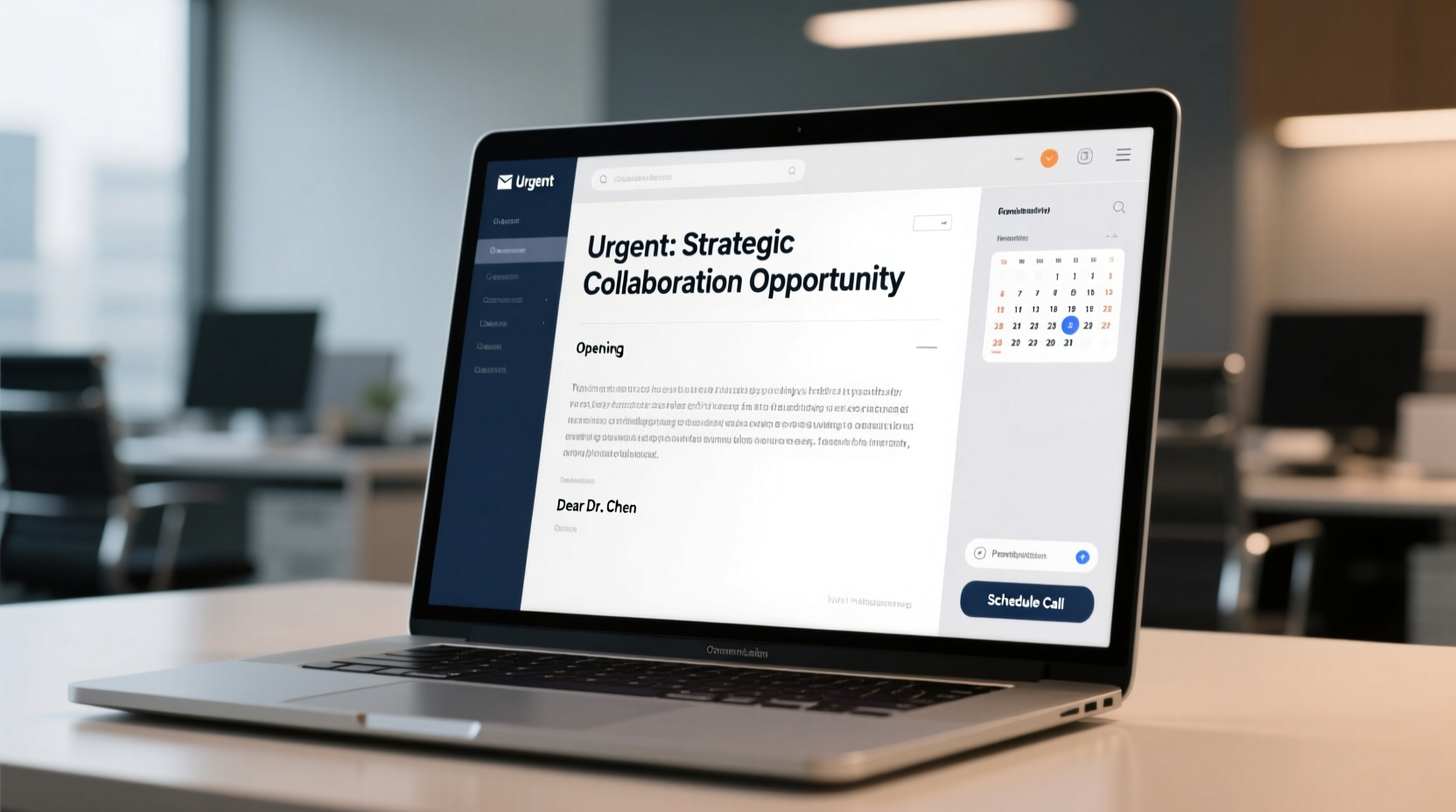
Email may seem impersonal, but human psychology still governs how we respond to messages. Studies in organizational behavior show that recipients form judgments about an email’s importance and the sender’s professionalism within the first 5–7 seconds. That window is dominated by the subject line and the opening sentence.
A compelling opener taps into three key psychological drivers: relevance, respect, and recognition. Relevance means showing the recipient why this message matters to them personally or professionally. Respect is conveyed through tone and brevity—acknowledging their time and position. Recognition involves referencing prior interactions, shared goals, or mutual connections, which activates social reciprocity.
“People don’t ignore emails because they’re busy—they ignore emails that don’t make it clear why they should care.” — Dr. Linda Nguyen, Organizational Communication Researcher, Stanford University
Understanding these principles allows you to move beyond generic greetings like “I hope this email finds you well” and instead create openings that are both human and purposeful.
Elements of a High-Impact Opening Line
An effective opening balances clarity, warmth, and intent. It should accomplish three things: identify the purpose quickly, reflect awareness of the recipient’s context, and invite continued reading. Below are the core components of a powerful introduction:
- Personalization: Use the recipient’s name and reference something specific—recent work, a shared project, or a common contact.
- Immediate Value: State what’s in it for them early. Are you offering insight, solving a problem, or making a request that aligns with their goals?
- Tone Alignment: Match the level of formality to your relationship and industry norms without sounding stiff or overly casual.
- Conciseness: Avoid long-winded preambles. Get to the point within two sentences.
Step-by-Step Guide to Crafting Your Opening
Creating a standout email start doesn’t have to be guesswork. Follow this five-step process to ensure every official email begins with impact:
- Identify the Core Purpose: Ask yourself: What do I want the recipient to know, feel, or do after reading this email? Be specific.
- Research the Recipient: Check recent news, LinkedIn updates, or past correspondence. Look for hooks—announcements, achievements, or ongoing projects.
- Choose Your Hook: Start with one of the following: a compliment tied to their work, a relevant question, a shared goal, or a brief acknowledgment of a challenge they face.
- Draft with Precision: Write 2–3 versions of your opening sentence. Trim unnecessary words. Replace passive phrases with active ones.
- Test the Tone: Read it aloud. Does it sound respectful yet confident? Would you respond if you received it?
Do’s and Don’ts of Official Email Openers
| Do’s | Don’ts |
|---|---|
| “Congrats on the successful product launch last week—your team’s agility under tight deadlines was impressive.” | “I’m reaching out because I need something from you.” |
| “Given your focus on improving customer retention, I wanted to share a quick insight from our latest survey data.” | “This might be a long shot, but…” (undermines confidence) |
| “Following up on John’s note about expanding into APAC—here are three market-entry options worth exploring.” | “Sorry to bother you…” (apologizing weakens authority) |
| “I appreciate your time on the call yesterday. To build on what we discussed, here’s a proposed timeline for implementation.” | “Hope you’re doing great!” (generic and overused) |
Real Example: Turning a Cold Outreach Into a Warm Connection
Sophia, a business development manager at a SaaS startup, needed to contact a director at a Fortune 500 company with no prior relationship. Her initial draft began with: “Dear Mr. Thompson, I’m writing to introduce our platform.” It went unanswered.
She revised it using a rapport-building strategy:
Dear Mr. Thompson,
I noticed your recent keynote at the TechFuture Summit highlighted the challenge of scaling AI integration across legacy systems—a pain point we’ve helped companies like yours resolve with automated workflow mapping.
I’d welcome 15 minutes to share a brief case study that aligns with your current infrastructure goals.
The result? A reply within four hours requesting the case study and scheduling a follow-up meeting. The difference wasn’t the product—it was the opening. By demonstrating research, relevance, and respect, Sophia positioned herself as a problem-solver, not just another salesperson.
Checklist: Build Stronger Email Openings in Minutes
Use this checklist before sending any official email:
- ✅ Used the recipient’s name correctly
- ✅ Referenced a recent event, achievement, or shared context
- ✅ Stated the purpose clearly in the first two sentences
- ✅ Aligned tone with the recipient’s role and culture
- ✅ Avoided filler phrases (“I hope you’re well,” “Just checking in”)
- ✅ Eliminated apologies or self-doubt language
- ✅ Kept the opening under 50 words
Frequently Asked Questions
How personal should I get in a professional email opening?
Strive for professional warmth, not familiarity. Mentioning a recent talk they gave, a company milestone, or a mutual contact is appropriate. Avoid personal details unless previously discussed. The goal is relevance, not intimacy.
What if I don’t know anything about the recipient?
Do light research. Check their LinkedIn, company website, or recent press releases. Even a simple observation like “Your company’s new sustainability initiative caught my attention” shows effort and sets you apart from mass outreach.
Is it okay to start with a question?
Yes—but only if it’s insightful and easy to answer. Instead of “Do you have time to chat?” try “Have you explored automation tools for reducing onboarding delays?” A thoughtful question invites engagement without burdening the recipient.
Conclusion: Make Every First Impression Count
The beginning of an official email is more than a greeting—it’s a strategic moment that determines whether your message is read, acted upon, or ignored. By applying psychological insights, structuring your openings with intention, and avoiding common pitfalls, you transform routine communication into opportunities for influence and relationship-building.
Great email writing isn’t about perfection; it’s about precision and empathy. Each opener is a chance to demonstrate that you value the recipient’s time, understand their world, and have something meaningful to contribute.




 浙公网安备
33010002000092号
浙公网安备
33010002000092号 浙B2-20120091-4
Comments
No comments yet. Why don't you start the discussion?