
In a world where financial pressure is rising and “get rich quick” schemes flood social media, the desire to earn substantial income fast is understandable. But speed doesn’t have to mean risk. While scams promise overnight wealth with little effort, real opportunities require strategy, hustle, and smart decision-making. The truth is, it’s possible to generate meaningful income in a short time—without compromising your integrity or falling victim to fraud.
This guide outlines practical, proven methods that prioritize legitimacy, scalability, and sustainability. These aren't magic formulas—they’re grounded in real-world success stories, market demand, and disciplined execution.
Leverage High-Demand Freelance Skills
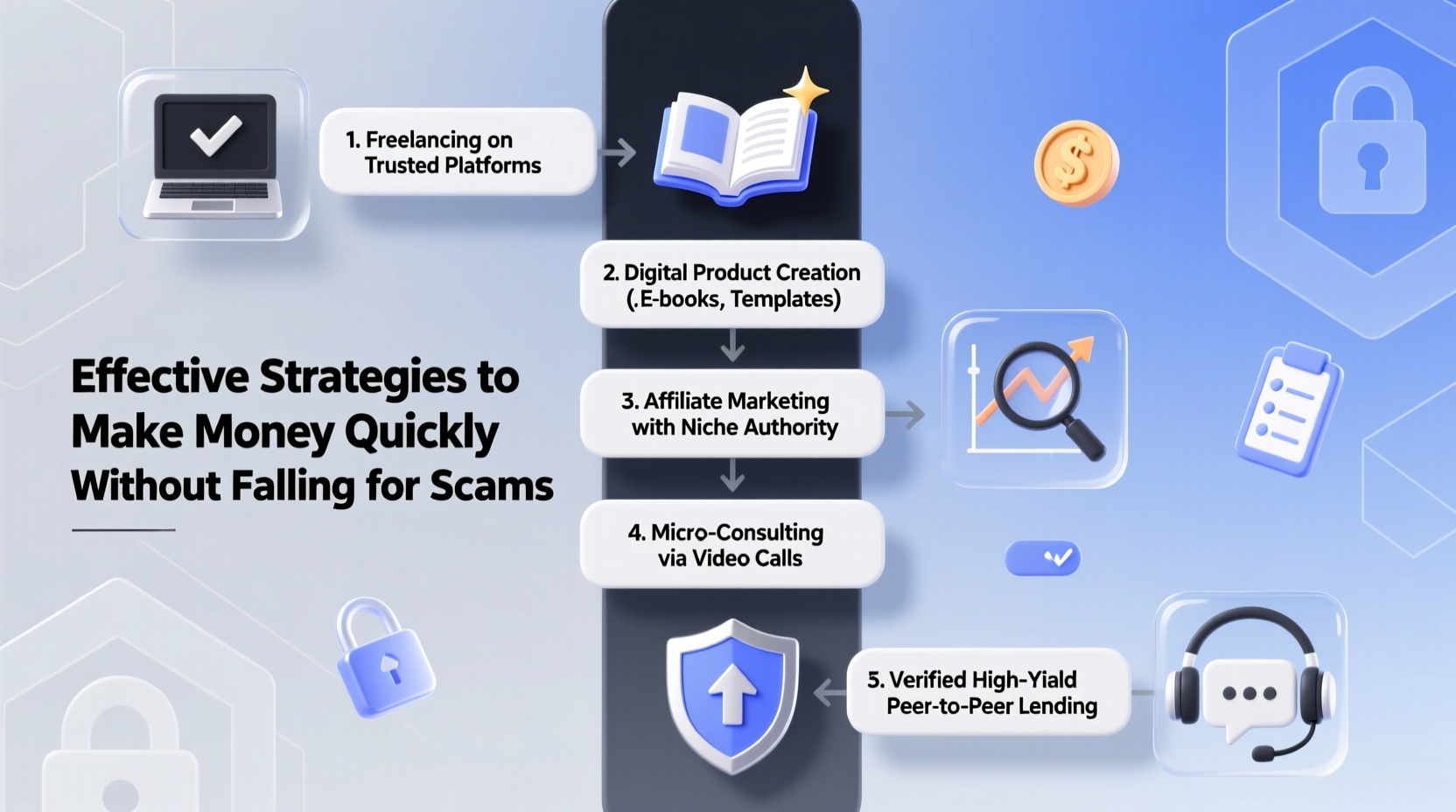
If you already possess marketable skills—writing, graphic design, coding, video editing, or digital marketing—you can turn them into immediate income. Platforms like Upwork, Fiverr, and Toptal allow skilled individuals to connect directly with clients needing urgent work completed.
The key is positioning. Instead of offering generic services, focus on high-value niches: landing page copywriting, Shopify store setup, or AI prompt engineering. These specialties often command rates between $50–$200 per hour, especially when delivered quickly and professionally.
Start by bidding aggressively on urgent jobs (often marked as “immediate start” or “24-hour delivery”). Clients willing to pay premiums for speed are abundant during product launches, marketing pushes, or website overhauls.
Flip Undervalued Items for Profit
Flipping—buying low and selling high—is one of the most accessible ways to generate quick cash. Unlike passive investing, flipping offers near-term returns when executed correctly. Common categories include electronics, furniture, collectibles, and even domain names.
For example, purchasing used iPhones from local buy-sell-trade groups and reselling them on eBay or Swappa after minor refurbishment (cleaning, battery replacement) can yield 30–70% profit margins. Similarly, thrift stores often carry designer clothing or vintage gear priced far below market value.
“Flipping isn’t gambling—it’s arbitrage. You profit by spotting inefficiencies in local markets.” — Marcus Tran, Reseller & E-commerce Consultant
To scale this method, use tools like eBay’s sold listings filter to research recent sale prices and avoid overpaying. Focus on items with consistent demand and low shipping weight to maximize return on effort.
Launch a Micro-Service with Immediate Turnaround
Micro-services are small, hyper-focused offerings that solve a specific problem quickly. Examples include resume editing, LinkedIn profile optimization, logo design, or Amazon listing descriptions. Because they take under 24 hours to complete, clients are often willing to pay upfront.
Here’s how to set one up in less than a day:
- Identify a pain point people will pay to fix (e.g., poor job search results).
- Create a simple service package (e.g., “Resume Revamp – 24-Hour Delivery” for $97).
- Promote it locally via Facebook Groups, Reddit (r/forhire), or Nextdoor.
- Deliver exceptional quality to encourage referrals and repeat business.
This model works because it combines speed, clarity, and perceived value. A well-formatted resume could land someone a job worth tens of thousands—making a $100 fee feel trivial.
Avoiding Scams: Red Flags to Watch For
When money is tight, desperation clouds judgment. Scammers exploit urgency with promises of easy income through fake check schemes, pyramid structures, or “secret systems.” Knowing what to avoid is just as important as knowing what to pursue.
| Red Flag | What It Means | Safe Alternative |
|---|---|---|
| “Pay to start” opportunities | Legitimate work doesn’t require upfront fees. | Finding clients organically or through reputable platforms. |
| Guaranteed returns with no risk | No investment or business is risk-free. | Focus on skill-based income with controllable outcomes. |
| Overly complex compensation plans | Often a sign of multi-level marketing disguised as entrepreneurship. | Direct sales of products or services with transparent pricing. |
| Vague job descriptions (“manage our international accounts”) | May involve laundering money unknowingly. | Clear, defined roles with verifiable companies. |
If an offer sounds too good to be true, pause. Research the company, look for reviews on the BBB or Trustpilot, and consult forums like r/scams on Reddit before engaging.
Real Example: From Side Hustle to $5,000 in 30 Days
Jamie, a former retail worker in Denver, needed $3,000 within six weeks to cover unexpected medical bills. With no savings, she turned to flipping furniture. She started by visiting thrift stores and estate sales every weekend, focusing on solid wood dressers, mid-century lamps, and leather chairs.
She spent under $400 total on five pieces, cleaned and refinished them at home using YouTube tutorials, and listed them on Facebook Marketplace and OfferUp. By staging photos well and writing compelling descriptions, all items sold within two weeks for a combined $2,800. Encouraged, she reinvested profits into higher-ticket items—a vintage record player and a refurbished laptop—and cleared another $2,200.
In one month, Jamie earned $5,000, avoided debt, and launched a small e-commerce side hustle. Her secret? Speed, reinvestment, and treating each flip as a mini-business.
Action Plan: 7-Day Money-Making Timeline
You don’t need months to see results. Here’s a realistic 7-day plan to start earning:
- Day 1: Audit your skills or inventory. What can you sell or offer?
- Day 2: Choose one method (freelancing, flipping, micro-service).
- Day 3: Set up profiles (Fiverr, eBay, Marketplace) or create service packages.
- Day 4: Make first outreach—apply to 5 freelance jobs or list 3 items for sale.
- Day 5: Optimize based on initial feedback (adjust pricing, improve photos).
- Day 6: Scale efforts—reinvest profits or pitch higher-paying clients.
- Day 7: Track earnings and refine your approach for week two.
FAQ
Can I really make serious money in under a month?
Yes—if you act strategically. People have earned $2,000–$10,000 in 30 days through flipping, freelancing, or launching micro-services. Success depends on effort, market choice, and execution speed, not luck.
What if I don’t have any skills or money to start?
You can begin with nearly zero investment. Offer free services to friends or nonprofits to build a portfolio. Use public libraries for computer access. Start flipping by reselling unused items from your home. Bootstrap methods exist for every budget.
Are online surveys or apps like “money-making games” worth it?
No. Most pay pennies per hour and waste time better spent on scalable activities. Stick to methods where your effort directly correlates with income—like selling, creating, or solving problems.
Conclusion: Build Momentum, Not Dependency
Making money quickly isn’t about shortcuts—it’s about smart leverage. Whether you're monetizing existing skills, capitalizing on market gaps, or turning clutter into cash, real income comes from action, not algorithms promising free money.
The strategies outlined here don’t rely on connections, inheritance, or luck. They rely on initiative. Each small win compounds: your first $100 leads to tools for your next flip, your first client referral opens doors to others, and your growing confidence fuels persistence.




 浙公网安备
33010002000092号
浙公网安备
33010002000092号 浙B2-20120091-4
Comments
No comments yet. Why don't you start the discussion?