
Workplace conflict is inevitable. Differing personalities, work styles, and competing priorities can create tension even in the most cohesive teams. For managers, the ability to identify, address, and resolve conflict isn't just a leadership skill—it's a critical component of maintaining productivity, morale, and psychological safety. Left unmanaged, conflict can escalate into disengagement, turnover, or toxic culture. But when handled effectively, it can lead to innovation, stronger relationships, and improved processes. The key lies in proactive, empathetic, and structured intervention.
Understand the Root Causes of Conflict
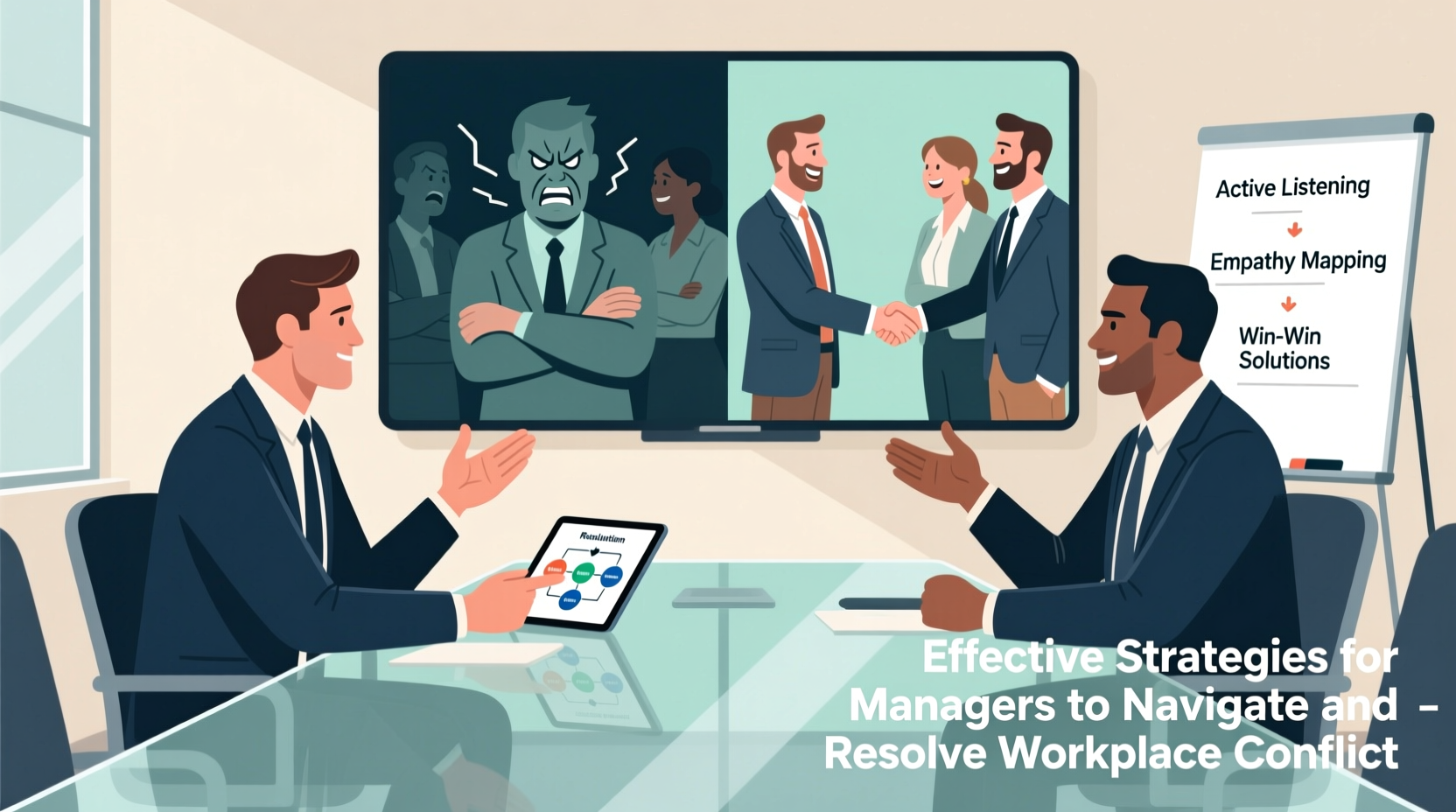
Before addressing any dispute, managers must first understand what’s driving it. Surface-level disagreements often mask deeper issues such as misaligned goals, unclear roles, communication breakdowns, or perceived inequities in recognition and workload. Jumping to solutions without diagnosing the cause risks applying temporary fixes to systemic problems.
Common sources of workplace conflict include:
- Role ambiguity: Unclear responsibilities lead to overlap or gaps in accountability.
- Communication style differences: Direct vs. indirect communicators may perceive each other as rude or evasive.
- Resource competition: Teams vying for budget, promotions, or visibility may develop rivalry.
- Values misalignment: Clashes over work ethic, collaboration, or decision-making approaches.
- Personality clashes: Introverts and extroverts, planners and improvisers—differences aren’t flaws, but they require management.
“Conflict is not the enemy—mismanaged conflict is.” — Dr. Tammy Lenski, conflict resolution expert
A Step-by-Step Guide to Resolving Workplace Conflict
Managers benefit from a repeatable process that ensures fairness, transparency, and closure. Follow this five-step framework to guide resolution efforts:
- Recognize early signs: Watch for changes in team dynamics—increased absenteeism, passive-aggressive comments, missed deadlines, or avoidance in meetings.
- Meet individually: Speak privately with each party involved. Listen without judgment, summarize their perspective, and validate emotions.
- Facilitate a joint discussion: Bring parties together only when both are ready. Set ground rules: no interruptions, respectful language, and a shared goal of resolution.
- Identify common ground: Highlight shared objectives (e.g., team success, project completion) and use them as anchors for compromise.
- Create an action plan: Define specific behaviors, timelines, and follow-up points. Document agreements to ensure accountability.
This approach prevents public confrontations, builds trust through confidentiality, and positions the manager as a neutral facilitator rather than a judge.
Effective Communication Techniques for Managers
The way managers communicate during conflict determines whether tensions de-escalate or intensify. Active listening, emotional regulation, and nonviolent language are essential tools.
| Technique | Application | Impact |
|---|---|---|
| Paraphrasing | “So you’re saying you felt excluded from the client decision?” | Validates feelings and confirms understanding |
| I-statements | “I feel concerned when updates aren’t shared” instead of “You never communicate” | Reduces defensiveness by focusing on impact, not accusation |
| Neutral questioning | “What would need to happen for you to feel heard in this situation?” | Encourages solution-oriented thinking |
| Silence utilization | Pausing after a statement allows space for reflection | Prevents reactive responses and promotes thoughtful dialogue |
Language shapes perception. A single word—like “but” versus “and”—can shift a conversation from opposition to collaboration. Train yourself to replace judgmental terms (“irrational,” “unprofessional”) with descriptive ones (“frustrated,” “overwhelmed”) to maintain objectivity.
Mini Case Study: Resolving Team Tension in a Marketing Department
In a mid-sized tech company, two senior marketers—Lena and Raj—began missing deadlines and clashing in meetings. Their manager, Sarah, noticed declining team morale and stepped in. She began with individual conversations and learned Lena felt Raj took credit for collaborative ideas, while Raj believed Lena withheld feedback until after campaigns launched, making revisions difficult.
Sarah arranged a mediated session where both shared their perspectives using I-statements. She guided them to co-create a new workflow: weekly syncs with documented idea ownership and a shared feedback calendar. They agreed to acknowledge contributions in team emails. Three months later, project delivery improved by 30%, and peer recognition scores increased.
The conflict wasn’t about personality—it was about process gaps and unmet needs for recognition and clarity. By focusing on systems rather than individuals, Sarah turned friction into functional improvement.
Do’s and Don’ts of Managerial Conflict Resolution
| Do | Don’t |
|---|---|
| Address issues early before they escalate | Wait for HR to step in as the first responder |
| Stay neutral and avoid taking sides | Label one person as the “problem employee” |
| Document agreements and follow-ups | Rely solely on verbal promises |
| Encourage direct dialogue between parties | Act as a permanent messenger between conflicted individuals |
| Seek feedback on your own role in the dynamic | Assume your management style is beyond critique |
Checklist: Essential Actions for Managers Facing Team Conflict
- Observe behavioral changes and team dynamics regularly
- Initiate private, empathetic conversations with involved parties
- Prepare for joint discussions with clear objectives and ground rules
- Use active listening and neutral language throughout
- Facilitate mutual understanding, not forced apologies
- Co-create actionable solutions with measurable outcomes
- Document agreements and set follow-up dates
- Monitor progress and adjust as needed
- Debrief with HR or a mentor if the issue involves policy or legal concerns
- Reflect on systemic factors that may have contributed to the conflict
Frequently Asked Questions
What if one employee refuses to participate in conflict resolution?
Start by understanding their hesitation. Some fear retaliation or distrust the process. Reassure confidentiality and emphasize that the goal is improved collaboration, not punishment. If resistance persists, involve HR to assess next steps, which may include formal performance reviews or mediation.
Should managers always stay neutral?
Neutrality is crucial during resolution—but not at the expense of accountability. If policies are violated (e.g., harassment, discrimination), the manager must act decisively. The goal is fairness, not false equivalence. Address misconduct firmly while still offering support for behavioral change.
How can I prevent conflict from recurring?
Build preventive structures: clarify roles, establish team norms, encourage feedback loops, and foster psychological safety. Regular one-on-ones help surface concerns early. Training in emotional intelligence and communication skills also equips teams to manage differences constructively.
Conclusion: Turning Conflict Into a Catalyst for Growth
Conflict isn’t a sign of failure—it’s an opportunity for insight. Managers who approach disagreements with curiosity, empathy, and structure don’t just resolve disputes; they build resilient, adaptive teams. The most effective leaders don’t avoid tension—they harness it. By mastering communication, implementing fair processes, and learning from each situation, you transform workplace conflict from a distraction into a driver of innovation and trust.




 浙公网安备
33010002000092号
浙公网安备
33010002000092号 浙B2-20120091-4
Comments
No comments yet. Why don't you start the discussion?