
Dark circles under the eyes are more than a cosmetic concern—they’re often a visible sign of fatigue, aging, or underlying health imbalances. While they rarely indicate serious medical issues, persistent shadows can affect self-confidence and make you appear older or more tired than you feel. The good news is that many cases respond well to consistent, natural interventions. Unlike temporary concealers or invasive procedures, addressing the root causes with lifestyle adjustments and proven home remedies offers lasting results. This guide explores holistic, evidence-informed methods to visibly brighten the under-eye area using accessible ingredients and sustainable habits.
Understanding the Causes of Under-Eye Darkness
Before applying any remedy, it’s essential to identify what’s contributing to your dark circles. The thin skin beneath the eyes makes blood vessels and underlying structures more visible, amplifying discoloration from various sources. Common causes include:
- Genetics: Some people inherit thinner under-eye skin or higher melanin concentration in that area, predisposing them to pigmentation.
- Poor sleep: Chronic sleep deprivation dilates blood vessels and increases fluid retention, creating a shadowed appearance.
- Allergies: Histamine release from allergic reactions can cause swelling and dilation of capillaries, leading to darkening.
- Aging: As collagen and fat diminish with age, the skin thins and sags, casting deeper shadows.
- Dehydration: Lack of fluids causes the skin to look dull and sunken, accentuating hollows under the eyes.
- Nutritional deficiencies: Low iron levels (anemia) reduce oxygen delivery to tissues, making veins appear darker.
Because multiple factors often overlap, a comprehensive approach yields better outcomes than relying on a single fix. For instance, someone with genetic predisposition may still benefit significantly from improved hydration and sleep hygiene.
Proven Natural Remedies That Deliver Results
Natural treatments work best when applied consistently over time. Their effectiveness lies not just in topical application but in how they support skin health, circulation, and inflammation control. Below are some of the most reliable options backed by both traditional use and emerging research.
Cucumber Slices: Cooling and Hydrating
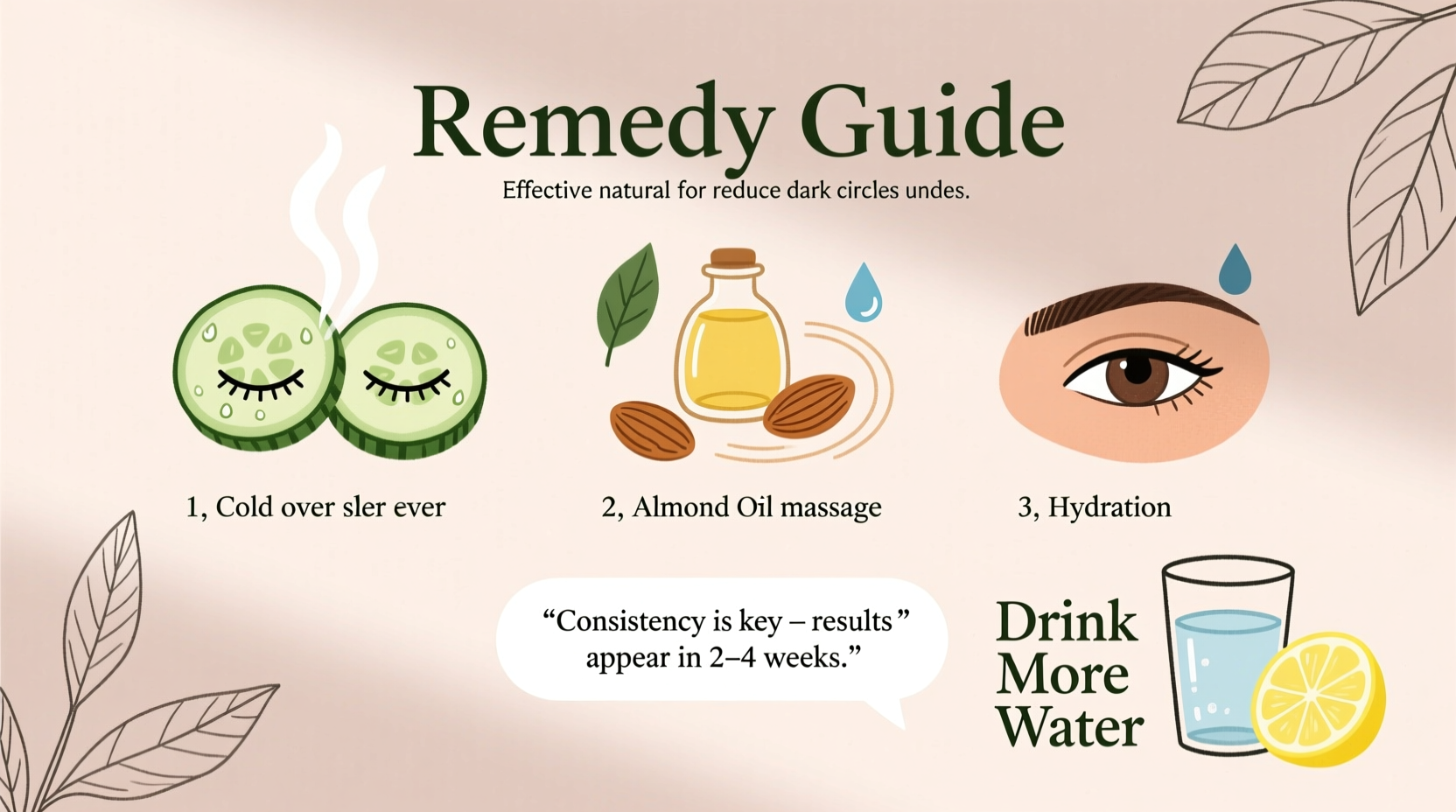
Cucumbers contain antioxidants like vitamin C and caffeic acid, which help reduce inflammation and prevent water retention. Their high water content also provides immediate cooling and hydration.
“Cucumber’s mild astringent properties soothe irritated skin and minimize puffiness, indirectly reducing the prominence of dark circles.” — Dr. Lena Torres, Dermatological Researcher
Tea Bags (Green or Black): Antioxidant Powerhouses
Brewed tea bags, cooled and placed over the eyes for 10–15 minutes, deliver caffeine and tannins. These compounds constrict blood vessels and reduce swelling. Green tea, rich in EGCG, also combats oxidative stress linked to premature aging.
Aloe Vera Gel: Soothing and Regenerative
Fresh aloe vera gel promotes cell regeneration and has anti-inflammatory effects. Apply a thin layer nightly and leave on overnight to improve microcirculation and skin tone.
Potato Juice: Lightening Agent
Potatoes contain catecholase, an enzyme believed to lighten pigmentation. Grate a raw potato, extract the juice, and dab it under the eyes with a cotton pad. Leave for 10 minutes before rinsing. Use every other day to avoid over-drying sensitive skin.
Rosewater and Sandalwood Paste: Traditional Brightener
In Ayurvedic practice, a paste of sandalwood powder and rosewater is used to cool and even out skin tone. Rosewater balances pH while sandalwood reduces redness and hyperpigmentation. Apply for 15 minutes daily.
Step-by-Step Daily Routine for Best Results
Natural remedies require consistency. Implementing a structured routine enhances absorption, supports healing, and prevents setbacks. Follow this timeline for optimal impact over 4–6 weeks:
- Morning (6:00–7:00 AM): After cleansing, apply chilled green tea bags for 10 minutes. Rinse and follow with a moisturizer containing hyaluronic acid.
- Midday (12:30 PM): If eyes feel puffy, place refrigerated cucumber slices for 8 minutes. Avoid rubbing the area.
- Evening (8:00 PM): Cleanse face thoroughly. Gently massage 3 drops of almond oil into the under-eye area using the ring finger to boost circulation.
- Nightly (10:00 PM): Apply a thin layer of aloe vera gel or sandalwood paste. Leave on overnight. Sleep with an extra pillow to reduce fluid accumulation.
- Weekly (Once): Perform a gentle exfoliation around the orbital bone using a mix of honey and oat flour to remove dead skin cells.
This regimen combines active treatment with preventive care. Patience is key—visible improvement typically appears after three weeks of uninterrupted use.
Lifestyle Adjustments That Make a Difference
No topical solution works long-term without addressing internal contributors. Real transformation comes from aligning daily habits with skin health priorities.
Prioritize Quality Sleep
Aim for 7–8 hours of uninterrupted sleep per night. Elevate your head slightly with a supportive pillow to prevent fluid pooling. Establish a wind-down ritual: dim lights, avoid screens one hour before bed, and consider herbal teas like chamomile.
Hydrate Strategically
Drink at least 2 liters of water daily. Dehydration causes the skin to appear thin and translucent, intensifying darkness. Include hydrating foods like watermelon, celery, and oranges in your diet.
Nutrition for Skin Repair
Support collagen production and blood health with nutrient-dense foods:
- Vitamin K-rich greens (kale, spinach) strengthen capillaries.
- Vitamin C (citrus, bell peppers) boosts collagen synthesis.
- Iron (lentils, red meat, fortified grains) combats anemia-related pallor.
- Omega-3 fatty acids (salmon, flaxseeds) reduce inflammation.
Manage Allergies and Screen Time
If you frequently rub your eyes due to allergies, treat the root cause with antihistamines or nasal sprays as advised by a doctor. Limit screen exposure to reduce eye strain, which contributes to fatigue-induced shadows.
“Patients who combine dietary changes with topical care see faster improvements than those relying solely on creams.” — Dr. Arjun Mehta, Integrative Medicine Specialist
Do’s and Don’ts: A Quick Reference Table
| Do’s | Don’ts |
|---|---|
| Use cold compresses daily to tighten vessels | Rub or tug at the delicate eye area |
| Sleep with your head elevated | Stay up late regularly or skip meals |
| Apply sunscreen every morning (even indoors) | Use citrus juices directly on under-eye skin |
| Eat iron-rich foods if prone to anemia | Overuse caffeine or alcohol, which dehydrate skin |
| Be patient—natural remedies take 3–6 weeks | Expect overnight results or switch treatments too quickly |
Real-Life Example: Sarah’s 6-Week Transformation
Sarah, a 34-year-old project manager, struggled with persistent dark circles despite using high-end concealers. She worked long hours, slept an average of 5.5 hours per night, and had mild seasonal allergies. After consulting a dermatologist, she learned her condition stemmed from a combination of poor sleep, screen fatigue, and mild iron deficiency.
She adopted the following changes:
- Started taking a daily iron supplement (after blood tests confirmed deficiency).
- Drank 2.5 liters of water daily and added spinach and lentils to her meals.
- Applied cold green tea bags each morning and used almond oil at night.
- Switched to blue-light-blocking glasses during evening work sessions.
- Set a phone alarm to go to bed by 10:30 PM.
After six weeks, coworkers noticed she looked “more awake.” A follow-up photo comparison showed a 60% reduction in under-eye darkness. Sarah continues the routine as part of her self-care practice, emphasizing that consistency—not intensity—was the real game-changer.
FAQ: Common Questions About Natural Dark Circle Treatments
Can lemon juice remove dark circles?
Lemon juice contains citric acid, which may lighten pigmentation, but it’s highly acidic and can irritate the thin under-eye skin. It may also increase photosensitivity, raising the risk of sun damage. Safer alternatives like cucumber or aloe vera are recommended.
How long does it take for natural remedies to work?
Most people notice subtle improvements within 2–3 weeks, with significant results appearing after 4–6 weeks of daily use. Factors like skin type, cause of dark circles, and overall health influence the timeline.
Are these remedies safe for sensitive skin?
Yes, but with caution. Always perform a patch test and avoid harsh ingredients like undiluted essential oils or acidic fruits. Stick to gentle options such as rosewater, aloe vera, and cold compresses if sensitivity is a concern.
Your Action Plan: Start Tonight
Eliminating dark circles naturally isn’t about finding a miracle cure—it’s about building a routine that supports your body’s ability to heal and renew. Begin tonight: brew two green tea bags, chill them in the fridge, and apply them while you wind down. Add a glass of water to your bedside table to start tomorrow hydrated. Small, deliberate actions compound into visible change.
You don’t need expensive serums or invasive treatments to achieve brighter eyes. With patience, consistency, and informed choices, you can address the root causes and reveal a more rested, radiant appearance. Your journey starts with one simple step—take it now.




 浙公网安备
33010002000092号
浙公网安备
33010002000092号 浙B2-20120091-4
Comments
No comments yet. Why don't you start the discussion?