
Every rainy season brings a familiar challenge: getting children dressed in their raincoats quickly, safely, and independently. While it may seem like a minor daily task, equipping kids with the ability to manage their rainwear confidently supports their autonomy, safety, and motor development. Teaching proper raincoat use—especially zipper handling—is more than convenience; it's an investment in independence, body awareness, and injury prevention. With thoughtful strategies, parents and educators can turn this routine into a learning opportunity that builds coordination, confidence, and responsibility.
Why Raincoat Safety and Zipper Skills Matter
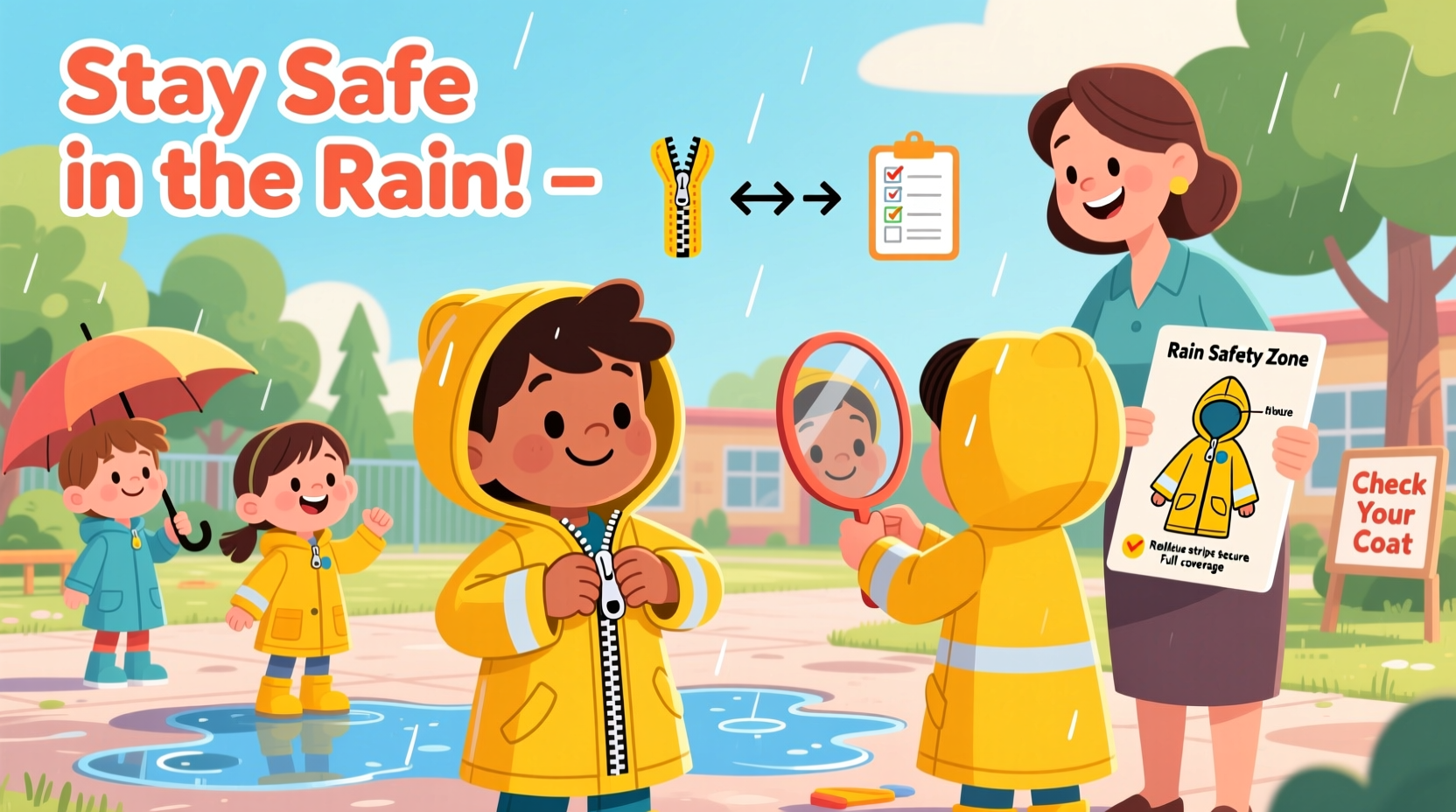
Children between the ages of 3 and 7 are developing fine motor skills, hand-eye coordination, and spatial awareness. Dressing routines offer natural practice for these abilities. A raincoat, with its zippers, hoods, and snaps, presents multiple challenges that stimulate cognitive and physical growth. However, improper use can lead to risks: pinched skin, choking hazards from loose drawstrings, or even impaired vision if the hood is worn incorrectly.
According to pediatric occupational therapists, dressing tasks involving fasteners like zippers improve bilateral coordination and finger dexterity—skills essential for writing, cutting, and other academic activities. Furthermore, knowing how to dress appropriately for weather conditions fosters personal responsibility and environmental awareness.
“Mastering self-dressing tasks like zipping a coat gives children a sense of competence that extends beyond clothing—it builds confidence in all areas of life.” — Dr. Lena Torres, Pediatric Occupational Therapist
Step-by-Step Guide to Teaching Zipper Skills
Teaching zipper use requires patience, repetition, and scaffolding. Break the process into manageable steps and gradually reduce support as your child gains skill.
- Start with a stationary zipper: Use a zipper board or attach a large zipper to a piece of fabric mounted on cardboard. This allows focus on motion without the complexity of wearing the coat.
- Teach grip and alignment: Show how to hold the zipper pull between thumb and forefinger. Practice aligning the two sides of the zipper teeth before pulling up.
- Use visual cues: Place a small sticker at the bottom of the zipper where the slider starts. Say “Start at the smile!” to help children remember where to begin.
- Practice the motion: Encourage slow, controlled movements. If the zipper gets stuck, teach them to stop, realign, and try again—don’t force it.
- Transition to real coats: Begin with oversized coats laid flat on a table. Once comfortable, progress to wearing the coat during low-pressure moments (e.g., not right before leaving the house).
- Add verbal prompts: Use consistent phrases like “Grab the tab, line it up, zip up to your chin” to build memory and sequencing.
- Celebrate effort, not just success: Praise persistence and improvement, even if the zipper isn’t fully closed.
Raincoat Safety: What Parents and Educators Must Know
Beyond zipping, children need guidance on safe raincoat habits. Many modern rainwear items contain features that pose hidden dangers if misused.
- Drawstring risks: Loose cords around the neck or waist can become entangled on playground equipment, posing strangulation hazards. The U.S. Consumer Product Safety Commission recommends avoiding drawstrings or using breakaway toggles.
- Hood positioning: Hoods should fit snugly but not obstruct peripheral vision. Teach children to adjust the hood so they can see clearly in all directions.
- Visibility: Choose raincoats with reflective strips or bright colors. Reinforce the habit of being seen, especially when walking near roads or in dim light.
- Proper fit: Coats that are too long can cause tripping. Sleeves should end near the wrist, allowing full hand movement.
| Safety Feature | Best Practice | Avoid |
|---|---|---|
| Drawstrings | Use breakaway toggles or elastic-free alternatives | Long cords with knots near the head or neck |
| Zipper Type | Double-slider zippers for partial ventilation | Sharp metal pulls without guards |
| Material | Waterproof yet breathable fabrics | Heavy PVC that restricts movement |
| Fit | Snug but allows arm lift and running | Coats dragging on the ground |
Fun and Effective Learning Activities
Turning skill-building into play increases engagement and retention. Try these classroom or home-tested activities:
- Zipper Obstacle Course: Set up stations where children must zip and unzip different jackets as part of a timed game. Include varied zipper types (front, side, hood) to build adaptability.
- Dress-Up Relay Races: In groups, children take turns putting on and removing raincoats correctly. Emphasize safety checks like securing zippers and adjusting hoods.
- Story-Based Role Play: Create a character who forgets to zip their coat and gets wet. Ask children how they would help the character stay dry and safe.
- Zipper Beads Game: String large beads onto a shoelace threaded through a zipper track. This strengthens finger muscles used in zipping.
Mini Case Study: The Rainy Day Routine at Maplewood Preschool
At Maplewood Preschool, teachers noticed that morning transitions during rainy seasons were chaotic. Children struggled to put on raincoats, often leaving zippers undone or hoods tangled. Teachers introduced a “Rainy Day Readiness” program over four weeks. Each week focused on one element: identifying parts of the coat, practicing zipping on boards, role-playing outdoor safety, and a final “Raincoat Rally” where children demonstrated their skills.
Results showed a 75% reduction in teacher assistance needed during outdoor transitions. More importantly, children reported feeling “proud” and “ready” for rain. One parent shared, “My daughter now zips her coat before I can even offer help. She says she’s a ‘rain warrior.’”
Essential Checklist for Caregivers and Educators
Use this checklist to ensure children are learning and using raincoat skills safely and effectively:
- ✅ Assess coat fit: Can the child move arms freely? Is the length safe?
- ✅ Remove or secure drawstrings to meet safety standards.
- ✅ Provide adaptive tools: zipper pulls with tabs, larger sliders, or magnetic zippers for younger children.
- ✅ Practice zipper skills off-body before wearing the coat.
- ✅ Teach the “zip-up-to-the-chin” rule for full protection.
- ✅ Reinforce visibility: Wear bright or reflective rainwear.
- ✅ Conduct seasonal safety talks about outdoor dressing habits.
- ✅ Praise independent efforts, even partial successes.
Frequently Asked Questions
What age should a child be able to zip their own raincoat?
Most children develop the fine motor control to zip a jacket between ages 4 and 6. However, some may start earlier with practice and adapted zippers. Development varies, so focus on progress rather than age benchmarks.
My child keeps getting their skin caught in the zipper. How can I prevent this?
This is common when rushing or misaligning the zipper. Teach them to pinch the fabric below the slider to keep skin clear. Using a zipper guard or applying a small amount of candle wax to the teeth can make zipping smoother and reduce pinching.
Are there raincoats designed for children with motor challenges?
Yes. Look for models with magnetic zippers, Velcro closures, or front-opening snap designs. Some brands specialize in adaptive clothing for children with sensory or motor differences, offering easier dressing without sacrificing style or function.
Conclusion: Building Confidence One Zip at a Time
Teaching kids raincoat safety and zipper skills is more than a seasonal chore—it’s a foundational step toward independence. By combining structured practice, safety awareness, and playful learning, caregivers can transform a simple act of dressing into a powerful developmental experience. Every successful zip boosts a child’s confidence, prepares them for changing environments, and nurtures lifelong self-reliance.




 浙公网安备
33010002000092号
浙公网安备
33010002000092号 浙B2-20120091-4
Comments
No comments yet. Why don't you start the discussion?