
Mechanical watches are marvels of precision engineering—each tick a testament to craftsmanship spanning decades. Unlike their quartz counterparts, they require attentive care to perform reliably over time. Whether you own a vintage heirloom or a modern luxury piece, understanding how to troubleshoot common issues and maintain its function is essential. Neglect can lead to inaccurate timekeeping, increased wear, or even permanent damage. With the right knowledge and routine, however, your mechanical watch can operate smoothly for generations.
Understanding How Mechanical Watches Work
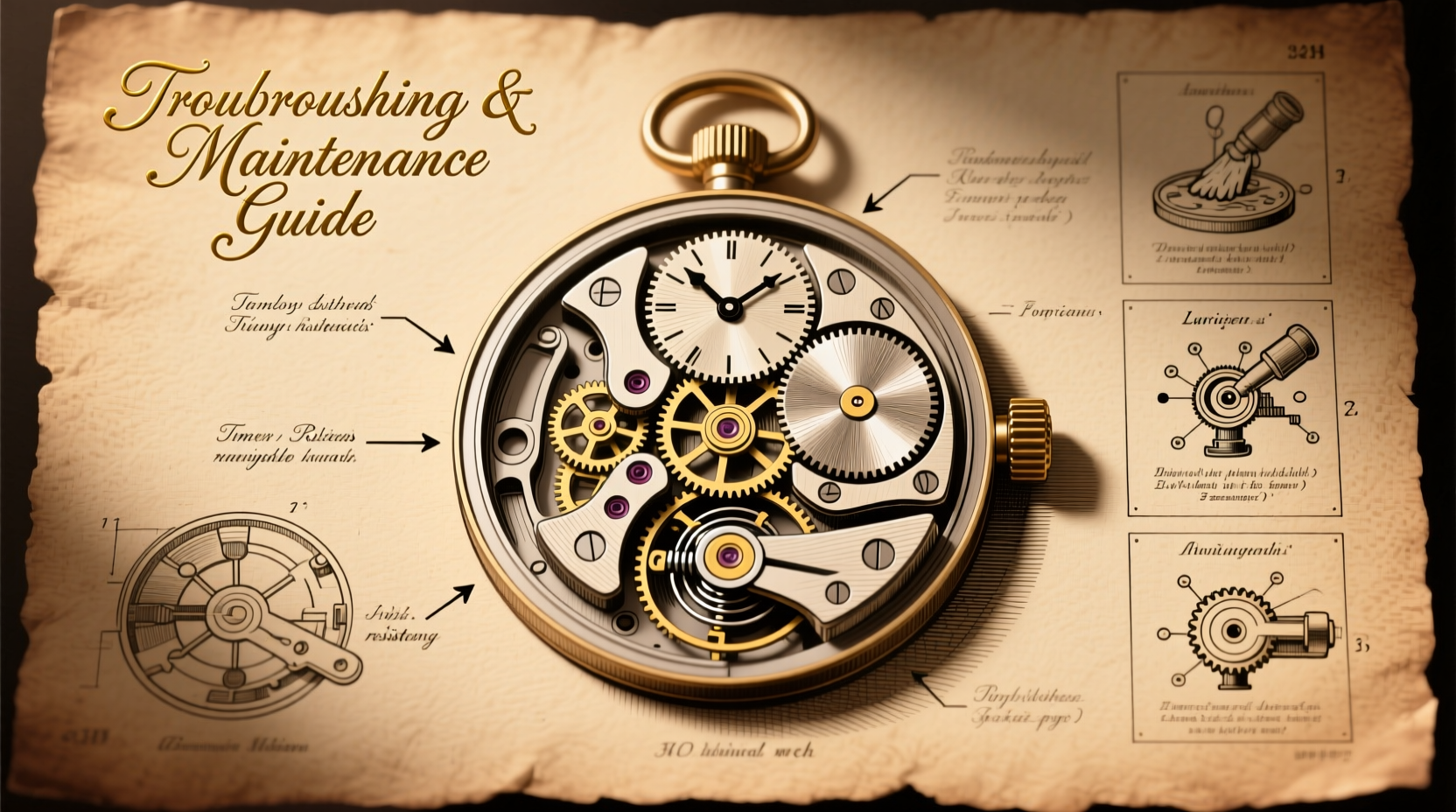
Before diving into maintenance, it helps to understand the core mechanics. A mechanical watch operates via a mainspring that stores energy when wound—either manually or automatically through wrist motion. This energy travels through a series of gears and escapements, regulating the release of power to move the hands at precise intervals. Because hundreds of tiny components work in concert, even minor disruptions—like dust, moisture, or misalignment—can affect performance.
The balance wheel oscillates at a consistent frequency (typically 4–8 times per second), and this rhythm governs timekeeping accuracy. Any interference with this oscillation—such as magnetization or shock—can cause the watch to run fast, slow, or stop entirely.
Common Issues and How to Diagnose Them
When a mechanical watch behaves unexpectedly, the cause is often one of several predictable problems. Recognizing symptoms early allows for timely intervention.
- Watch stops running: Often due to lack of power (needs winding) or internal damage from shock.
- Inaccurate timekeeping: Can result from magnetization, positional variance, or worn lubricants.
- Second hand \"jumps\" multiple seconds: Indicates the watch is severely underpowered and needs winding.
- Unusual noises: Grinding or clicking may point to gear damage or debris inside the movement.
- Fogging under the crystal: Suggests moisture ingress, requiring immediate attention to prevent corrosion.
“Over 60% of service visits for mechanical watches stem from avoidable issues like magnetization or improper handling.” — Daniel Roux, Master Watchmaker, Geneva Institute of Horology
Step-by-Step Troubleshooting Timeline
- Check power reserve: Wind the crown 20–30 times (for manual watches) or wear it for 8–10 hours (automatic).
- Assess timekeeping: Compare against a reliable time source over 24 hours.
- Test for magnetism: Use a compass app on your phone—place the watch near it and look for needle deflection.
- Inspect for impact signs: Look for case dents or erratic hand movement after a drop.
- Evaluate environmental exposure: Recall if the watch was exposed to water, extreme heat, or chemicals.
- Determine next steps: If unresolved, consult a certified watchmaker.
Essential Maintenance Practices
Preventive care is far more effective—and less costly—than repairs. Regular maintenance preserves accuracy, prevents wear, and extends the lifespan of your timepiece.
Winding and Setting Best Practices
For manual watches, wind daily at roughly the same time to maintain consistent power. Stop immediately if resistance increases—overwinding can damage the mainspring. For automatic watches, wearing them for 8–10 hours typically generates sufficient power. If left idle, use a watch winder to keep the mechanism active.
When setting the time, pull the crown gently to the correct position. Avoid adjusting the date between 9 PM and 3 AM, as this is when the date mechanism is engaged and vulnerable to damage.
Cleaning and External Care
Wipe the case and bracelet weekly with a soft, dry microfiber cloth. For metal bracelets, occasional cleaning with mild soapy water and a soft brush is safe—rinse thoroughly and dry completely. Leather straps should never be submerged; instead, wipe with a slightly damp cloth and allow to air-dry away from direct heat.
Maintenance Checklist: Monthly & Annual Tasks
| Task | Frequency | Notes |
|---|---|---|
| Visual inspection for damage | Monthly | Check crystal, hands, case, and strap condition |
| External cleaning | Monthly | Use lint-free cloth; avoid chemicals |
| Timekeeping accuracy test | Quarterly | Compare to atomic clock or GPS time |
| Demagnetization check | Biannually | Use a smartphone compass app |
| Professional servicing | Every 5–7 years | Complete disassembly, cleaning, re-lubrication |
Real Example: Recovering a Dormant Watch
James inherited a 1960s Omega Seamaster from his grandfather. After decades in a drawer, the watch wouldn’t run. He began by gently winding the crown for 30 turns. The second hand moved briefly but stopped after 10 seconds. Suspecting low amplitude due to dried oil, he wore it for two days using a winder, but accuracy remained poor—gaining 15 minutes daily.
He tested for magnetism using a phone compass app and observed significant needle deflection. After using a $30 demagnetizer, the watch still ran inconsistently. James then took it to a specialist, who diagnosed degraded lubricants and slight gear wear. After a full service—including cleaning, re-oiling, and regulation—the watch now keeps time within +3 seconds per day. This case underscores how layered issues often require both DIY checks and professional expertise.
Do’s and Don’ts of Mechanical Watch Care
| Don’t | Do |
|---|---|
| Expose to strong magnetic fields (phones, speakers, MRI) | Use a demagnetizer if timekeeping suddenly changes |
| Adjust the date during the danger zone (9 PM – 3 AM) | Set the date first, then the time, to avoid strain |
| Submerge unless rated for water resistance | Have water resistance tested every 2 years |
| Drop or knock the watch against hard surfaces | Remove during high-impact activities like sports |
| Wait until the watch fails to service it | Schedule preventive servicing every 5–7 years |
FAQ: Common Questions About Watch Maintenance
How often should I service my mechanical watch?
Most manufacturers recommend a full service every 5 to 7 years. However, if you notice persistent inaccuracies, frequent stopping, or moisture inside the case, seek service sooner. Vintage watches may need more frequent attention due to older materials and lubricants.
Can I demagnetize my watch at home?
Yes—affordable demagnetizers ($25–$50) are widely available online. Pass the watch slowly over the device and test accuracy afterward. However, if the issue persists, the problem may not be magnetism alone, and professional diagnosis is advised.
What’s the best way to store a mechanical watch long-term?
Store it in a cool, dry place away from sunlight and magnetic sources. For automatic watches, use a winder set to 650–800 TPD (turns per day) to maintain lubricant distribution. Manual watches should be stored fully wound to reduce mainspring fatigue.
Conclusion: Treat Your Watch Like a Living Mechanism
A mechanical watch is not just a timekeeper—it’s a finely tuned instrument that responds to how it’s treated. By adopting consistent maintenance habits, diagnosing issues early, and respecting its mechanical nature, you ensure it remains accurate and reliable for decades. These strategies aren’t reserved for collectors or experts; any owner can preserve their watch’s integrity with minimal effort and awareness.




 浙公网安备
33010002000092号
浙公网安备
33010002000092号 浙B2-20120091-4
Comments
No comments yet. Why don't you start the discussion?