
Loz building blocks have gained popularity among hobbyists and collectors for their intricate designs, affordability, and compatibility with major brick-based systems. While assembling these sets can be a rewarding experience, even experienced builders occasionally encounter challenges—misaligned pieces, missing components, or structural instability. Understanding how to diagnose and resolve these issues efficiently ensures smoother builds and preserves the enjoyment of the process.
Identify Common Assembly Challenges
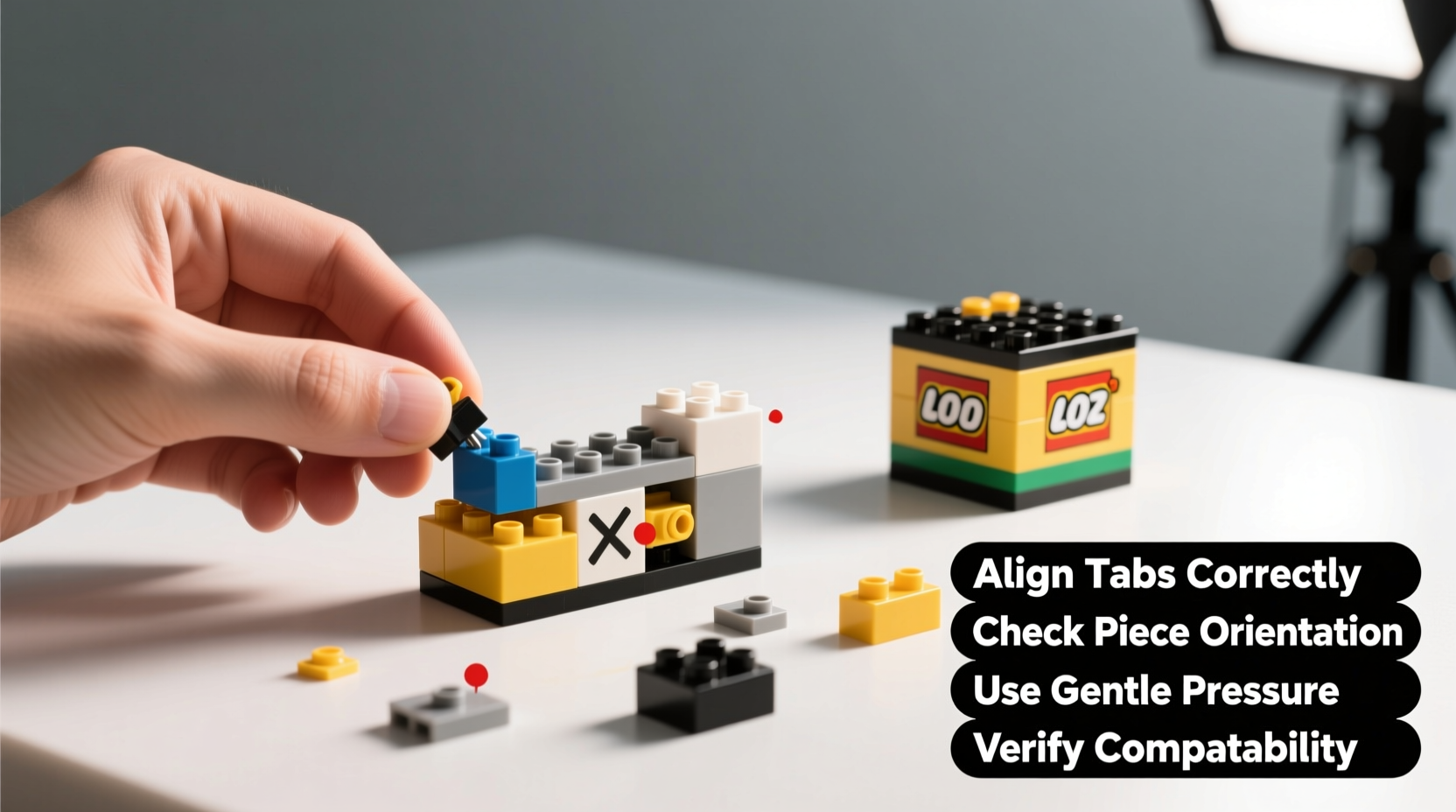
Before applying solutions, it's essential to recognize the most frequent problems encountered during Loz set assembly:
- Missing or incorrect parts: Small elements may be omitted from packaging or mislabeled in instruction manuals.
- Brick misalignment: Pieces don’t snap together smoothly due to manufacturing tolerances or design complexity.
- Structural weakness: Completed models feel loose or unstable, especially in larger or dynamic builds like vehicles or figures.
- Instruction errors: Step diagrams may contain inaccuracies, such as reversed sequences or misplaced part numbers.
- Frustration from repetitive disassembly: Frequent undoing of sections due to early mistakes slows progress and damages bricks over time.
Step-by-Step Troubleshooting Guide
When an issue arises mid-build, follow this structured approach to identify and fix the problem without compromising the final model.
- Pause and assess: Stop immediately when something feels off. Forcing pieces can lead to cracked bricks or internal stress points.
- Backtrack one step at a time: Undo only the last few steps rather than dismantling large sections. This minimizes wear on connectors.
- Verify part numbers: Use the instruction guide’s reference chart to confirm you're using the correct piece. Loz often uses similar-looking elements with subtle differences.
- Check orientation: Some pieces must be inserted at precise angles. Rotate them gently to test fit before pressing firmly.
- Test stability incrementally: After each major section, lightly wiggle the structure to detect weak joints early.
- Document corrections: If you spot an error in the instructions, make a note (or use sticky tabs) to remember adjustments for future reference.
Do’s and Don’ts When Fixing Assembly Errors
| Do’s | Don’ts |
|---|---|
| Use plastic tools designed for brick separation to avoid scratching surfaces. | Never use metal screwdrivers or knives—they can chip edges and damage connectors. |
| Clean hands before handling small pieces to prevent oils from weakening grip over time. | Avoid working on carpeted floors where tiny parts can easily get lost. |
| Organize pieces by type and color using compartment trays during complex builds. | Don’t skip bag numbering—even if bags aren’t labeled, sort them sequentially based on instruction stages. |
| Take breaks during long sessions to maintain focus and reduce fatigue-related errors. | Don’t rush through steps just to “finish”—accuracy matters more than speed. |
Real Example: Fixing a Misaligned Dragon Wing
A collector in Seoul reported difficulty assembling the wings of a Loz Mythical Creatures series dragon. The upper joint kept detaching during display despite appearing correctly connected. Upon inspection, he realized that two 1x2 hinge bricks were installed in reverse orientation—one facing inward, the other outward—creating torsional strain.
He carefully disassembled the last six steps using a brick separator, realigned both hinges to face the same direction, and reassembled the section. The wing remained stable thereafter. He later shared his findings in an online forum, noting that the instruction manual used a top-down view that made rotational direction ambiguous.
This case underscores the importance of spatial awareness and double-checking rotational symmetry, especially in articulated builds.
“Precision in micro-building isn't about perfection—it's about consistency. One misaligned connector can compromise an entire structure.” — Lin Zhao, Modular Design Engineer and Brick Systems Analyst
Essential Tips for Preventing Recurring Issues
Prevention is always more efficient than correction. Incorporate these practices into your building routine to minimize disruptions:
- Inspect every piece under good lighting: Tiny mold lines or warping are easier to catch before assembly.
- Double-stud connections where possible: In high-stress areas (e.g., limbs or supports), use additional studs to reinforce joints.
- Compare with digital previews: Many fan communities upload corrected builds or alternate instructions online—cross-reference if unsure.
- Label partial builds: If pausing mid-project, place a small tag indicating the last completed step.
FAQ: Common Questions About Loz Block Assembly
What should I do if a part is missing from my set?
Contact the retailer or manufacturer with your set number and a photo of the required piece from the manual. Many companies offer free replacement parts upon verification. Alternatively, check third-party retailers or brick databases like BrickLink to source individual components.
Can I use Loz blocks interchangeably with other brands?
Yes, Loz blocks are designed to be compatible with leading brick systems. However, slight dimensional variances may cause tighter or looser fits. Test connections gently and avoid forcing incompatible pieces together.
Why does my model feel wobbly after completion?
Wobbling usually results from insufficient internal framing or uneven weight distribution. Reinforce the core structure with cross-bracing or add baseplates for larger models. Also, ensure all connection points are fully seated—sometimes a soft click doesn’t mean full engagement.
Conclusion: Build Smarter, Not Harder
Troubleshooting Loz building blocks doesn’t require advanced tools or expertise—just patience, attention to detail, and a systematic mindset. By identifying common pitfalls early, applying targeted fixes, and adopting preventive habits, you transform potential frustrations into opportunities for mastery. Whether you’re constructing a miniature piano or a detailed castle, every challenge overcome deepens your skill and appreciation for the craft.




 浙公网安备
33010002000092号
浙公网安备
33010002000092号 浙B2-20120091-4
Comments
No comments yet. Why don't you start the discussion?