
A cluttered inbox is more than just a visual nuisance—it’s a productivity drain. For professionals relying on Microsoft Outlook, mastering email archiving isn’t optional; it’s essential. Archiving helps preserve important messages while removing them from your primary inbox, reducing noise without losing access. When done strategically, archiving transforms your email experience from chaotic to controlled. This guide outlines proven techniques to leverage Outlook’s archiving features efficiently, so you can maintain a lean inbox and retain critical information with confidence.
Why Archiving Matters More Than Deleting
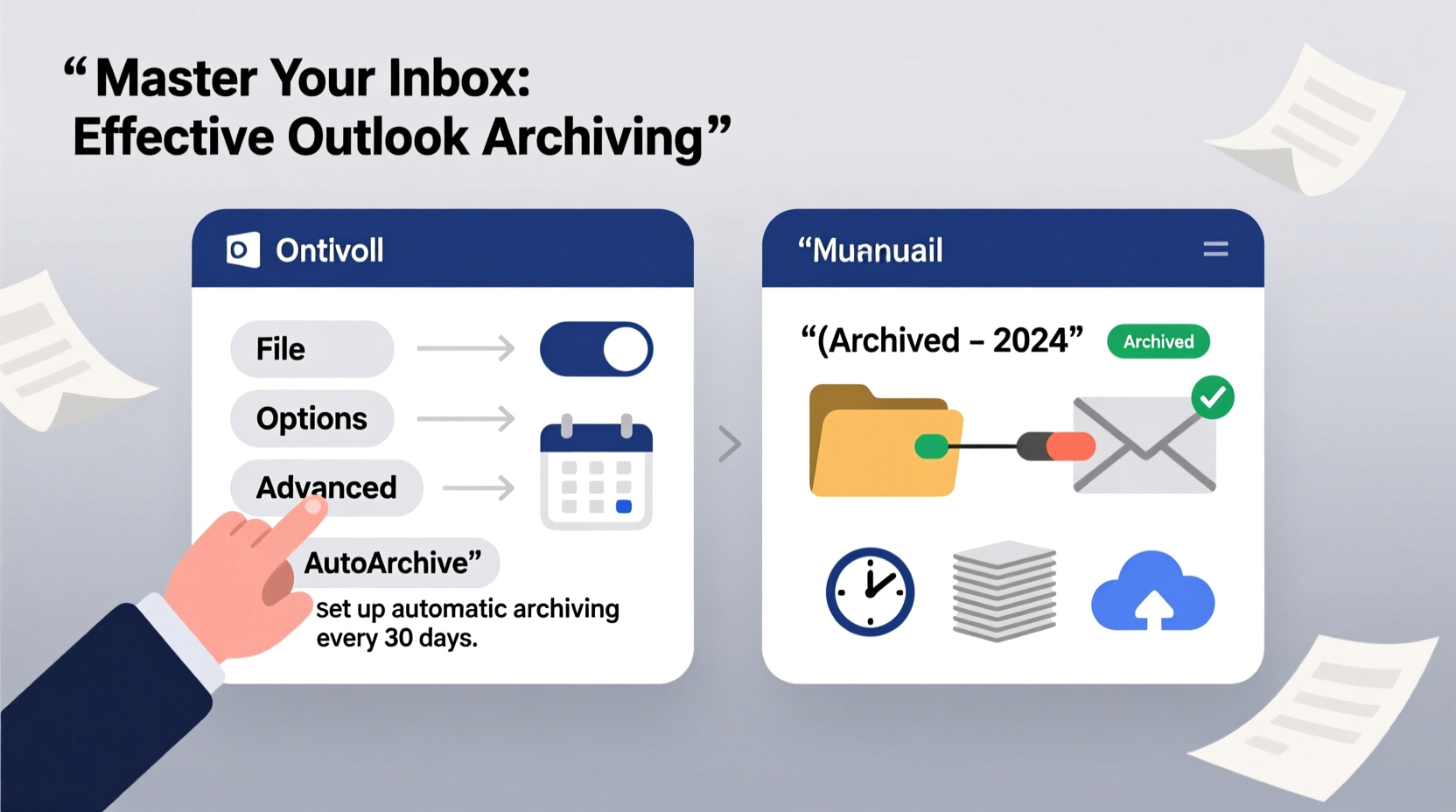
Many users default to deleting emails to keep their inbox clean. However, deletion is irreversible and often shortsighted. Unlike deletion, archiving moves messages to a separate storage location—typically an .pst file or cloud-based archive—where they remain searchable and retrievable. This distinction is crucial for compliance, audits, and historical reference.
According to a 2023 study by the McKinsey Digital Group, knowledge workers spend nearly 28% of their workweek managing email. A well-maintained archive system can cut that time significantly by reducing cognitive load and improving message retrieval speed.
“Archiving isn’t about storing everything—it’s about preserving value. The goal is to make information accessible when needed, not buried under clutter.” — Dr. Laura Simmons, Productivity Researcher at MIT Sloan
Step-by-Step Guide to Set Up Automatic Archiving in Outlook
Outlook offers robust automatic archiving tools across desktop and web versions. Setting this up correctly ensures consistent maintenance without manual effort. Follow these steps to configure auto-archive on Outlook for Windows:
- Open Outlook and go to File > Options > Advanced.
- Under the \"AutoArchive\" section, click AutoArchive Settings.
- Select “Run AutoArchive every X days” and set the frequency (e.g., 14 days).
- Choose how old items must be before archiving (e.g., 6 months).
- Check “Archive deleted items” if you want to retain soft deletions.
- Specify the archive file location (.pst) or use the default path.
- Click OK to save settings.
Note: In Outlook on the web (Office 365), automatic archiving is managed through Exchange Online retention policies, not local .pst files. Administrators typically control these via the Microsoft 365 admin center.
Manual Archiving: When Precision Beats Automation
While automation handles routine cleanup, manual archiving gives you full control over what gets preserved and when. Use this method for sensitive projects, client communications, or seasonal campaigns.
To manually archive emails:
- Select individual messages or entire folders.
- Right-click and choose Move > Archive, or use the ribbon’s Move button.
- Alternatively, drag and drop selected items into your “Archive” folder.
Create custom archive folders such as “Client Contracts 2023,” “Vendor Agreements,” or “Tax Records” to enhance organization. These folders can live within your main archive .pst file or be stored in cloud-based archive mailboxes if using Exchange Online.
Best Practices for Manual Archiving
- Name folders clearly and consistently (e.g., YYYY-MM_ProjectName).
- Limit nested folder depth to three levels to avoid navigation fatigue.
- Use Outlook categories (color tags) to mark archived items by priority or project.
- Regularly review and consolidate outdated archives quarterly.
Do’s and Don’ts of Email Archiving in Outlook
| Do’s | Don’ts |
|---|---|
| Set retention rules based on business needs (e.g., financial records kept for 7 years) | Archive large attachments without compressing or reviewing size impact |
| Back up your .pst archive files regularly to external drives or secure cloud storage | Rely solely on local .pst files without backups—risk of data loss is high |
| Use search folders to monitor aging emails nearing archive thresholds | Allow unstructured accumulation of messages in the archive folder |
| Leverage Outlook’s Instant Search to find archived items quickly | Forget to update archive paths after changing computers or reinstalling Outlook |
Real-World Example: How a Marketing Team Reduced Inbox Overload
The marketing department at NexaTech, a mid-sized SaaS company, faced chronic inbox overload. Team members received over 200 emails daily, many related to past campaigns no longer active but still relevant for reporting. Searching for old campaign metrics took up to 20 minutes per request.
They implemented a structured archiving strategy:
- Created a shared archive policy: all campaign-related emails older than 90 days were moved to labeled folders.
- Used Outlook rules to auto-move emails tagged “Campaign-Complete” to the archive.
- Trained staff to use Instant Search with date filters and keywords.
Within six weeks, average inbox size dropped by 68%, and time spent retrieving old messages decreased by 75%. The team reported higher focus during work hours and fewer missed deadlines due to lost emails.
Expert Tips for Long-Term Archive Maintenance
Archiving isn’t a one-time fix—it requires ongoing attention. Here are key recommendations from IT and productivity specialists:
- Monitor .pst file size: Keep individual archive files under 10 GB to prevent corruption and slow performance.
- Use cloud archiving when possible: Office 365’s In-Place Archive offers seamless integration, redundancy, and mobile access.
- Educate your team: Standardize naming conventions and archiving timelines across departments.
- Leverage metadata: Apply flags, categories, and sensitivity labels to improve future searchability.
Frequently Asked Questions
Can I access archived emails offline?
Yes, if your archive is stored in a local .pst file, you can access it offline in Outlook. Cloud-based archives (like Exchange Online Archive) require internet connectivity unless cached locally via Outlook’s Offline Mode.
What’s the difference between archiving and moving to a folder?
Archiving specifically refers to moving older messages out of active mailboxes using retention policies or dedicated archive stores. Simply moving emails to a custom folder keeps them in the mailbox and doesn’t reduce server load or apply automated lifecycle rules.
Will archiving free up space in my mailbox quota?
It depends on your setup. Local .pst archiving frees up space in your primary mailbox. However, in Office 365, using the In-Place Archive does not reduce your primary mailbox usage—you get additional archive storage instead.
Final Checklist: Building a Sustainable Archiving Routine
Adopting archiving as a habit requires consistency. Use this checklist weekly or monthly to stay on track:
- ✅ Review inbox for emails older than 60–90 days.
- ✅ Move non-urgent, completed-thread messages to appropriate archive folders.
- ✅ Confirm that automated rules are functioning correctly.
- ✅ Back up critical .pst files to encrypted external storage.
- ✅ Delete redundant or outdated archives to prevent sprawl.
- ✅ Train new team members on your organization’s archiving standards.
Take Control of Your Digital Workflow
Email doesn’t have to dominate your day. By implementing smart archiving strategies in Outlook, you reclaim mental space, reduce stress, and build a reliable knowledge repository. Whether you’re using automatic policies or curating archives by hand, the key is consistency and intentionality. Start small—archive one folder today—and scale the practice across your workflow. Over time, you’ll notice not just a cleaner inbox, but clearer thinking and greater control over your professional communication.




 浙公网安备
33010002000092号
浙公网安备
33010002000092号 浙B2-20120091-4
Comments
No comments yet. Why don't you start the discussion?