
Cat spraying is a natural territorial behavior, but the lingering odor can be overwhelming and difficult to remove. Unlike regular urine accidents, sprayed urine is often deposited on vertical surfaces in small amounts with high concentration, making it particularly pungent. Standard cleaning methods rarely suffice because they fail to break down the odor-causing compounds—primarily ammonia and sulfur-based chemicals embedded deep within porous materials. To truly eliminate the smell for good, a multi-phase approach combining enzymatic breakdown, environmental modification, and behavioral intervention is essential.
Understanding Cat Spray vs. Regular Urination
Before tackling the odor, it’s critical to distinguish between spraying and inappropriate urination. Spraying typically occurs on vertical surfaces like walls, furniture legs, or door frames. The cat stands upright, lifts its tail, and releases a small amount of urine backward as a scent marker. In contrast, inappropriate urination involves squatting on horizontal surfaces such as carpets or beds and usually indicates a medical or stress-related issue.
Spraying is primarily a communication tool. Cats mark territory when stressed, anxious, or responding to changes in their environment—such as new pets, people, or even outdoor animals visible through windows. This context matters because eliminating the odor without addressing the root cause often leads to re-spraying.
The Science Behind Odor Elimination
Most household cleaners mask odors rather than destroy them. Cat urine contains urea, urobilin, and pheromones that bond tightly to surfaces. As bacteria break down urea, ammonia gas is released, creating the sharp smell. Over time, crystalline salts form and can re-activate when exposed to moisture or humidity, causing the odor to return months later.
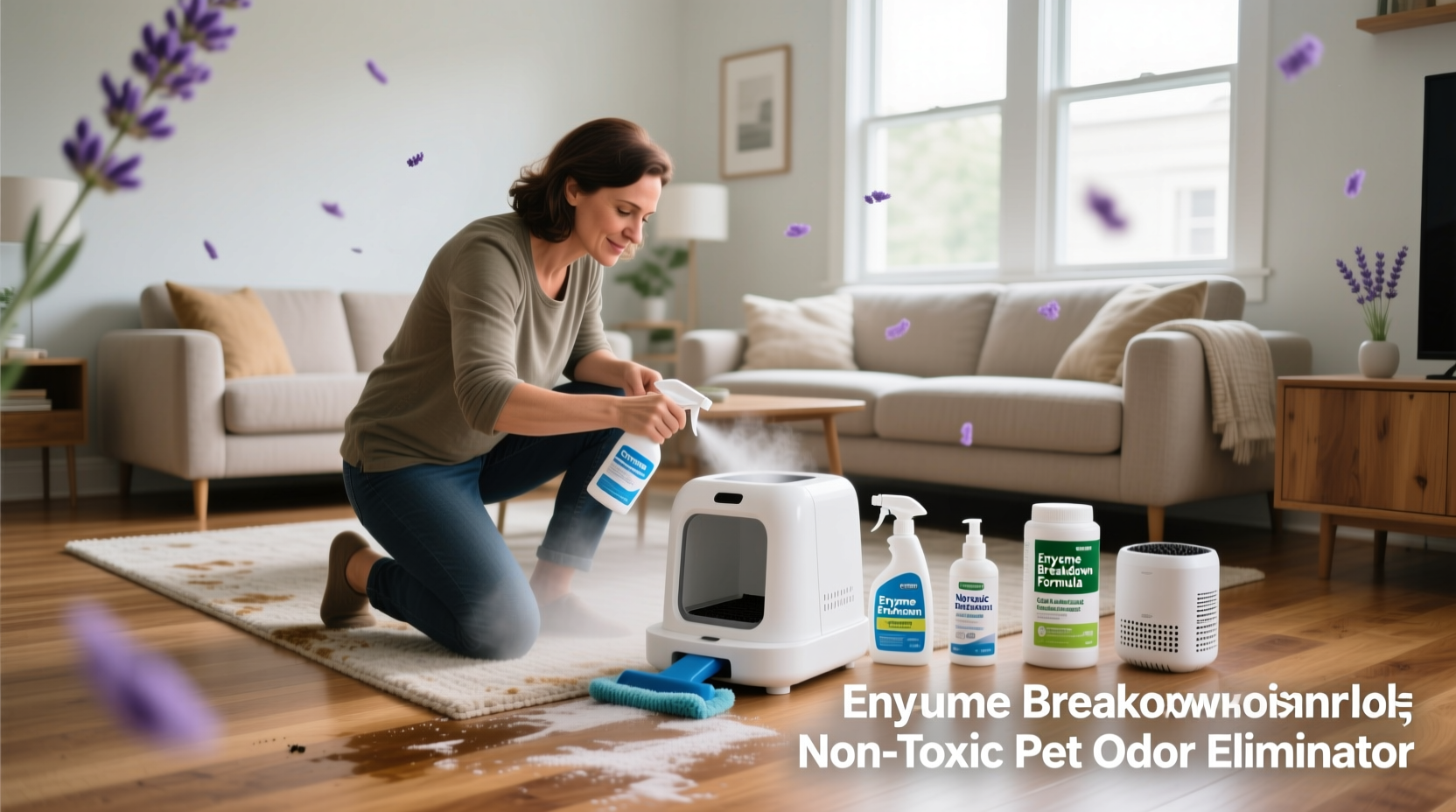
Effective odor removal requires breaking down these organic compounds at a molecular level. Enzymatic cleaners use live bacteria and enzymes (like protease and urease) to digest the proteins and urea in urine. These products must be applied generously and allowed to dwell long enough for microbial action to occur—typically 12 to 24 hours.
“Enzymatic cleaners are the gold standard for biological odor removal. They don’t just cover up smells—they eliminate the source.” — Dr. Lena Patel, DVM, Feline Behavior Consultant
Step-by-Step Guide to Permanent Odor Removal
Follow this systematic process to ensure thorough decontamination of affected areas:
- Identify all sprayed zones using a blacklight in a dark room. Fresh and old urine stains glow under UV light due to phosphorus content.
- Blot excess moisture with paper towels. Avoid rubbing, which spreads the urine deeper into fibers.
- Prewash with cold water if dealing with washable fabrics. Hot water sets proteins and makes odors permanent.
- Apply an enzymatic cleaner liberally to saturate the area. For carpets, lift the pad and treat the backing and subfloor if possible.
- Cover with plastic wrap to prevent evaporation and allow enzyme activity for at least 12 hours.
- Absorb residual moisture with clean towels or baking soda after treatment.
- Repeat if necessary, especially in high-traffic or repeatedly sprayed areas.
Do’s and Don’ts of Cat Spray Cleanup
| Do’s | Don’ts |
|---|---|
| Use enzymatic cleaners specifically labeled for pet urine | Use steam cleaners before enzymatic treatment (heat sets stains) |
| Vacuum treated areas thoroughly after drying | Scrub aggressively and damage surface fibers |
| Wear gloves and ventilate the area during cleaning | Apply bleach or hydrogen peroxide directly to urine (toxic fumes) |
| Test cleaners on inconspicuous spots first | Rely solely on air fresheners or ozone generators |
| Treat all suspected areas—even if invisible | Ignore underlying behavioral or medical issues |
Preventing Future Incidents: A Holistic Approach
Eliminating the odor is only half the battle. Without addressing why the cat is spraying, recurrence is likely. Consider the following preventive measures:
- Neuter or spay your cat: Intact cats are far more likely to spray. Even fixed cats may spray under stress, but the frequency drops significantly.
- Reduce environmental stressors: Provide multiple litter boxes (one per cat plus one extra), use pheromone diffusers like Feliway, and create safe retreat spaces.
- Block visual triggers: Cover windows where outdoor cats are visible, or use motion-activated deterrents outside.
- Maintain litter box hygiene: Scoop daily, clean weekly, and avoid scented liners or strong detergents.
- Introduce changes gradually: New pets, furniture, or routines should be phased in slowly to minimize anxiety.
“We had a client whose cat sprayed every doorway after a neighbor’s tomcat started roaming the yard. After installing motion-sensor lights and using Feliway diffusers, the spraying stopped within two weeks.” — Sarah Lin, Certified Feline Behaviorist
Real-World Case Study: Restoring a Living Room After Chronic Spraying
A family in Portland reported persistent cat spray odor in their living room despite repeated carpet shampooing. Their 3-year-old male cat began spraying after a new kitten was adopted. A professional inspection revealed urine saturation behind baseboards and under the carpet edge.
The solution involved: - Removing and replacing contaminated padding and treating the subfloor with an industrial-grade enzymatic solution. - Sealing baseboards with a waterproof primer to block odor migration. - Installing a Feliway diffuser and adding a second litter box in a quiet hallway. - Behavioral enrichment: daily interactive play and scheduled feeding times to reduce anxiety.
Within three weeks, both odor and spraying ceased. Follow-up visits confirmed no recurrence over six months.
Essential Checklist for Complete Odor Eradication
Use this checklist to ensure no step is missed:
- ☑ Identify all spray sites using a blacklight
- ☑ Blot and pre-clean with cold water
- ☑ Apply enzymatic cleaner and allow 12–24 hour dwell time
- ☑ Treat beneath surfaces (carpet padding, drywall, wood trim)
- ☑ Neutralize air with carbon filters, not masking sprays
- ☑ Address behavioral causes with vet consultation if needed
- ☑ Monitor for recurrence and reapply treatment if necessary
Frequently Asked Questions
Can I use baking soda and vinegar to remove cat spray?
Vinegar has a strong smell that may temporarily neutralize ammonia, but it doesn’t break down odor-causing compounds. Baking soda absorbs moisture and mild odors but won’t reach deep-set urine. While both are safe for preliminary use, they should never replace enzymatic treatment for complete elimination.
How long does cat spray odor last if untreated?
Indoors, untreated urine can emit detectable odor for years. Crystallized salts reactivate with humidity, releasing ammonia gas. In damp conditions, the smell can resurface seasonally, especially in basements or poorly ventilated rooms.
Is ozone treatment effective for cat spray?
Ozone generators oxidize odor molecules and can reduce airborne smells, but they don’t penetrate surfaces where urine resides. They also pose health risks to pets and humans if used improperly. Ozone should only be considered as a supplemental method after thorough enzymatic cleaning—and never with animals present.
Final Steps Toward a Fresh, Stress-Free Home
Eliminating cat spray odor permanently isn’t just about cleaning—it’s about understanding feline behavior and creating a stable, secure environment. With the right enzymatic products, diligent application, and attention to your cat’s emotional needs, you can reclaim your home’s freshness and prevent future incidents. The key is consistency: treat every stain thoroughly, address stress triggers, and maintain a routine that supports your cat’s well-being.




 浙公网安备
33010002000092号
浙公网安备
33010002000092号 浙B2-20120091-4
Comments
No comments yet. Why don't you start the discussion?