
In a world where demands on time are constant and growing, the idea of “finding” more hours in the day might seem unrealistic. Yet some people consistently accomplish more without burning out. The difference isn’t luck or a secret time machine—it’s strategy. By rethinking how you structure your day, prioritize tasks, and manage energy, you can unlock pockets of time you didn’t know existed and significantly increase your output. This guide outlines practical, research-backed methods to reclaim control over your schedule and amplify your productivity.
Reframe Your Relationship with Time
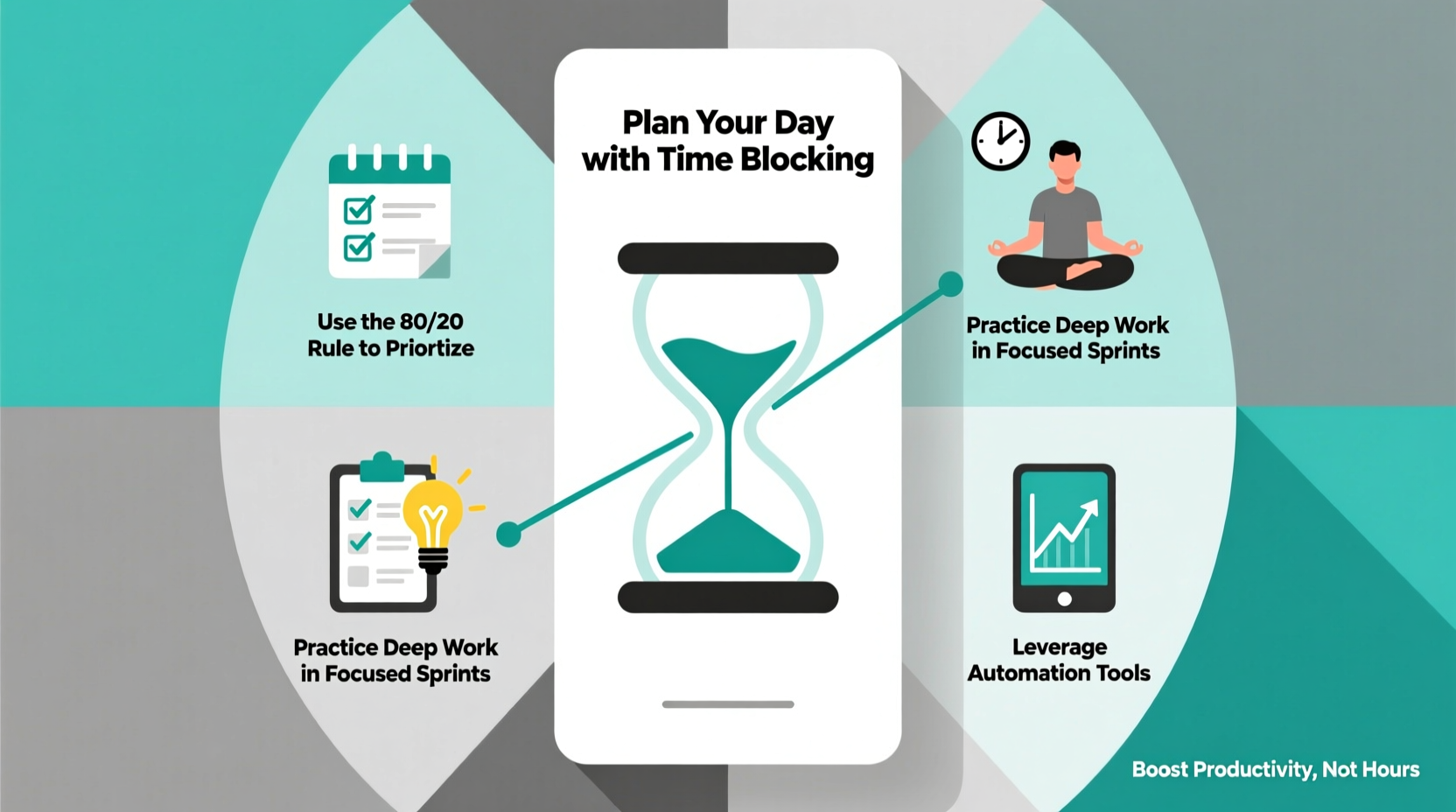
Most people treat time as a fixed resource—24 hours, no more, no less. But productivity isn’t about having more time; it’s about using what you have with intention. Instead of asking, “Where can I find more time?” shift to: “What can I eliminate or delegate to make room for what matters?”
Time is not evenly valuable throughout the day. Energy levels fluctuate, focus waxes and wanes, and distractions accumulate. Recognizing that not all hours are equal allows you to align tasks with your natural rhythms. For example, scheduling deep work during peak mental clarity and saving administrative tasks for low-energy periods maximizes efficiency.
Prioritize Ruthlessly with the Eisenhower Matrix
One of the biggest obstacles to productivity is mistaking busyness for progress. You can be active all day and still fail to move the needle on meaningful goals. The Eisenhower Matrix helps clarify what truly deserves attention by categorizing tasks into four quadrants:
| Urgent & Important | Crisis management, deadlines, critical problems |
|---|---|
| Important, Not Urgent | Strategic planning, skill development, relationship building |
| Urgent, Not Important | Some emails, meetings, interruptions |
| Neither Urgent nor Important | Busywork, social media scrolling, trivial tasks |
The key insight? Most long-term value comes from the second quadrant—important but not urgent activities. These are the tasks that build careers, strengthen health, and grow businesses, yet they’re often neglected because they don’t scream for attention. Schedule time for these weekly, just as you would a meeting.
“Productivity is never about being able to do more things. It's about being able to do the right things.” — Greg McKeown, author of *Essentialism*
Implement Time Blocking for Focused Work
Cal Newport, computer science professor and author of *Deep Work*, advocates for time blocking as a cornerstone of high performance. This technique involves assigning specific blocks of time to specific activities on your calendar, treating each block like a non-negotiable appointment.
For example:
- 9:00–10:30 AM: Write project proposal (deep work)
- 10:30–10:45 AM: Break + stretch
- 10:45–11:30 AM: Respond to priority emails
- 1:00–1:45 PM: Team check-in meeting
- 2:00–3:00 PM: Learn new software feature
Time blocking reduces decision fatigue, prevents task-switching, and increases accountability. When every minute has a purpose, distractions lose their power.
Step-by-Step Guide to Start Time Blocking
- Review your upcoming week: List all recurring and one-time responsibilities.
- Identify priorities: Mark 2–3 key outcomes you want to achieve.
- Estimate time needed: Be realistic—underestimating leads to frustration.
- Schedule blocks: Assign tasks to calendar slots based on energy levels.
- Protect the blocks: Decline non-critical meetings that conflict.
- Review and adjust: At week’s end, assess what worked and refine.
Leverage Task Batching to Reduce Context Switching
Switching between tasks—answering an email mid-report, taking a call while drafting a presentation—fragments attention and drains cognitive resources. Research shows it can take up to 23 minutes to fully refocus after an interruption.
Task batching combats this by grouping similar activities. Instead of checking email five times a day, set two 30-minute windows: once in the morning and once in the afternoon. Process all messages at once. Apply the same logic to phone calls, errands, or administrative work.
This method creates momentum, minimizes setup time, and preserves mental flow. Over time, you’ll notice faster completion rates and fewer errors.
Real Example: How a Marketing Manager Reclaimed 10 Hours a Week
Sarah, a marketing manager at a mid-sized tech firm, felt overwhelmed despite working late nearly every night. She was responsive, met deadlines, but had no time for strategic planning. After auditing her week, she discovered she spent 14 hours on fragmented email checks, impromptu meetings, and reactive tasks.
She implemented three changes:
- Blocked 8:30–10:00 AM daily for campaign strategy (her peak focus time).
- Batched email responses to 11:00–11:30 AM and 4:00–4:30 PM.
- Asked her team to consolidate requests into one daily stand-up instead of interrupting her.
Within two weeks, Sarah reduced her workweek by 10 hours and delivered a new campaign ahead of schedule. Her team reported better communication, and she regained time for professional development.
Checklist: Daily Routine for Maximum Productivity
Use this checklist each morning to set the tone for a focused, intentional day:
- Review your top 3 priorities for the day
- Confirm scheduled time blocks on your calendar
- Turn off non-essential notifications
- Set a 5-minute buffer between meetings
- Plan one break for movement or mindfulness
- End the day with a 10-minute review: What was accomplished? What needs to carry over?
Common Pitfalls and How to Avoid Them
Even with the best strategies, setbacks happen. Here’s how to stay on track:
- Over-scheduling: Leave breathing room. Aim for 70–80% calendar utilization to accommodate surprises.
- Perfectionism: Done is better than perfect. Ship work that meets standards, then improve iteratively.
- Neglecting recovery: Sleep, breaks, and downtime aren’t luxuries—they’re performance fuel.
FAQ
How can I find time if my job requires constant availability?
Even in responsive roles, you can negotiate boundaries. Communicate core focus hours to your team, use auto-responders outside those times, and delegate routine queries. High responsiveness doesn’t require 24/7 availability—clarity and consistency do.
What if unexpected tasks keep derailing my plan?
Build flexibility into your schedule. Reserve one “buffer block” per day (e.g., 30–60 minutes) for urgent issues. If a disruption occurs, reschedule—not cancel—the original task to maintain accountability.
Is multitasking ever effective?
Rarely. True multitasking—performing two cognitively demanding tasks simultaneously—reduces accuracy and speed. Simple, automatic tasks (like walking while talking) can coexist, but complex work requires singular focus. Embrace monotasking as a competitive advantage.
Take Control of Your Time, Take Charge of Your Results
Finding time in a busy schedule isn’t about squeezing more into each hour. It’s about designing your day with purpose, protecting your focus, and aligning effort with impact. The strategies outlined here—time blocking, ruthless prioritization, batching, and energy awareness—are not quick fixes but sustainable practices used by top performers across industries.
Start small. Pick one technique—perhaps time blocking or a daily priority list—and apply it consistently for one week. Measure the difference in output and stress. Then layer in another. Over time, you’ll not only get more done, but you’ll also gain something even more valuable: control over your attention and autonomy over your life.




 浙公网安备
33010002000092号
浙公网安备
33010002000092号 浙B2-20120091-4
Comments
No comments yet. Why don't you start the discussion?