
For many cat owners, the mere sight of a carrier signals distress—for both feline and human. Unlike dogs, cats often associate crates with trips to the vet, loud noises, or unfamiliar environments, triggering anxiety and resistance. However, with thoughtful preparation and consistent training, you can transform the crate from a source of fear into a safe, familiar space. The goal isn’t just compliance; it’s comfort. A cat that walks into their carrier willingly reduces stress, saves time, and makes travel or medical visits safer and more humane.
Why Cats Resist Crates—and How to Change Their Mind
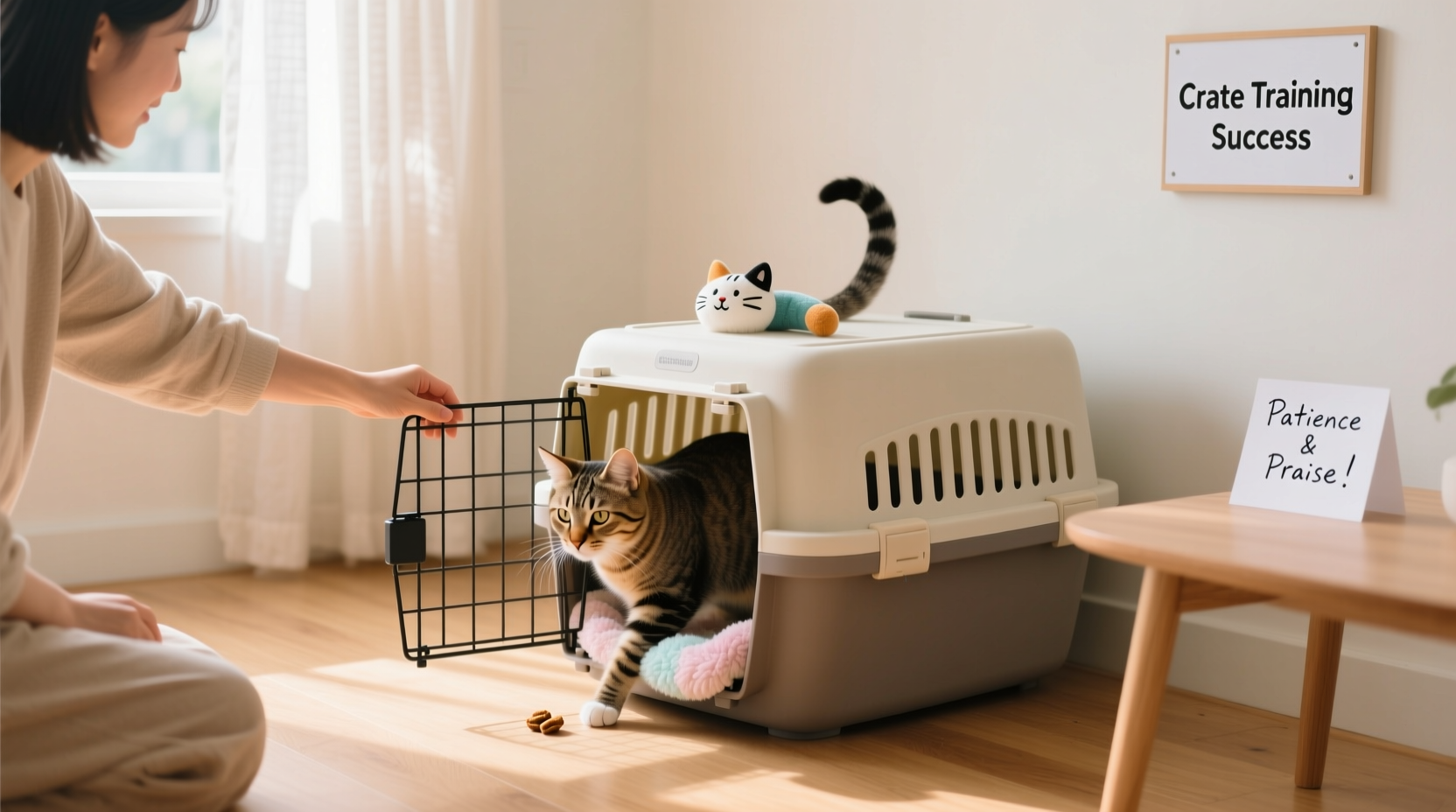
Cats are creatures of habit, highly sensitive to changes in their environment. A sudden appearance of a plastic or wire crate disrupts their sense of security. Many cats have only experienced carriers during stressful events—being rushed to the vet, boarding, or moving homes. These negative associations create lasting fear responses.
The key is to decouple the crate from these stressful experiences. Instead of using it only when something unpleasant is about to happen, integrate it into daily life as a neutral or even positive space. This process, known as counter-conditioning, gradually reshapes your cat’s emotional response through repeated positive exposure.
Step-by-Step: Training Your Cat to Enter the Crate Voluntarily
Successful crate training takes time, patience, and consistency. Follow this 4-week timeline to build confidence and cooperation:
- Week 1: Introduce the crate as furniture. Place it in a quiet but accessible area (e.g., living room or bedroom). Leave the door open and allow your cat to investigate at their own pace. Toss treats or toys near and inside the crate to spark curiosity.
- Week 2: Add comfort and value. Line the crate with a soft blanket, cat bed, or an item of clothing with your scent. Feed meals or offer high-value treats (like tuna flakes or freeze-dried chicken) inside the crate. Let your cat come and go freely.
- Week 3: Practice closing the door briefly. Once your cat enters confidently, gently close the door while they’re eating or resting inside. Open it again after 10–15 seconds. Gradually increase duration over several days, always ensuring your cat remains calm.
- Week 4: Simulate short “trips.” Pick up the crate and carry it a few feet. Later, place it in a stationary car or another room. Continue rewarding calm behavior. Avoid actual travel until your cat shows no signs of stress.
This gradual approach builds trust and control, allowing your cat to feel empowered rather than trapped.
Choosing the Right Crate and Environment
Not all carriers are created equal. A poorly designed crate can amplify stress. Consider the following features when selecting one:
| Feature | Recommended | Avoid |
|---|---|---|
| Entry Type | Top-loading or dual-door models | Back-only entry (harder to coax cat in) |
| Material | Soft-sided (for home use) or hard-shell with ventilation | Poorly ventilated plastic or flimsy fabric |
| Size | Fits your cat comfortably with room to turn | Too large (less secure) or too small (restrictive) |
| Comfort | Removable, washable bedding | Bare plastic or metal floors |
Soft carriers are lighter and less intimidating, while hard-shell ones offer better protection during transport. For maximum flexibility, consider a carrier that splits in half—vets can remove the back section without stressing the cat.
Expert Insight: What Veterinarians Recommend
Veterinary professionals emphasize that crate training is preventive healthcare. Dr. Lena Torres, a feline behavior specialist at the American Association of Feline Practitioners, explains:
“Cats who are stressed during transport have elevated cortisol levels, which can suppress immune function and complicate diagnoses. A cat that enters their carrier calmly is not just easier to handle—it’s medically safer.” — Dr. Lena Torres, DVM, Feline Behavior Consultant
She also recommends using pheromone sprays like Feliway inside the crate 15–20 minutes before use. These synthetic analogs of natural facial pheromones help reduce anxiety and promote a sense of familiarity.
Tips for Immediate Success During Travel or Emergencies
Even with training, real-world situations require smart tactics. Use these actionable strategies to minimize stress:
- Use a favorite blanket or toy inside the crate to provide comfort.
- Cover the carrier with a lightweight cloth to create a den-like, calming environment.
- Transport the crate low to the ground and avoid sudden movements.
- Speak softly and maintain a steady, reassuring tone.
- If your cat refuses to enter, try placing the crate in a small room with food and water—most cats will eventually explore and settle in.
Real-Life Example: From Fearful to Fearless
Mia, a 3-year-old rescue cat in Portland, Oregon, would hide under the bed whenever her owner brought out the carrier. Attempts to scoop her up resulted in hissing and scratches. Her owner, Sarah, decided to start fresh using positive reinforcement.
She left the carrier open in the living room for two weeks, tossing treats inside daily. She began feeding Mia’s evening meal in the crate, then added a cozy bed. After three weeks, Mia was napping inside regularly. When Sarah gently closed the door, Mia barely reacted. Within a month, Mia walked into the carrier on cue when offered a piece of chicken. Her first vet visit using the new method was smooth—no sedation, no struggle. The vet noted, “She was one of the calmest cats we’ve seen.”
Checklist: Ensuring Stress-Free Crate Use
Before every use, run through this quick checklist:
- ✅ Carrier is clean and odor-free (avoid strong cleaners)
- ✅ Bedding is soft and familiar
- ✅ Door opens and closes smoothly
- ✅ Treats or toys are placed inside to encourage entry
- ✅ Pheromone spray applied (if needed)
- ✅ Route and destination are prepared (e.g., car warmed, vet appointment confirmed)
FAQ: Common Concerns About Cat Crates
What if my cat still won’t go in, even after training?
Some cats need more time. Try breaking the process into smaller steps—reward simply looking at the crate, then approaching, then sniffing. If progress stalls, consult a veterinary behaviorist. Underlying anxiety or past trauma may require professional support.
Can I sedate my cat for travel?
Sedation should be a last resort and only under veterinary guidance. Many over-the-counter remedies can be unsafe. Proper crate training often eliminates the need for medication.
Should I cover the crate during travel?
Yes, covering with a breathable fabric reduces visual stimuli and creates a secure, cave-like atmosphere. Ensure airflow isn’t blocked and monitor your cat for signs of overheating.
Conclusion: Building Trust One Step at a Time
Helping your cat enter a crate smoothly isn’t about tricks or shortcuts—it’s about empathy, consistency, and respect for their instincts. By redefining the crate as a safe zone rather than a threat, you empower your cat to face change with greater resilience. Whether it’s a routine check-up or an unexpected move, a well-trained cat means less stress for everyone involved.




 浙公网安备
33010002000092号
浙公网安备
33010002000092号 浙B2-20120091-4
Comments
No comments yet. Why don't you start the discussion?