
Bringing a new kitten into a home where an older, territorial, or easily stressed cat already lives can be one of the most delicate transitions in pet ownership. The energetic antics of a playful kitten often clash with the calm, routine-driven life of a senior feline, especially one who has grown accustomed to being the sole focus of attention. Without careful planning, this introduction can lead to prolonged tension, aggression, or even lifelong hostility between pets. However, with patience, structure, and empathy for both animals’ emotional needs, peaceful coexistence is not only possible—it can evolve into companionship.
The key lies in understanding that cats are creatures of habit and territory. An older cat may perceive a newcomer as an intruder threatening their safety and resources. A kitten, on the other hand, sees everything as an adventure. Bridging this gap requires more than hope; it demands strategy. This guide outlines science-backed and behaviorist-approved methods to ensure a smooth, low-stress integration process.
Understanding Feline Behavior During Introductions
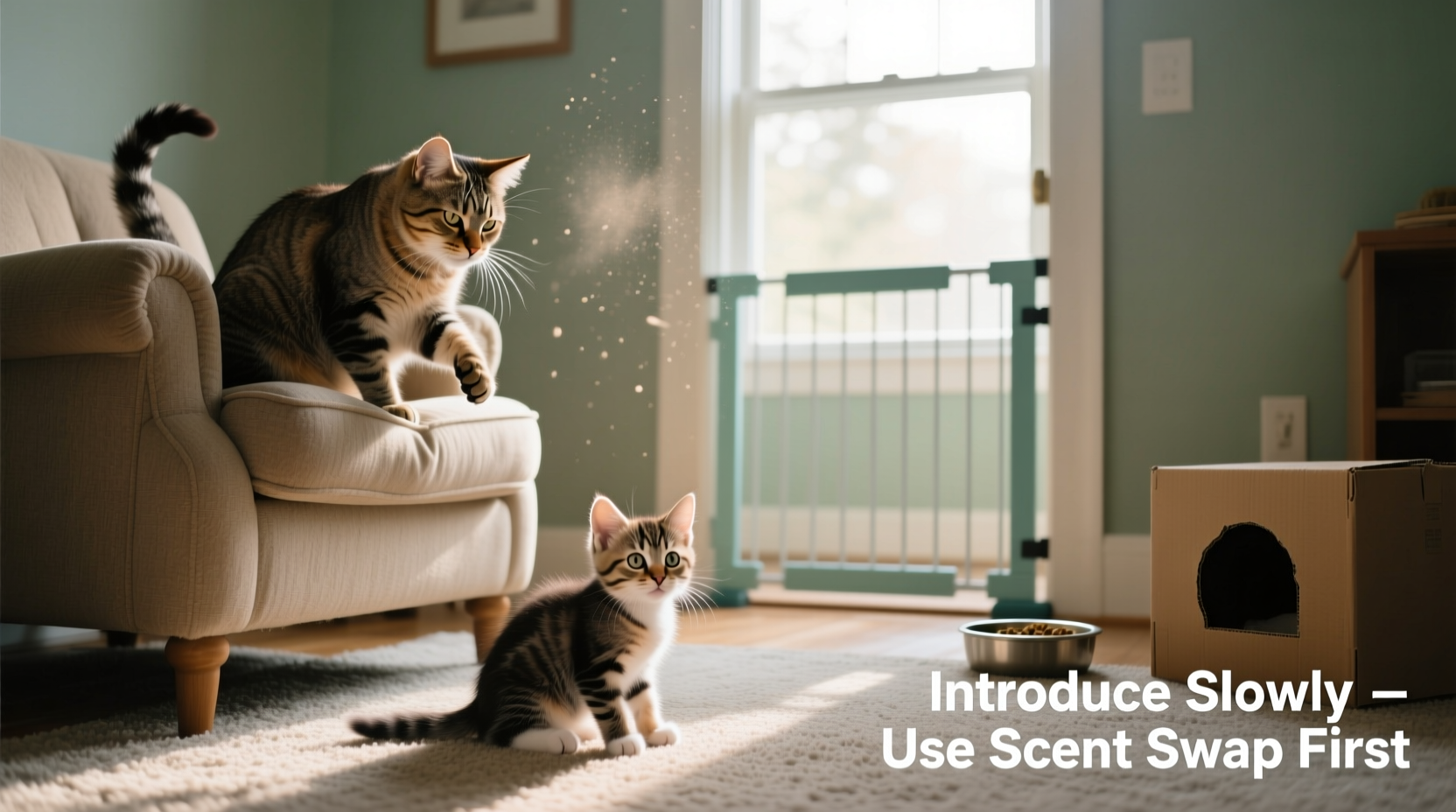
Cats communicate primarily through scent, body language, and subtle environmental cues—not vocalizations or direct confrontation (unless forced). When a new animal enters their space, they rely on olfactory signals first. Sudden visual exposure without prior scent familiarization can trigger fear or defensive aggression.
Older cats, particularly those who have lived alone for years, often develop rigid routines. Disruptions—even positive ones like a new companion—can cause anxiety. Signs of distress include hiding, excessive grooming, urination outside the litter box, or growling when near doors where the kitten is present.
Kittens, while naturally curious, may escalate tension by chasing, pouncing, or invading personal spaces. What seems like playfulness to humans can feel like harassment to a senior cat. Recognizing these dynamics early allows owners to mediate interactions before negative associations solidify.
“Cats don’t naturally form colonies like dogs. Every introduction must be managed as if building trust from scratch.” — Dr. Sarah Ellis, Certified Cat Behavior Specialist, International Society of Feline Medicine
A Step-by-Step Timeline for Safe Introduction
Rushing the process is the most common mistake. A proper introduction should span **7 to 14 days minimum**, though some cases require several weeks. Follow this phased approach:
- Phase 1: Separate Living (Days 1–3)
Keep the kitten in a separate room with its own litter box, food, water, toys, and bedding. Never allow free access to shared areas initially. - Phase 2: Scent Swapping (Days 4–6)
Use soft cloths to gently wipe each cat’s cheeks (where scent glands are located), then place the cloth in the other’s space. Rotate beds every few days so they sleep on each other’s used bedding. - Phase 3: Controlled Visual Exposure (Days 7–9)
Use a baby gate or cracked door so cats can see but not touch each other. Offer treats during these sessions to create positive associations. - Phase 4: Supervised Interaction (Days 10–14)
Allow brief, leashed or confined meetings (e.g., in a large pen). End before any signs of stress appear. Gradually increase duration. - Phase 5: Full Integration (After Day 14+)
Only when both cats remain relaxed in proximity should you allow unsupervised time together. Continue monitoring closely for weeks.
Essential Do’s and Don’ts During the Transition
Mistakes during introduction can set progress back by weeks. Refer to this table to stay on track:
| Do’s | Don’ts |
|---|---|
| Provide vertical space (cat trees, shelves) so the older cat can retreat upward | Force face-to-face meetings before both cats show calm curiosity |
| Use pheromone diffusers (like Feliway) in shared areas to reduce stress | Reprimand or shout at either cat during tense moments—it increases anxiety |
| Maintain separate resources (litter boxes, food bowls, sleeping spots) even after integration | Punish the older cat for hissing—it’s natural communication |
| Play with the older cat daily to reinforce their bond with you | Let the kitten roam freely while the older cat is asleep or vulnerable |
| Monitor body language: flattened ears, tail flicking, or crouching signal discomfort | Assume silence means acceptance—some cats suppress stress until they explode |
Real-Life Example: Bella and Milo’s Successful Integration
Bella, a 10-year-old domestic shorthair, had lived alone with her owner for eight years. When her owner adopted Milo, a 12-week-old tabby kitten, Bella immediately retreated under the bed and refused to eat for two days.
Following a structured plan, the owner kept Milo in a spare bedroom, swapped scents using blankets, and played calming music near Bella’s space. By day five, Bella began sniffing Milo’s blanket without growling. At day nine, they were introduced behind a baby gate. The owner fed them kibble on either side, reinforcing mealtime with peace.
By week three, Milo would nap near the gate while Bella watched from a distance. No chasing occurred because the owner redirected Milo’s energy with wand toys. After four weeks, supervised floor time began. Today, Bella and Milo nap within three feet of each other—Bella still prefers solitude, but no longer flees the room when Milo enters.
This case illustrates that success doesn’t require cuddling or grooming between cats. Peaceful tolerance is a win.
Checklist: Preparing Your Home for a Smooth Introduction
- Designate a quiet, fully equipped room for the kitten (litter box, food, water, scratching post, bed)
- Install pheromone diffusers in common areas one week before arrival
- Double the number of litter boxes (one per cat plus one extra)
- Ensure multiple escape routes and elevated perches in shared zones
- Stock up on high-value treats (chicken, tuna flakes) for reward-based training
- Prepare a logbook to track interactions, appetite, and bathroom habits
- Trim both cats’ claws slightly to minimize injury risk during early encounters
- Have a soft carrier or harness ready for controlled movement
Frequently Asked Questions
How long does it take for an older cat to accept a kitten?
There is no fixed timeline. Some cats tolerate newcomers within two weeks; others take months. Factors include the older cat’s personality, past socialization, and how consistently the introduction process is followed. Patience is essential—rushing leads to setbacks.
What if my older cat swats or hisses at the kitten?
Hissing and swatting are normal forms of communication. As long as it’s not escalating to full attacks or causing injury, these behaviors are part of boundary-setting. Never punish the older cat. Instead, separate them calmly and return to earlier phases of the introduction. Redirect the kitten’s attention if it provokes the older cat.
Can I leave them alone together once they seem fine?
No—never leave them unsupervised until they’ve consistently shown relaxed behavior around each other for at least one week. Even brief unmonitored interactions can result in trauma or injury. Gradual trust-building takes time.
Expert Insight: Why Scent Matters More Than Sight
Dr. Mikel Delgado, a feline behavior expert at the University of California, Davis, emphasizes that humans prioritize visual cues, but cats rely on smell above all else.
“When cats meet, they’re asking, ‘Do I know you? Are you safe?’ Scent answers that question. If you skip scent exchange and go straight to sight, you’re forcing a cold confrontation—one that almost always ends in fear.” — Dr. Mikel Delgado, PhD, Cat Behavior Researcher
This explains why swapping bedding, using cheek-wiped cloths, and feeding near shared doors are so effective. These actions simulate gradual, natural acquaintance rather than sudden invasion.
Conclusion: Building Harmony One Step at a Time
Introducing a new kitten to an older, grumpy cat isn’t about forcing friendship—it’s about managing change with empathy and precision. Success isn’t measured by whether the cats groom each other, but by whether they can share a home without fear or conflict. Each phase of the process builds neural associations: the kitten’s scent becomes familiar, not frightening; the older cat’s space remains secure, even with new activity nearby.
Remember, your older cat isn’t being “mean”—they’re protecting their world. And your kitten isn’t “annoying”—they’re exploring theirs. Your role is to be the bridge, the translator, and the peacekeeper. With consistency, observation, and respect for both animals’ limits, you’ll create a household where both can thrive.




 浙公网安备
33010002000092号
浙公网安备
33010002000092号 浙B2-20120091-4
Comments
No comments yet. Why don't you start the discussion?