
Stray cats often wander into residential areas in search of food, shelter, or warmth. While their presence may seem harmless—or even endearing—persistent visits can lead to noise, hygiene concerns, or damage to gardens and outdoor spaces. The key is addressing the issue humanely. Modern best practices emphasize coexistence without conflict, using deterrents that discourage rather than punish. These methods protect both your property and the well-being of the animals.
Understanding Why Stray Cats Enter Your Property
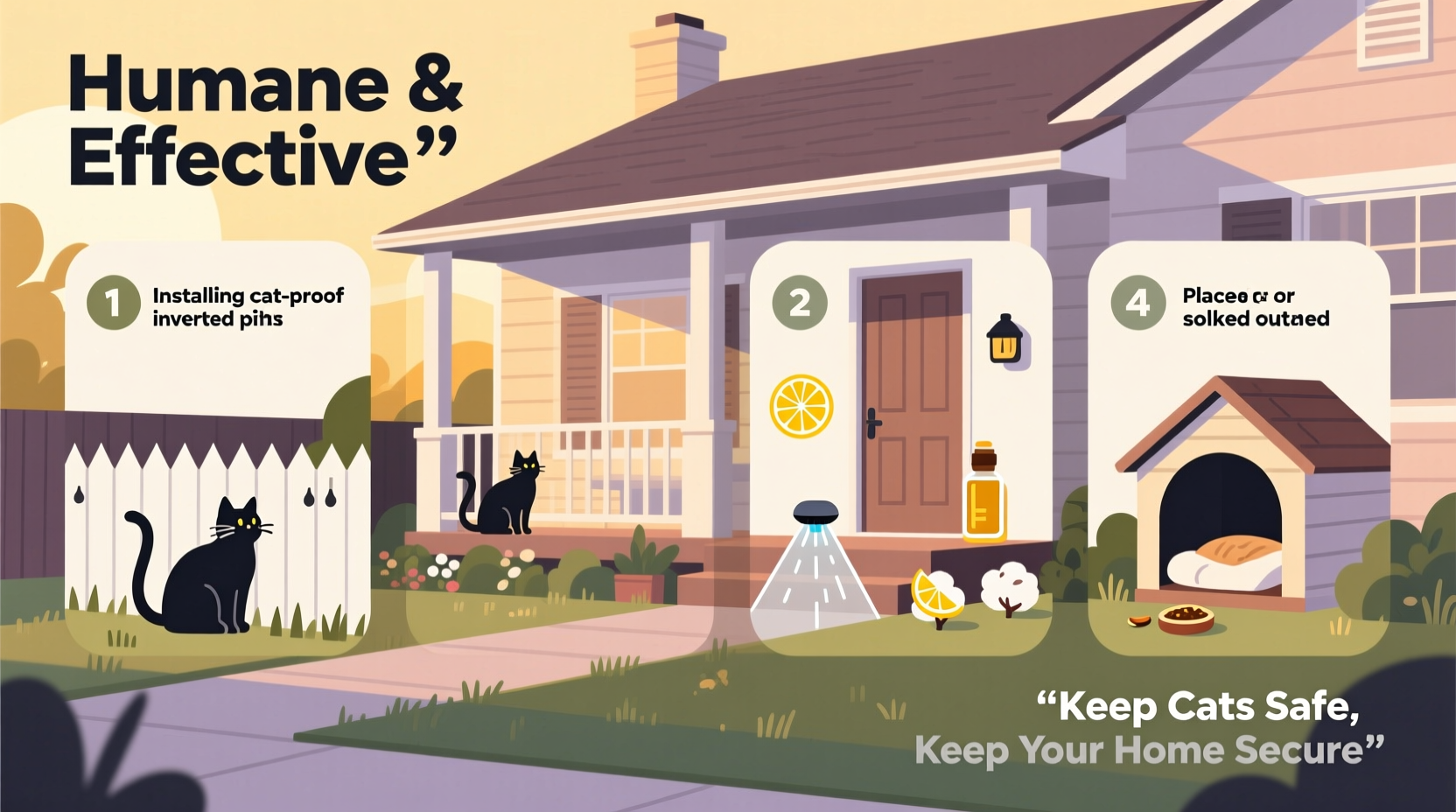
Cats are naturally curious and territorial. A stray cat doesn’t randomly choose your yard—it’s responding to environmental cues. Common attractants include accessible food sources (like uncovered compost or pet bowls), warm shelter spots (under decks or sheds), and unsecured entry points (open garage doors or broken screens).
Additionally, unneutered strays may mark territory with urine, which can create recurring issues if not managed early. Understanding these motivations allows for targeted, non-harmful interventions.
Step-by-Step Guide to Cat-Proofing Your Outdoor Space
- Inspect your property perimeter for gaps under decks, openings in fences, or loose siding where cats could enter.
- Secure trash and compost bins with tight-fitting lids or bungee cords.
- Bring in pet food after feeding, especially during evening hours when strays are most active.
- Install motion-activated sprinklers near common entry zones to startle cats gently.
- Use ultrasonic deterrent devices that emit high-frequency sounds unpleasant to cats but inaudible to humans.
Humane Deterrent Methods That Work
The goal is to make your space undesirable without causing distress. Effective strategies rely on sensory discomfort—texture, smell, sound—rather than physical barriers alone.
| METHOD | HOW IT WORKS | DURATION OF EFFECT |
|---|---|---|
| Aluminum foil or plastic carpet runners (spike-side up) | Unpleasant texture discourages walking or lounging | Immediate, lasts as long as installed |
| Citrus peels or essential oils (orange, lemon, citronella) | Strong scent repels cats naturally | 1–3 days; reapply after rain |
| Mothballs (used cautiously outdoors only) | Pungent odor deters animals | 1–2 weeks; replace regularly |
| Motion-activated air sprayers | Release a burst of air when movement is detected | Ongoing; battery-dependent |
Note: Avoid mothballs near children or pets, and never use them indoors. Their chemicals can be toxic if ingested or inhaled.
Creating Unwelcoming Zones Around Entry Points
Garages, basements, and patios are frequent targets. Prevent access by combining physical and sensory deterrents.
- Install door sweeps to close gaps beneath exterior doors.
- Use lattice or wire mesh to block crawl spaces under porches.
- Place pine cones or decorative river rocks in garden beds—cats dislike digging through uneven surfaces.
- Hang old CDs or wind chimes near windows; the reflection and noise disrupt comfort.
Real Example: How One Homeowner Reduced Visits by 90%
Sarah from Portland noticed stray cats entering her garage nightly, leaving behind waste and nesting materials. She began by removing an old cat carrier left outside and sealing a small gap near the water heater. Next, she placed citrus-scented cotton balls along the foundation and installed a motion-activated sprinkler near the back door.
Within two weeks, sightings dropped significantly. After a month, only occasional paw prints remained—and no further entries. “I didn’t want to hurt them,” she said. “But I needed my garage back. The sprinkler was the game-changer.”
Expert Insight on Coexistence and Community Responsibility
Animal behavior specialists stress that long-term solutions require community involvement. Isolated efforts may simply shift the problem to a neighbor’s yard.
“Effective stray management isn’t about exclusion alone—it’s about reducing attraction across neighborhoods. Trap-Neuter-Return (TNR) programs, when combined with responsible feeding policies, yield the most sustainable results.” — Dr. Lena Torres, Urban Wildlife Biologist
TNR initiatives humanely capture strays, sterilize them, vaccinate, and return them to monitored colonies. This reduces mating behaviors, territorial spraying, and population growth over time. Supporting local TNR groups can alleviate pressure on individual households.
Checklist: 7 Actions to Keep Stray Cats Away Humanely
- ✅ Remove outdoor food sources (pet bowls, open compost)
- ✅ Seal entry points under decks, garages, and sheds
- ✅ Use citrus-based sprays or essential oils in frequented areas
- ✅ Install motion-activated sprinklers or lights
- ✅ Lay down textured mats or aluminum foil in sitting zones
- ✅ Support or volunteer with local TNR programs
- ✅ Communicate with neighbors to ensure consistent efforts
Frequently Asked Questions
Are ultrasonic cat repellents safe?
Yes. Ultrasonic devices emit frequencies uncomfortable to cats but completely safe. They do not cause hearing damage or long-term stress. Effectiveness varies by model and environment, so choose one with adjustable settings and weatherproof housing for outdoor use.
What should I do if a stray cat has already had kittens on my property?
Do not attempt to move the kittens immediately. Contact a local animal rescue or TNR organization. They can help safely trap the mother and kittens, provide medical care, and arrange foster or adoption. Disturbing the nest too soon may cause the mother to abandon the young.
Can I legally prevent stray cats from entering my yard?
In most regions, you have the right to deter animals from your private property as long as no cruelty is involved. Trapping, harming, or relocating strays without permits is often illegal. Always use non-lethal, humane methods and consult local animal control for guidance.
Conclusion: Compassion Meets Practicality
Keeping stray cats away from your home doesn’t require extreme measures or ethical compromise. By understanding feline behavior and applying thoughtful, layered deterrents, you can reclaim your space while respecting animal welfare. The most successful outcomes come from consistency, community awareness, and a commitment to humane practices.




 浙公网安备
33010002000092号
浙公网安备
33010002000092号 浙B2-20120091-4
Comments
No comments yet. Why don't you start the discussion?