
Nitrate buildup is one of the most common yet overlooked challenges in aquarium maintenance. While less toxic than ammonia or nitrite, elevated nitrate levels can stress fish, promote excessive algae growth, and ultimately compromise the long-term health of your aquatic ecosystem. Unlike sudden spikes in ammonia, nitrates accumulate gradually—making them easy to ignore until problems arise. The good news is that with consistent care and informed practices, you can effectively manage and reduce nitrate concentrations. This guide outlines proven, practical methods to keep your tank’s water chemistry balanced and your fish thriving.
Understanding Nitrates: The Silent Threat
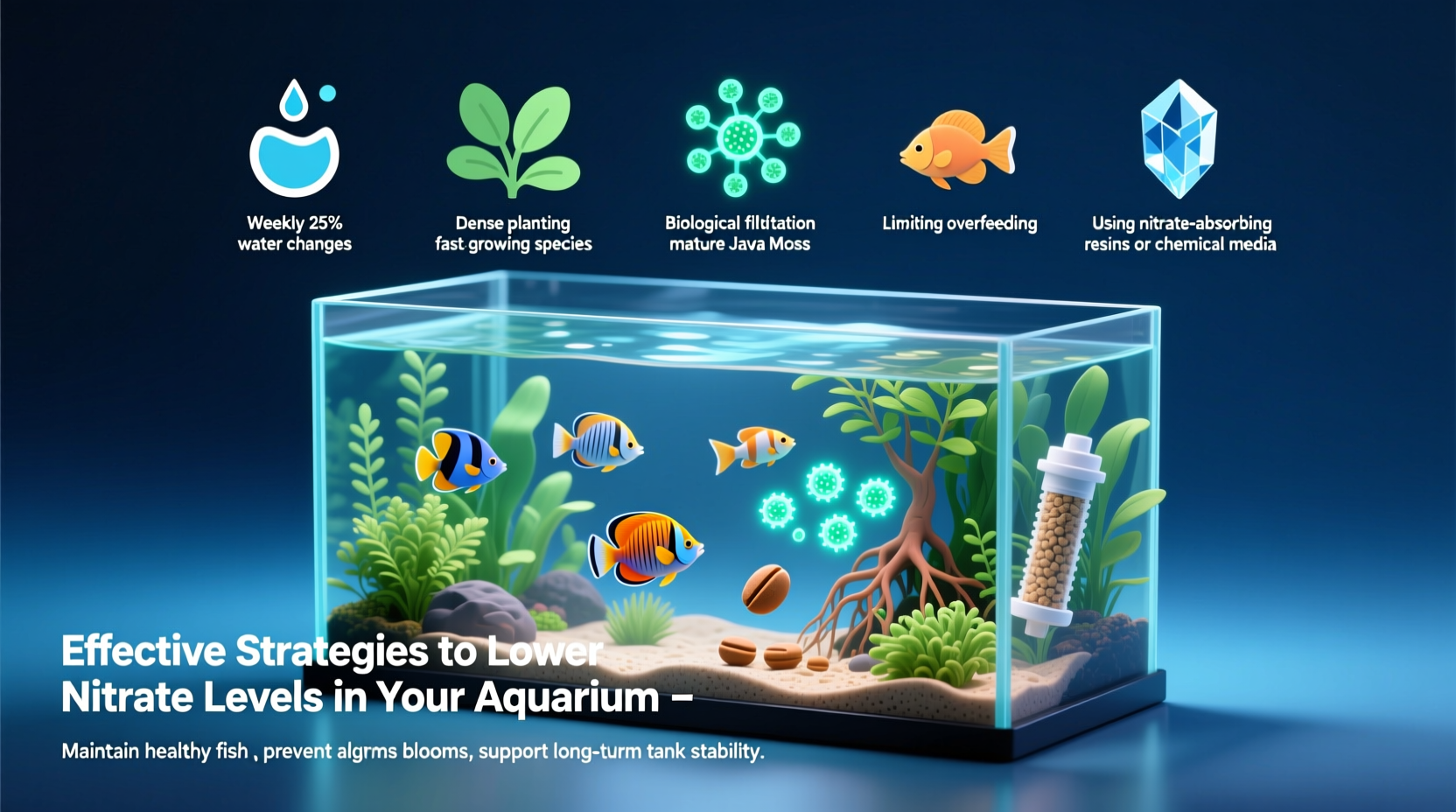
Nitrates (NO₃⁻) are the end product of the nitrogen cycle in an aquarium. Beneficial bacteria convert harmful ammonia from fish waste and decaying matter into nitrite, then into nitrate. While this final stage detoxifies more dangerous compounds, it doesn’t eliminate risk. Over time, nitrates build up unless actively removed. In freshwater tanks, levels above 50 ppm can begin to affect sensitive species; marine and reef systems often require levels under 10 ppm for optimal coral health.
Fish exposed to chronically high nitrates may show reduced appetite, lethargy, increased susceptibility to disease, and in extreme cases, reproductive failure. Algae blooms—especially hair algae and green water—are also strong indicators of excess nitrates. Because symptoms develop slowly, many aquarists don’t realize their tank has a nitrate problem until visible signs appear.
“Nitrates are like cholesterol in human health—they don’t cause immediate harm, but long-term exposure leads to systemic decline.” — Dr. Lisa Chen, Aquatic Veterinarian and Water Quality Specialist
Key Strategies to Reduce Nitrate Levels
1. Perform Regular Partial Water Changes
The most direct and effective method to lower nitrates is routine water replacement. By removing a portion of nitrate-rich water and replacing it with clean, dechlorinated water, you dilute accumulated pollutants instantly.
Use a gravel vacuum during water changes to remove detritus from the substrate—the primary source of organic decay that fuels nitrate production. Always match the temperature and pH of new water to your tank to avoid shocking inhabitants.
2. Optimize Your Filtration System
Standard mechanical and biological filters do not remove nitrates. However, incorporating specialized media can enhance nitrate reduction:
- Nitrate-absorbing resins: Products like Seachem Denitrate or API Nitra-Zorb chemically bind nitrates. Effective for short-term control but require regular replacement.
- Anaerobic denitrifying filters: These use porous media to foster anaerobic bacteria that convert nitrates into nitrogen gas. Best suited for sumps or canister filters with low flow zones.
- Protein skimmers (saltwater only): Remove organic waste before it breaks down into nitrates, significantly reducing nutrient load.
3. Introduce Live Plants
Aquatic plants naturally consume nitrates as a nutrient source for growth. Fast-growing species such as hornwort, duckweed, and stem plants like wisteria or hygrophila are particularly efficient at nitrate uptake.
| Plant Type | Nitrate Uptake Efficiency | Best For |
|---|---|---|
| Hornwort | High | All tank types, floating or anchored |
| Dwarf Hygrophila | High | Planted freshwater tanks |
| Marsilea hirsuta | Medium | Low-light setups |
| Chaetomorpha (macroalgae) | Very High | Refugiums in saltwater systems |
Ensure adequate lighting and CO₂ (for demanding species) to maximize plant growth and nutrient consumption.
4. Control Feeding and Bioload
Overfeeding is a leading contributor to nitrate accumulation. Uneaten food decomposes rapidly, releasing nitrogen compounds into the water. Similarly, overstocking increases waste output beyond the system’s processing capacity.
Regularly assess your tank’s bioload. A general rule is 1 inch of adult fish per gallon for small community species, less for larger or messier eaters like goldfish or cichlids.
5. Use a Refugium or Deep Sand Bed
In advanced setups, especially marine tanks, a refugium—a separate chamber connected to the main tank—can host macroalgae and beneficial microfauna. Macroalgae absorb nitrates and phosphates, while microorganisms aid in denitrification.
Deep sand beds (6+ inches) create anaerobic zones where denitrifying bacteria thrive. Caution: these must be established carefully to prevent hydrogen sulfide buildup.
Step-by-Step Guide to Lowering High Nitrates
- Test current nitrate levels using a liquid test kit (more accurate than strips).
- Perform an immediate 30–50% water change if levels exceed 75 ppm.
- Vacuum the substrate thoroughly to remove trapped organic debris.
- Inspect and clean filter media, replacing chemical media if exhausted.
- Reduce feeding temporarily and remove any uneaten food promptly.
- Add fast-growing live plants or introduce nitrate-reducing media.
- Establish a maintenance schedule: Weekly 20% water changes, monthly filter inspection, biweekly testing.
Mini Case Study: Recovering a Stressed Community Tank
Mark, a hobbyist with a 55-gallon freshwater community tank, noticed his tetras becoming sluggish and frequent green algae blooms. Testing revealed nitrate levels at 90 ppm—well above the safe threshold. After consulting a local aquarium expert, he implemented a recovery plan: upgraded his filter with Denitrate media, added a bunch of hornwort, began weekly 30% water changes, and reduced feeding frequency. Within six weeks, nitrates dropped to 25 ppm. His fish regained color and activity, and algae growth slowed dramatically. Mark now tests monthly and credits proactive maintenance with transforming his tank’s stability.
Checklist: Maintain Low Nitrate Levels
- ✅ Test water weekly for nitrates
- ✅ Perform 20–30% water changes regularly
- ✅ Vacuum substrate during each change
- ✅ Avoid overfeeding and overstocking
- ✅ Use live plants or nitrate-removing media
- ✅ Clean or replace chemical filtration monthly
- ✅ Monitor algae as an early warning sign
Common Mistakes That Increase Nitrates
| Do’s | Don’ts |
|---|---|
| Use live plants to absorb nutrients | Let dead leaves or uneaten food decay in the tank |
| Change filter media without rinsing in tap water (kills beneficial bacteria) | Rinse media in dechlorinated tank water |
| Invest in a quality test kit | Rely solely on visual cues |
| Stock fish gradually | Add too many fish at once |
FAQ
How often should I test for nitrates?
Test weekly in new or heavily stocked tanks. Once stable, biweekly testing is sufficient for most mature aquariums.
Can high nitrates kill fish?
Yes. While not acutely toxic like ammonia, prolonged exposure to high nitrates (>100 ppm) weakens immune systems, causes chronic stress, and can lead to death—especially in fry or sensitive species like discus or cardinal tetras.
Is bottled water safe for water changes to reduce nitrates?
Not necessarily. Some bottled waters contain minerals, salts, or additives unsuitable for aquariums. Reverse osmosis (RO) water is ideal but must be remineralized for freshwater tanks. Tap water treated with a conditioner is usually safer and more cost-effective.
Conclusion
Keeping nitrate levels in check isn’t about quick fixes—it’s about building sustainable habits that support a balanced aquatic environment. From disciplined water changes to thoughtful stocking and the strategic use of plants and filtration, every action contributes to long-term water quality. Healthy fish start with clean water, and clean water starts with your daily choices. Take control of your tank’s chemistry today, and enjoy a clearer, more vibrant aquarium tomorrow.




 浙公网安备
33010002000092号
浙公网安备
33010002000092号 浙B2-20120091-4
Comments
No comments yet. Why don't you start the discussion?