
In the digital age, maintaining a clean and intentional online presence is more important than ever. Whether you're an individual managing personal branding or a business streamlining its social media footprint, unwanted Facebook pages can clutter your profile, confuse audiences, or even pose security risks. These pages might include outdated brand iterations, test pages, duplicate profiles, or ones created without your consent. Left unattended, they can harm credibility or attract spam. The good news is that Facebook provides tools to effectively manage and permanently remove such pages. This guide outlines practical, secure, and verified methods to take control of your digital identity on the platform.
Understanding the Risks of Unmanaged Facebook Pages
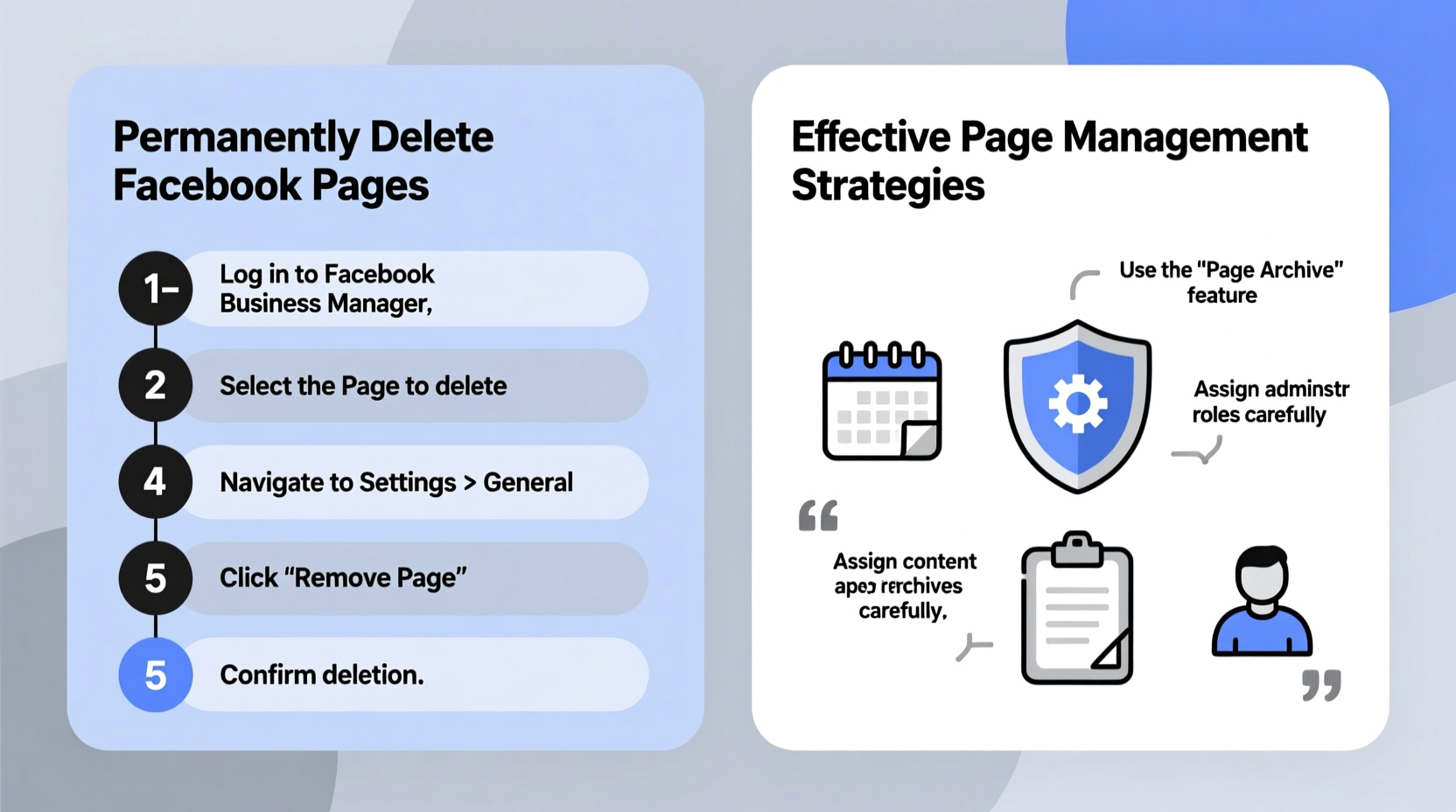
Unwanted Facebook pages aren’t just digital clutter—they can lead to real consequences. Duplicate or abandoned pages may be hijacked by impersonators, used for phishing scams, or mislead customers searching for your legitimate business. In some cases, former employees or collaborators who retain admin access can post unauthorized content. Additionally, search engines often index Facebook content, meaning inactive or irrelevant pages can appear in Google results, damaging your reputation or SEO efforts.
From a privacy standpoint, pages associated with your name or email—even if not actively managed—can expose you to data harvesting or social engineering attacks. For businesses, inconsistent branding across multiple pages confuses customers and weakens marketing impact. Recognizing these risks is the first step toward proactive page management.
“Digital hygiene isn’t optional anymore. Every unclaimed or forgotten page is a potential vulnerability.” — Lena Patel, Cybersecurity Consultant at TrustNet Digital
Step-by-Step Guide to Permanently Delete a Facebook Page
Deleting a Facebook page is irreversible, so ensure you’ve backed up any essential content before proceeding. Only admins with full privileges can delete a page. Follow this sequence carefully:
- Log in to Facebook using the account that has admin rights to the page.
- Navigate to your Facebook Pages dashboard.
- Select the unwanted page from your list.
- Click on Settings in the top-right menu.
- In the left sidebar, choose General.
- Scroll down to the section labeled “Remove Page.”
- Click Delete Page.
- Confirm your decision when prompted. Facebook will initiate a 14-day waiting period.
During this grace period, the page remains hidden but can be restored if needed. After 14 days, it is permanently deleted, along with all posts, likes, comments, and insights. No data recovery is possible after deletion.
Managing Pages Without Deleting: Transfer, Merge, or Archive
Deletion isn’t always the best option. Sometimes, consolidation or reassignment is more strategic. Consider these alternatives:
- Transfer Ownership: If the page still holds value but no longer fits your brand, transfer it to a relevant organization or team member. Go to Page Settings > Page Roles > Add Person, assign them as admin, then remove yourself.
- Merge Duplicate Pages: Facebook allows merging of similar pages under certain conditions (e.g., same business name, location). Use the Page Merge Tool to consolidate followers and content.
- Deactivate Instead of Delete: While Facebook doesn’t offer a true “archive” feature, you can restrict posting and visibility by removing admins, unpublishing content, and disabling messaging. The page remains in your portfolio but becomes inert.
When to Choose Each Option
| Action | Best For | Reversible? | Data Retention |
|---|---|---|---|
| Delete | Irrelevant, fake, or harmful pages | No, after 14 days | None |
| Transfer | Rebranding or team handover | Yes, if new owner agrees | Full retention |
| Merge | Duplicate business pages | Limited reversal window | Combined data |
| Deactivate | Temporary pause or legacy preservation | Yes, at any time | Complete |
Real Example: Cleaning Up a Brand’s Digital Footprint
A regional coffee chain, BrewHaven, discovered five unofficial Facebook pages claiming to represent their brand. Two were fan-made, one was a defunct location, and two appeared suspicious—posting unrelated ads and collecting follower data. Their marketing team took immediate action:
They reported the fraudulent pages via Facebook’s impersonation policy, which led to swift removal. The defunct location page was transferred to their archive account and unpublished. The fan pages were contacted politely; one agreed to convert to a public group, while the other was left untouched due to positive community engagement. Finally, they merged two overlapping location pages using Facebook’s merge tool, consolidating over 8,000 followers into one authoritative profile. Within three weeks, BrewHaven’s official page became the sole, trusted source—boosting engagement by 34% and improving customer trust.
Essential Checklist for Managing Unwanted Pages
Use this checklist to systematically address unwanted Facebook pages:
- ✅ Audit all Facebook pages linked to your name, business, or email.
- ✅ Identify duplicates, outdated versions, or unauthorized pages.
- ✅ Verify admin access and remove unnecessary or former collaborators.
- ✅ Back up critical content (photos, reviews, insights) from pages slated for deletion.
- ✅ Decide whether to delete, transfer, merge, or deactivate each page.
- ✅ Initiate deletion only after confirming final decisions.
- ✅ Monitor search results and Facebook searches for lingering traces post-deletion.
- ✅ Update linked ads, websites, or directories to reflect current page URLs.
Frequently Asked Questions
Can I recover a Facebook page after it’s been deleted?
No. Once a page passes the 14-day grace period after deletion, it is permanently removed. All content, including photos, messages, and insights, is irretrievable. If you change your mind within 14 days, go to Settings > General > Remove Page and click “Reactivate Page.”
What if I don’t have admin access to a page I want to delete?
If you’re not an admin, you cannot delete the page. However, you can report it if it violates Facebook’s policies (e.g., impersonation, fraud). Visit the page, click the three dots below the cover photo, and select “Report Page.” Provide details to support your claim.
Will deleting a Facebook page remove all associated ads and billing?
Deleting a page does not automatically cancel active ad campaigns or payment methods. You must separately pause or end ads through Facebook Ads Manager and remove any linked credit cards or PayPal accounts under Billing Settings.
Take Control of Your Digital Identity Today
Your online presence should reflect your current goals, values, and brand integrity. Unwanted Facebook pages dilute your message, create confusion, and open doors to misuse. By systematically auditing, managing, and removing unnecessary pages, you protect your reputation and enhance audience trust. Whether you choose deletion, transfer, or consolidation, each step brings clarity and control. Don’t let digital clutter define your online story. Act now—clean up your Facebook presence and build a more focused, authentic digital footprint.




 浙公网安备
33010002000092号
浙公网安备
33010002000092号 浙B2-20120091-4
Comments
No comments yet. Why don't you start the discussion?