
Losing keys is more than just an inconvenience—it can waste time, increase stress, and even compromise security. Whether it’s house keys, car keys, or office access fobs, misplacing them disrupts routines and may lead to costly replacements. One of the most reliable and low-tech solutions? A well-chosen key case. More than just a storage accessory, a quality key case promotes organization, protects your keys, and reinforces consistent habits that drastically reduce the risk of loss.
This guide explores how to use a key case effectively, offering actionable strategies, real-life insights, and expert-backed methods to ensure your keys are always where you expect them to be.
Why Key Loss Happens (And How a Key Case Helps)
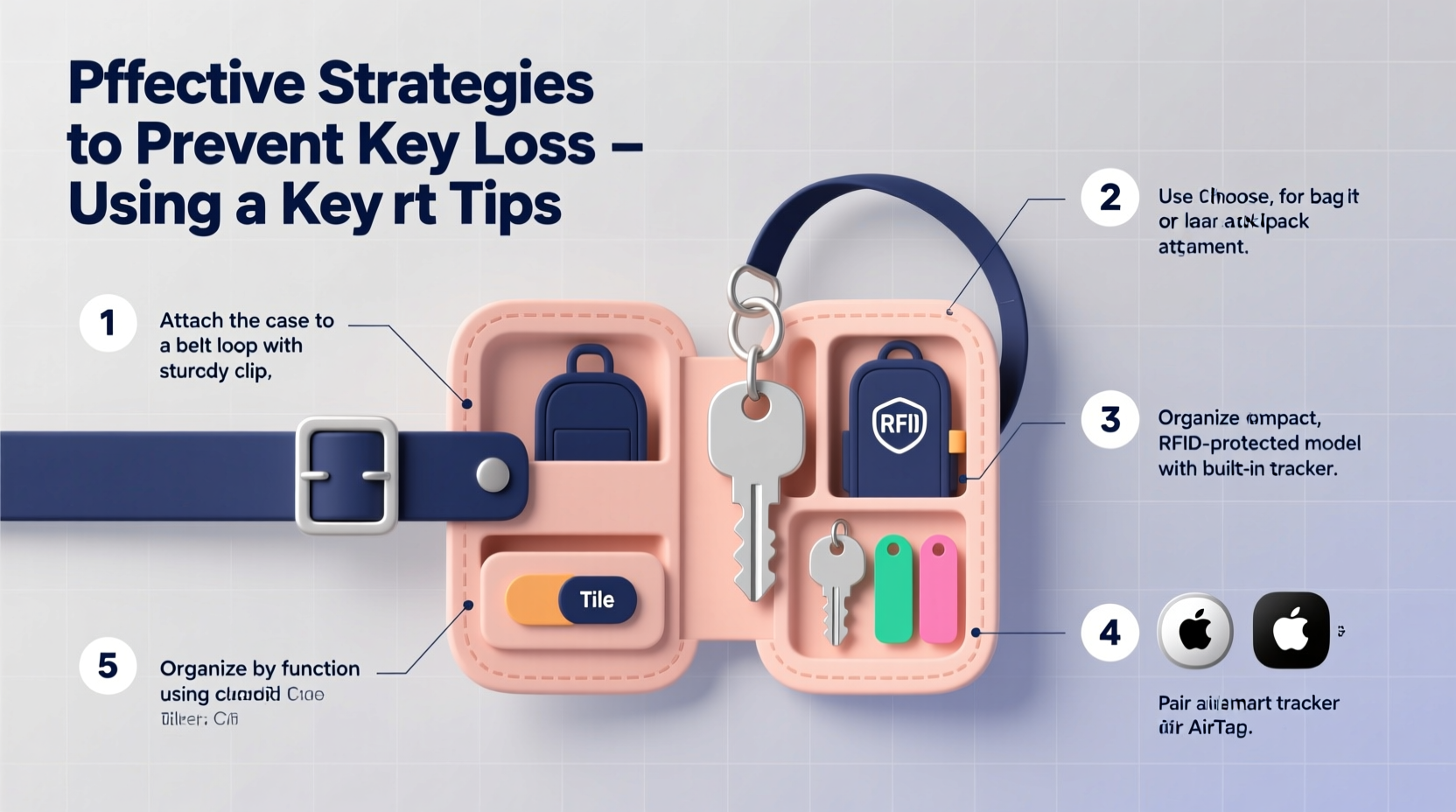
Most key loss occurs due to inconsistent placement, cluttered environments, or distracted behavior—like dropping keys into a coat pocket after work or tossing them on a random surface at home. Without a designated system, keys become invisible in plain sight.
A key case acts as both a physical organizer and a behavioral cue. It consolidates multiple keys into one compact unit, prevents tangling, and creates a routine: when you take out your keys, they come from the case; when you return them, they go back in. This simple feedback loop reduces cognitive load and builds muscle memory around responsible key management.
Selecting the Right Key Case for Your Lifestyle
Not all key cases are created equal. The best choice depends on your daily routine, the number of keys you carry, and whether you prioritize slim design, durability, or accessibility.
| Type | Best For | Pros | Cons |
|---|---|---|---|
| Leather Sleeve | Minimalists, professionals | Elegant, protects against scratches | Limited capacity, slower access |
| Rotating Key Holder | Bulk key carriers | Organizes up to 8 keys, quick retrieval | Bulkier, higher cost |
| Compact Metal Case | Durability seekers | Weather-resistant, long-lasting | Heavier, less pocket-friendly |
| Foldable Silicone Case | Travelers, active users | Lightweight, shock-absorbent | Less premium feel, may wear over time |
When selecting a case, consider not just function but also integration into your daily flow. If you frequently drive, a case that allows fast access to your car key without removing all others is ideal. For urban dwellers juggling apartment, gym, and office keys, a rotating organizer prevents digging through a tangled mess.
“People underestimate how much small organizational tools impact daily efficiency. A good key case eliminates friction and reduces anxiety.” — Daniel Reeves, Productivity Consultant
Step-by-Step Guide to Building a Key Management Routine
Choosing a key case is only the first step. To truly prevent loss, integrate it into a consistent habit. Follow this five-step process:
- Assess your current key load. Remove any unused or redundant keys. Fewer keys mean less bulk and fewer chances for misplacement.
- Purchase a key case suited to your needs. Use the comparison table above to narrow options based on lifestyle.
- Assign a permanent home for your key case. Designate a spot near your entryway—a hook, bowl, or shelf—where the case goes every time you enter your home.
- Anchor the habit to an existing routine. Link returning the key case to another action, like hanging up your coat or removing your shoes.
- Test and adjust weekly. After one week, evaluate: Are you still losing track? Is the case too bulky? Refine your system until it feels effortless.
Consistency matters more than perfection. Even if you forget twice a week at first, repeated reinforcement strengthens the habit over time.
Real-Life Example: How Sarah Reduced Key Misplacement by 90%
Sarah, a project manager and mother of two, used to lose her keys multiple times a week—often during morning rushes. She’d search drawers, bags, and couch cushions, adding 10–15 minutes of stress to her day.
After investing in a rotating aluminum key holder and placing a small tray by her front door labeled “Keys Live Here,” she implemented a rule: keys go into the case immediately upon entering, no exceptions. Within three weeks, she hadn’t lost them once. Her children began using the same system, and the household saved nearly an hour per week collectively.
The change wasn’t revolutionary—just intentional. As Sarah noted: “It’s not about remembering more. It’s about remembering less by creating systems that work automatically.”
Common Mistakes That Undermine Key Case Effectiveness
Even with a high-quality case, poor habits can negate its benefits. Avoid these pitfalls:
- Using the case only sometimes. Inconsistency breaks the habit loop. If you only use it on weekends, it won’t become automatic.
- Overloading the case. Too many keys make retrieval difficult and discourage proper use.
- Ignoring maintenance. Dirt, grime, or worn-out mechanisms can make a case unpleasant to use, leading to abandonment.
- Placing the case in variable locations. If you set it down in different rooms, the system fails. Always return it to the same spot.
Key Case Best Practices Checklist
Use this checklist to ensure your key case system remains effective over time:
- ✅ I’ve removed all unnecessary keys
- ✅ My key case fits comfortably in my pocket or bag
- ✅ I’ve designated a fixed home for the case at home and/or work
- ✅ I’ve linked returning the case to a daily habit (e.g., taking off shoes)
- ✅ I clean and inspect the case monthly
- ✅ All household members know where the keys are kept
- ✅ I have a backup plan (spare key location) in case of emergency
Frequently Asked Questions
Can a key case really prevent loss, or is it just convenience?
It does both. While convenience improves usability, the real value lies in behavioral reinforcement. By centralizing keys and standardizing their location, a case reduces decision fatigue and eliminates guesswork—two major contributors to misplacement.
What if I lose the entire key case?
To minimize risk, avoid attaching identifiable information like name or address to the case. Instead, register your keys with a digital tag service (e.g., QR code with contact info). Also, keep a spare key securely stored with a trusted neighbor or in a lockbox.
Are smart key finders better than traditional cases?
Smart trackers (like Tile or Apple AirTag) are useful but have limitations—they require charging, connectivity, and can be expensive. A physical key case is more reliable, works anywhere, and costs less. For maximum protection, combine both: use a case with a built-in tracker slot.
Final Thoughts: Make Key Management Effortless
Preventing key loss isn’t about vigilance—it’s about designing a system that removes the need for constant attention. A key case is a small tool with outsized impact. When paired with smart habits and consistent placement, it transforms a common frustration into a solved problem.
Start today: declutter your keys, choose a case that fits your life, and anchor it to a routine. Within weeks, you’ll wonder why you ever tolerated the morning scramble.




 浙公网安备
33010002000092号
浙公网安备
33010002000092号 浙B2-20120091-4
Comments
No comments yet. Why don't you start the discussion?