
As digital screen use becomes a constant in modern life, so does the strain on our eyes. Presbyopia—the age-related loss of the eye’s ability to focus on close objects—typically begins around age 40. While it cannot be reversed, its progression can be significantly slowed with mindful visual habits, especially for those spending hours daily on computers, tablets, or smartphones. Unlike other vision conditions, presbyopia is not caused by disease but by the natural hardening of the eye’s lens over time. However, excessive near work without breaks can accelerate symptoms like eye fatigue, blurred vision, and difficulty shifting focus. The good news: small, consistent changes in your digital routine can make a meaningful difference.
Understanding Presbyopia and Digital Eye Strain
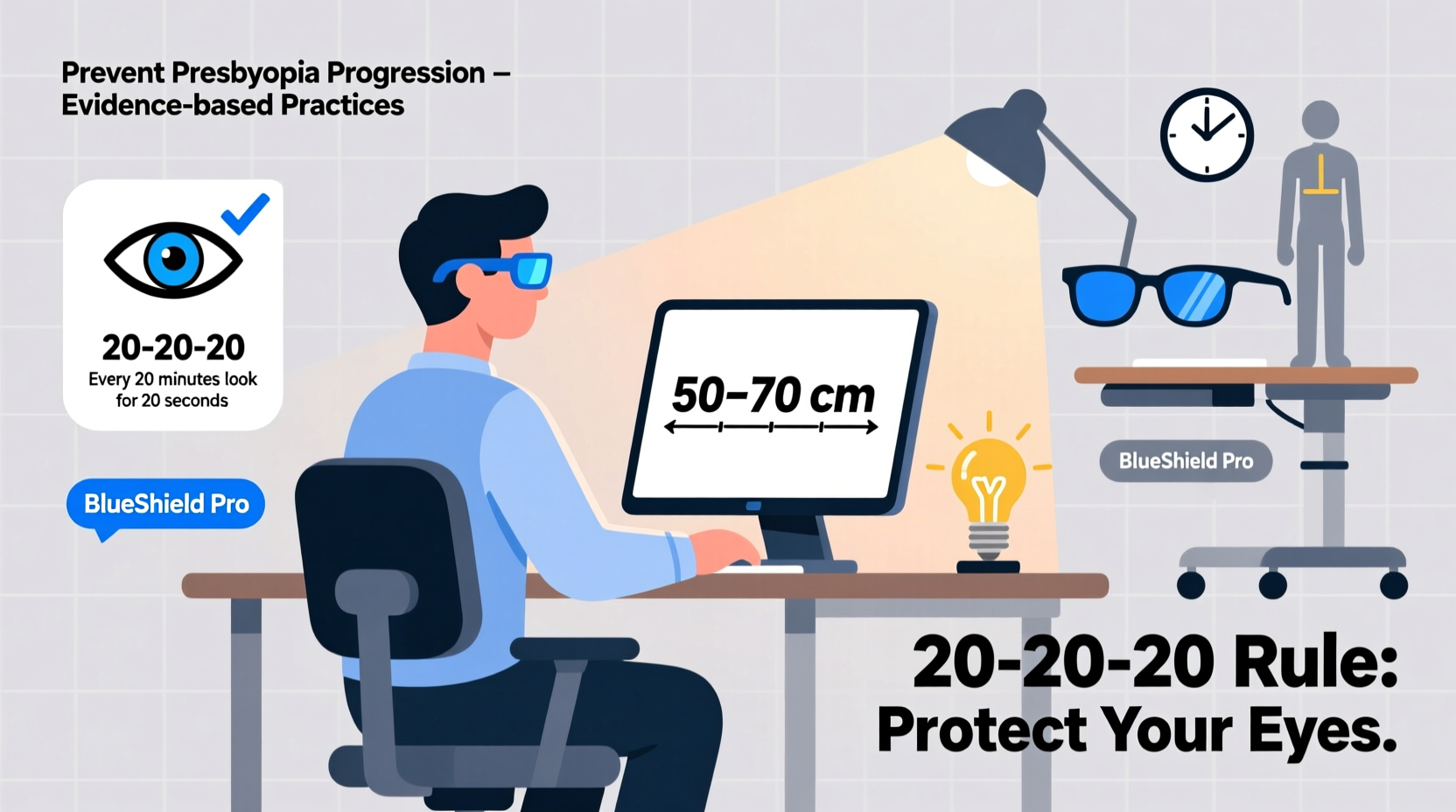
Presbyopia occurs when the crystalline lens inside the eye gradually loses flexibility, making it harder to accommodate up-close tasks such as reading or typing. This process is inevitable, but how we interact with digital devices can either ease or exacerbate the burden on our visual system. Prolonged screen exposure often leads to digital eye strain (also known as computer vision syndrome), which includes dry eyes, headaches, and blurred vision. When combined with presbyopia, these symptoms can appear earlier and worsen faster than they otherwise would.
The human eye evolved for varied visual input—shifting between distant landscapes and nearby details. Today, many spend 8–10 hours a day focused within arm’s length of screens, rarely allowing the ciliary muscles responsible for focusing to relax. This constant contraction may contribute to premature weakening, accelerating functional decline. As Dr. Lena Torres, an optometrist specializing in occupational vision health, explains:
“While presbyopia is age-driven, the way we use our eyes today can influence how quickly symptoms interfere with daily life. Think of your focusing muscles like any other—they need rest and variation to stay resilient.” — Dr. Lena Torres, OD, FAAO
Optimize Your Workspace Ergonomics
Your physical setup plays a crucial role in reducing ocular stress. Poor posture and screen placement force your eyes to work harder, increasing strain and potentially worsening presbyopic symptoms.
| Element | Recommended Setting | Why It Matters |
|---|---|---|
| Screen Height | Top of monitor at or slightly below eye level | Reduces neck strain and allows natural downward gaze, minimizing dry eye risk |
| Viewing Distance | 20–26 inches from eyes | Gives adequate space for comfortable focusing; closer distances increase accommodative demand |
| Lighting | Ambient, glare-free illumination | Reduces contrast stress; avoid backlighting or overhead fluorescent glare |
| Font Size & Contrast | Minimum 12pt font, dark text on light background | Lessens effort required to read, especially as near vision declines |
Adopt the 20-20-20 Rule and Visual Hygiene Practices
One of the most effective, research-supported methods to reduce eye strain is the 20-20-20 rule: every 20 minutes, look at something 20 feet away for at least 20 seconds. This simple habit gives your focusing system a chance to reset, reducing cumulative fatigue.
But beyond this rule, consider integrating broader visual hygiene into your routine:
- Blink consciously: People blink about half as often when staring at screens, leading to dry, irritated eyes. Make a habit of full, deliberate blinks every few minutes.
- Use artificial tears if needed: Preservative-free lubricating drops can help maintain moisture, especially in air-conditioned or heated environments.
- Adjust brightness dynamically: Match screen brightness to ambient lighting. Overly bright screens in dim rooms increase pupil constriction and strain.
- Take longer breaks: After two hours of continuous work, take a 15-minute break to walk outside or focus on distant objects.
Step-by-Step Daily Eye Care Routine for Digital Workers
- Morning: Begin with 5 minutes of outdoor light exposure to regulate circadian rhythm and support retinal health.
- Every 20 minutes: Follow the 20-20-20 rule using a timer or app reminder.
- Hourly: Perform gentle eye rolls and palming (cupping hands over closed eyes without pressure) to relax ocular muscles.
- Midday: Step outside for 10 minutes; distance viewing helps retrain focus flexibility.
- Evening: Reduce blue light exposure 1–2 hours before bed using software filters or amber-lens glasses.
Leverage Technology and Corrective Tools
Modern tools can support visual health when used intentionally. Many assume that stronger reading glasses mean better vision, but improper correction can actually increase strain.
Consider progressive lenses or computer-specific occupational lenses designed for intermediate distances (about 24–36 inches). These reduce the need to tilt your head or squint, promoting better posture and less accommodative effort. Anti-reflective coatings and blue light filters can also improve comfort during extended use.
Software adjustments matter too:
- Enable “dark mode” in apps and operating systems to reduce luminance contrast.
- Use text-to-speech features for long documents to give your eyes a rest.
- Zoom in on web pages and PDFs to 120–150% instead of leaning forward or straining to read small text.
Real-Life Example: Slowing Progression Through Habit Change
Mark, a 46-year-old financial analyst, began noticing he had to hold reports farther away to read them clearly. Within months, he was switching between reading glasses and computer glasses constantly, experiencing frequent headaches. After a consultation with his optometrist, he implemented several changes:
- Replaced his single-screen setup with dual monitors positioned at optimal height and distance.
- Installed f.lux software to automatically adjust screen color temperature throughout the day.
- Set a smartwatch reminder for the 20-20-20 rule and started taking short walks during lunch.
- Switched to specialized computer progressive lenses prescribed for his workstation distance.
Within six weeks, Mark reported reduced eye fatigue and fewer headaches. A follow-up eye exam showed stable refractive needs—no increase in prescription strength—despite continued heavy screen use. His doctor noted improved tear film stability and better accommodative recovery during testing.
Presbyopia Prevention Checklist
To help you implement these strategies consistently, here’s a practical checklist:
- ✅ Position monitor 20–26 inches from eyes, top at or below eye level
- ✅ Apply the 20-20-20 rule every hour
- ✅ Blink fully and frequently; use lubricating drops if eyes feel dry
- ✅ Use computer-specific eyewear with anti-glare coating
- ✅ Adjust screen brightness to match room lighting
- ✅ Take a 10–15 minute break every two hours to view distant objects
- ✅ Limit evening blue light exposure with filters or glasses
- ✅ Schedule annual eye exams with an optometrist familiar with digital eye strain
Frequently Asked Questions
Can presbyopia be reversed with exercises?
No, presbyopia cannot be reversed because it involves structural changes in the lens. However, vision therapy and focusing exercises may improve symptom management and delay dependency on stronger corrections in some cases. Always consult an eye care professional before starting any program.
Are blue light glasses effective for preventing presbyopia progression?
Blue light glasses do not stop presbyopia, but they can reduce digital eye strain and improve sleep quality by supporting melatonin production. Less strain means more comfortable near vision, which may indirectly slow the perceived worsening of symptoms.
How often should I get my eyes checked if I work digitally?
Adults over 40 should have comprehensive eye exams every 1–2 years, especially if experiencing changes in near vision. More frequent checks may be recommended if you have diabetes, high blood pressure, or a family history of eye disease.
Conclusion: Protect Your Vision Before It Fades
Presbyopia is a natural part of aging, but its impact doesn’t have to disrupt your productivity or comfort. By respecting your eyes’ physiological limits and adjusting your digital habits proactively, you can preserve visual function and delay the need for stronger corrections. The key lies in consistency—small actions repeated daily build long-term resilience. Whether you're in your late 30s noticing early signs or already managing reading glasses, now is the time to act. Your future self will see the difference clearly.




 浙公网安备
33010002000092号
浙公网安备
33010002000092号 浙B2-20120091-4
Comments
No comments yet. Why don't you start the discussion?