
In an era where we capture thousands of photos annually—on smartphones, tablets, and digital cameras—finding a specific image can feel like searching for a needle in a haystack. Fortunately, Google offers a powerful suite of tools designed to help you organize, search, and retrieve your visual memories with ease. From intelligent tagging to cross-device syncing, leveraging Google’s ecosystem effectively transforms photo chaos into clarity.
The key lies not just in storing photos but in mastering how to find them fast when needed. Whether you're looking for last summer’s beach trip or a screenshot from a meeting six months ago, the right approach saves time and reduces frustration.
Use Google Photos as Your Central Hub
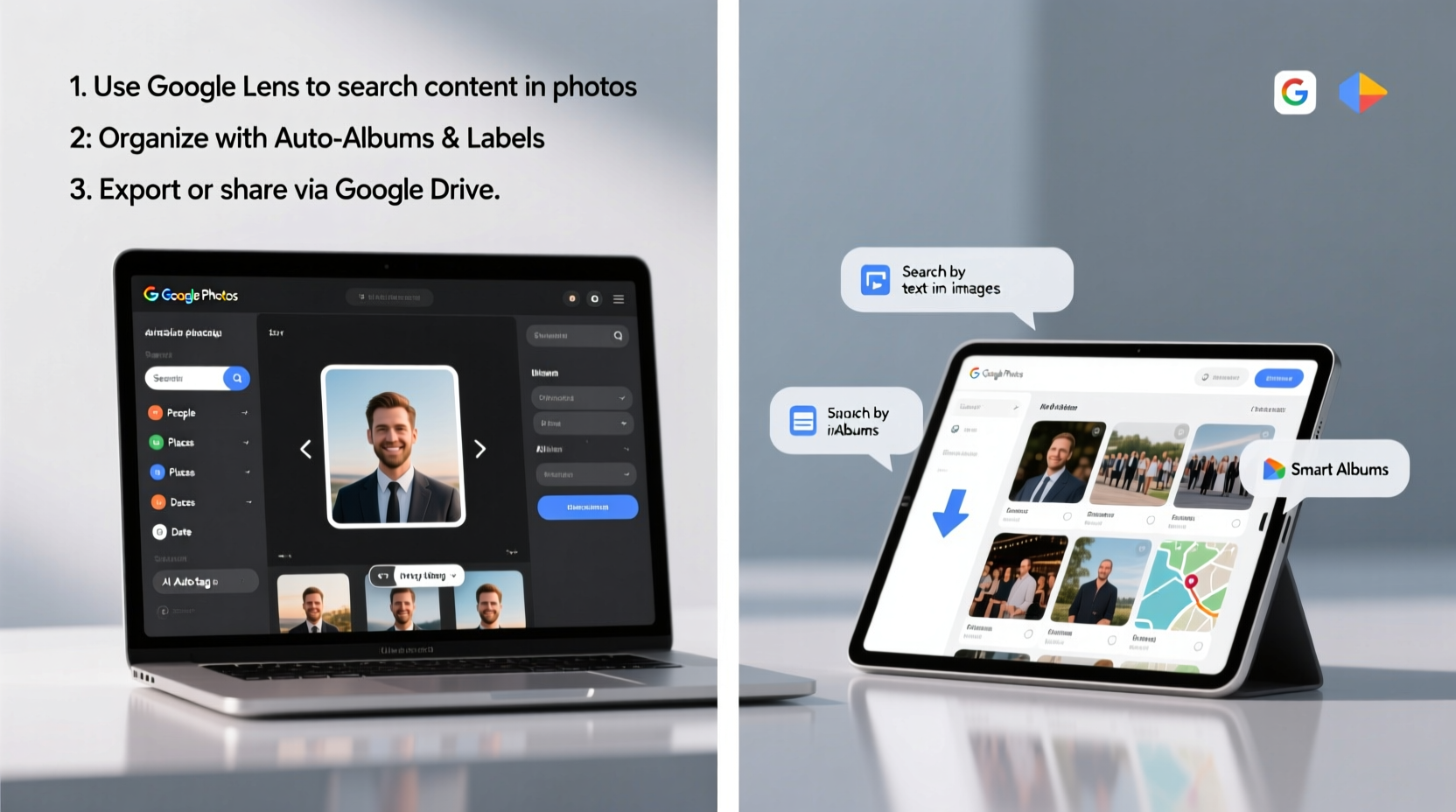
Google Photos is more than just cloud storage—it's an AI-powered library that automatically categorizes and indexes your images. Once you enable backup and sync, every photo you take on any device is uploaded and made searchable through advanced machine learning algorithms.
Photos are grouped by date, location, people, pets, objects, and even text within images (like whiteboards or receipts). This means you can type “dog at lake” or “screenshot invoice” and get relevant results without manually tagging anything.
To maximize this system:
- Ensure high-quality free storage or upgrade to Google One for unlimited backups if needed.
- Regularly review and delete duplicates or blurry shots to keep your library clean.
- Use albums strategically for events, trips, or projects that require quick access.
Master Advanced Search Techniques
Google Photos’ search function goes far beyond basic keywords. It understands natural language and context, allowing nuanced queries that return precise results.
For example, searching “birthday party 2023” brings up all birthday-related photos from that year. Try “photos with mountains before June” or “videos of Emma laughing” — the system interprets combinations of people, places, dates, and emotions.
“Google’s vision AI has reached a point where it can distinguish between similar faces, recognize landmarks, and even identify handwritten notes inside photos.” — Dr. Lena Patel, Computer Vision Researcher at MIT Media Lab
Here’s how to refine your searches:
- Use specific descriptors: Instead of “car,” try “red sports car at night.”
- Leverage dates: Type “January 2024” or “last weekend” to narrow results.
- Combine terms: “Dog + snow + Christmas” finds festive winter moments with your pet.
- Search text in images: Screenshots, receipts, or signs containing words like “meeting” or “café” are fully searchable.
Create a Smart Organization System
While automation handles much of the heavy lifting, intentional organization enhances retrieval speed. Think of it as setting up signposts in a vast digital landscape.
Start by creating curated albums for recurring themes—family gatherings, work projects, travel destinations. Unlike automatic collections, these give you full control over what’s included and how it’s named.
| Method | Best For | Tips |
|---|---|---|
| Auto-Collections (AI) | Daily browsing, memory recall | Let Google group by people, pets, places |
| Custom Albums | Events, collaborations, portfolios | Name clearly: “Italy Trip 2024 – Family” |
| Favorites/Stars | Highlight key images | Star wedding highlights or milestone moments |
| Shared Libraries | Couples, families, teams | Automatically share new uploads with trusted contacts |
Avoid over-tagging or making too many small albums. Focus on broad categories that reflect how you naturally remember experiences.
Sync Across Devices Using Google Drive and Search
Not all photos live in Google Photos. Some may be stored in Google Drive as part of presentations, reports, or shared folders. To locate these, use universal Google Search.
From any browser, go to google.com, sign in, and type descriptive phrases like “photo of chart from Q2 report” or “image PNG uploaded last month.” Google scans file names, content, and embedded media across Gmail, Docs, and Drive.
You can also filter results directly in Google Drive:
- Click “Type” → “Images” to see only photo files.
- Use date filters (“Last week,” “In 2023”) to narrow scope.
- Sort by “Last modified” to find recently added visuals.
Real-World Example: Recovering Lost Event Photos
Sarah, a freelance event planner, was preparing a portfolio for a client when she realized she couldn’t find photos from a garden wedding held three months earlier. She remembered taking dozens of shots but hadn’t organized them yet.
Instead of scrolling through hundreds of images, she opened Google Photos and typed: “outdoor wedding June 2024 greenery.” Within seconds, the algorithm returned 47 relevant photos, including wide-angle shots of floral arrangements and candid guest moments. She created a new album titled “Maplewood Gardens Wedding – June 2024” and shared it with the client—all within ten minutes.
This saved her hours compared to manual sorting and demonstrated the power of combining smart search with timely curation.
Essential Checklist for Photo Management Success
Follow this actionable checklist monthly to maintain a streamlined photo ecosystem:
- ✅ Back up all devices to Google Photos
- ✅ Delete low-quality or duplicate images
- ✅ Create 1–2 key albums for recent events
- ✅ Star favorite memories for easy access
- ✅ Share important albums with family or collaborators
- ✅ Rename critical image files in Drive for better indexing
- ✅ Test a complex search query to verify discoverability
Frequently Asked Questions
Can I search for photos based on color?
Yes. Google Photos allows color-based searches. Try typing “blue dress,” “yellow car,” or “black cat” to find images matching specific hues. The AI detects dominant colors in scenes and objects.
What happens to my photos if I turn off backup and sync?
Your existing backed-up photos remain safe in the cloud, but new ones won’t upload. Any photos deleted from your device won’t affect the cloud copies unless you manually remove them from Google Photos.
Are screenshots treated the same as regular photos?
Absolutely. Screenshots are indexed just like any other image. You can search their content (e.g., “error message login failed”) or context (“screenshot email from manager”).
Conclusion: Turn Chaos Into Clarity
Managing a growing photo library doesn’t have to be overwhelming. By harnessing Google’s intelligent tools—Photos for AI-driven discovery, Drive for document-integrated visuals, and universal Search for cross-platform retrieval—you gain instant access to your digital life.
The most effective systems aren’t built overnight. They evolve through consistent habits: enabling sync, refining searches, curating key albums, and cleaning clutter regularly. These small actions compound into significant time savings and peace of mind.




 浙公网安备
33010002000092号
浙公网安备
33010002000092号 浙B2-20120091-4
Comments
No comments yet. Why don't you start the discussion?