
Losing access to your mobile number can be more than just inconvenient—it can disrupt communication, block access to two-factor authentication, and compromise accounts tied to that number. Whether due to a lost SIM card, switching carriers, or an expired plan, regaining control of your old number is often possible with the right approach. Mobile numbers are valuable digital assets, and most carriers have protocols in place to help legitimate users reclaim them—provided you act quickly and follow the correct procedures.
Why Recovering Your Old Number Matters
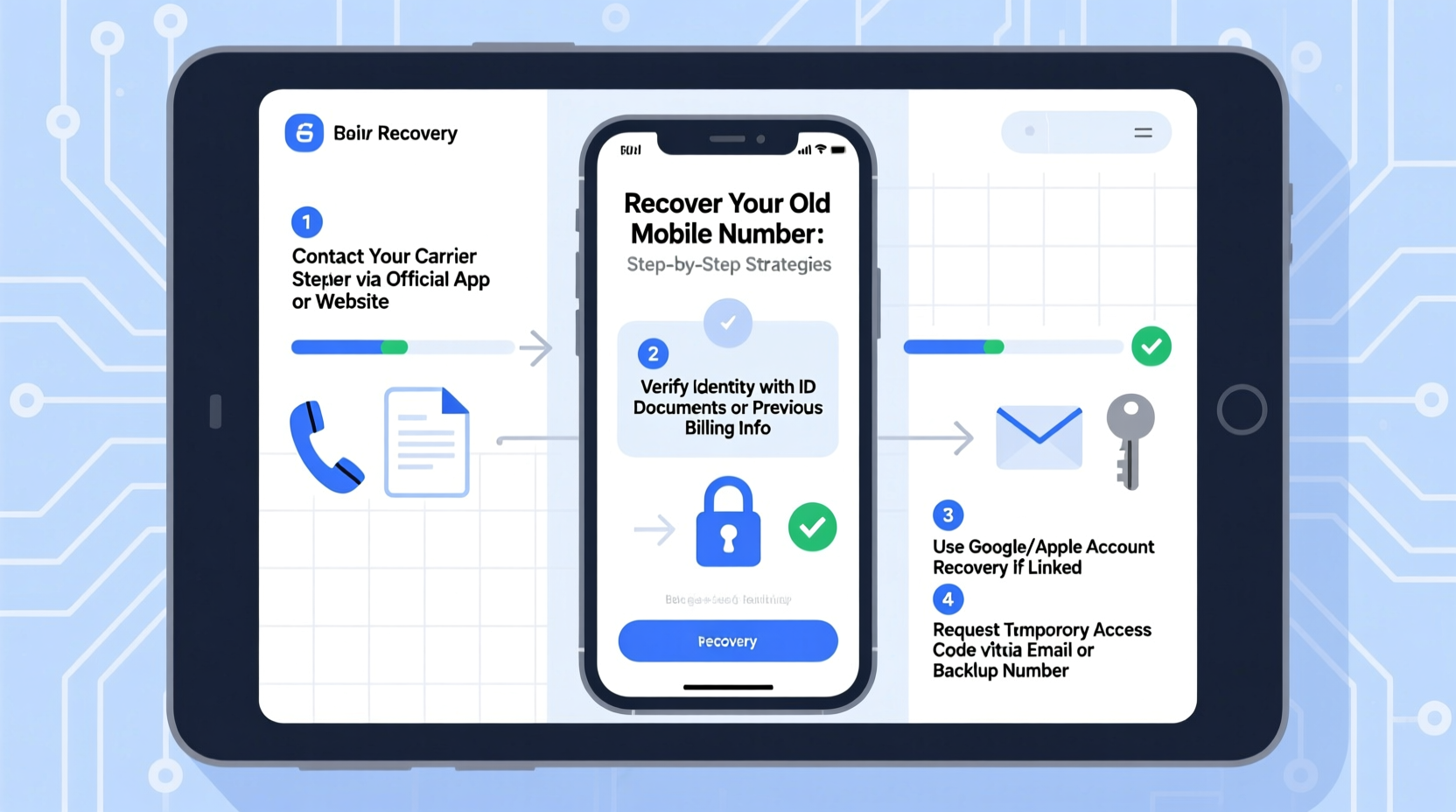
Your mobile number is frequently linked to critical services: banking apps, social media, email recovery, and messaging platforms. A sudden loss of access can lock you out of these accounts, leaving you vulnerable to security risks or service interruptions. Beyond security, your number holds personal value—contacts, messages, and years of digital history may depend on it. Unlike email addresses, phone numbers are finite and assigned by carriers, making reclamation essential if you wish to maintain continuity.
Carriers typically recycle inactive numbers after 30 to 90 days, depending on region and policy. The sooner you act, the higher your chances of success. Delaying recovery efforts increases the risk that your number has already been reassigned to another user.
Step-by-Step Guide to Reclaim Your Mobile Number
Recovering your old number involves coordination with your mobile carrier, identity verification, and sometimes persistence. Follow this structured timeline for the best chance of success:
- Confirm Number Status: Use a secondary device or ask a contact to call or text your old number. If it’s disconnected or reassigned, you’ll hear a message indicating the status.
- Contact Customer Support Immediately: Reach out to your carrier via official channels—website chat, app support, or phone. Avoid third-party forums or unofficial agents.
- Provide Proof of Ownership: Be ready with account details such as your full name, address, account PIN, last payment method, and previous SIM ICCID (found on the SIM card or billing statements).
- Request Reactivation or Port-In Option: If the number hasn’t been reassigned, request reactivation. If it’s active under another account, explain your case clearly and politely.
- Follow Up Persistently: If denied initially, escalate to a supervisor. Document all interactions, including agent names and timestamps.
What Carriers Require for Verification
Mobile providers prioritize security and legal compliance. To prevent fraud, they require robust proof that you are the rightful owner of the number. Requirements vary slightly between carriers but generally include:
| Verification Factor | Accepted Proof | Notes |
|---|---|---|
| Account Holder Name | Matching government ID (e.g., driver’s license) | Name must exactly match account records |
| Billing Address | Recent utility bill or bank statement | Must be within the last 3 months |
| Account PIN/Password | Original or reset credentials | Set up recovery options in advance if possible |
| Last Payment Method | Credit card ending digits or transaction date | Helps confirm recent activity |
| SIM ICCID | Physical SIM or past documentation | Unique identifier etched on the SIM |
If you lack certain documents, provide alternative evidence—such as screenshots of past calls, text logs, or account-linked services that display your number. While not always accepted, supplementary proof can strengthen your case during escalation.
Mini Case Study: Reclaiming a Number After International Relocation
Rahul moved from India to Canada and deactivated his local mobile line temporarily. Six months later, he tried to reactivate it for family use but found the number had been reassigned. He contacted the Indian carrier via their international support portal, submitted scanned copies of his original ID, and referenced his last top-up transaction. After three follow-ups over two weeks, the carrier confirmed the number was still in a “grace period” buffer and reissued the SIM to his registered address. Rahul regained access within ten days.
This case highlights two key factors: timely action and thorough documentation. Had Rahul waited longer, the number would have entered the public pool and become unrecoverable.
“Carriers are more willing to assist when customers demonstrate consistent ownership and urgency. Don’t wait—act within the first 30 days.” — Lena Patel, Telecommunications Consumer Advocate
Common Mistakes That Delay Recovery
Avoid these pitfalls that reduce your chances of successfully recovering your number:
- Waiting too long: After 60–90 days, most carriers release numbers into circulation.
- Providing incomplete information: Inconsistent names or outdated addresses raise red flags.
- Using unverified support channels: Scammers often pose as carrier agents online.
- Not escalating when denied: Frontline reps may lack authority to resolve complex cases.
Checklist: Essential Steps to Recover Your Old Mobile Number
Use this checklist to ensure you cover all bases when attempting recovery:
- ☐ Confirm the current status of your number (disconnected, in use, etc.)
- ☐ Gather identification documents (ID, proof of address)
- ☐ Locate account details (PIN, last payment, SIM ICCID)
- ☐ Contact your carrier through official support channels
- ☐ Clearly state your intent to recover your number
- ☐ Submit all required verification materials
- ☐ Request escalation if initial response is negative
- ☐ Follow up every 48–72 hours until resolved
- ☐ Once recovered, set up recovery options and backup SIMs
Frequently Asked Questions
Can I recover my number if it’s already assigned to someone else?
In rare cases, yes—if the new user obtained the number recently and hasn’t established significant usage, carriers may intervene based on documented ownership. However, once a number is fully activated under another account, reclamation is unlikely due to privacy and service continuity policies.
How long do carriers keep a number inactive before recycling it?
Most major carriers retain inactive numbers for 30 to 60 days. Prepaid plans often have shorter grace periods (30 days), while postpaid accounts may extend to 90 days depending on contract terms and regional regulations.
Is there a fee to recover an old number?
Some carriers charge a reactivation or administrative fee, typically between $10 and $30. Additional costs may apply for SIM shipping or porting services. Always ask for a breakdown before proceeding.
Protecting Your Number in the Future
Once recovered, take proactive steps to prevent future loss. Consider upgrading to a postpaid plan with auto-renewal, which reduces the risk of accidental deactivation. Enable number porting locks if available, and register for multi-factor authentication using alternate methods (like authenticator apps) so you’re not solely reliant on SMS.
Additionally, inform your carrier of any planned travel or extended disuse. Some providers offer “number hold” services for temporary inactivity, preserving your line without requiring continuous billing.
Final Thoughts: Act Fast, Stay Persistent
Recovering your old mobile number isn't guaranteed, but it's far from impossible. Success hinges on speed, accurate documentation, and persistent communication with your carrier. Treat your mobile number as a critical component of your digital identity—worth protecting and reclaiming when lost.




 浙公网安备
33010002000092号
浙公网安备
33010002000092号 浙B2-20120091-4
Comments
No comments yet. Why don't you start the discussion?