
Repetitive Strain Injury (RSI) affects millions of people who spend long hours at desks, typing, or performing repetitive motions. Whether you're a programmer, writer, designer, or office worker, the risk is real. Symptoms like wrist pain, forearm tightness, shoulder stiffness, and tingling in the fingers are not just discomforts—they’re warning signs. The good news: RSI is largely preventable, and with the right approach, recovery is possible. This guide outlines proven, practical strategies to reduce RSI, relieve symptoms, and protect your body for the long term.
Understanding RSI: Causes and Early Signs
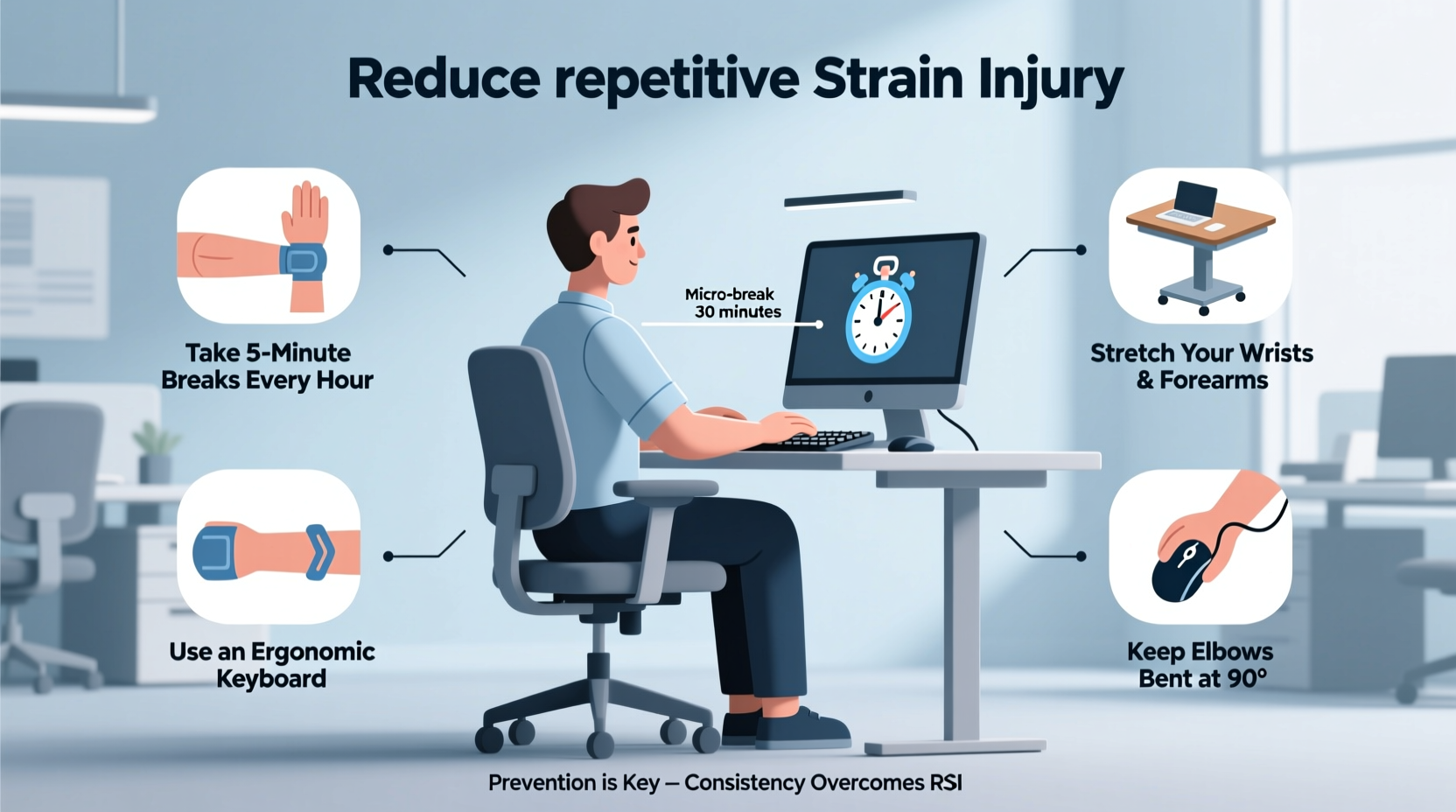
RSI develops when muscles, tendons, and nerves are overused without adequate rest. Common causes include prolonged typing, poor posture, incorrect workstation setup, and lack of movement. It often starts subtly—perhaps a slight ache after a long day—but can escalate into chronic pain if ignored.
Early indicators include:
- Dull or sharp pain in wrists, hands, forearms, or shoulders
- Numbness or tingling (especially in fingers)
- Muscle fatigue that doesn’t resolve overnight
- Reduced grip strength or coordination
Ignoring these signals can lead to conditions like carpal tunnel syndrome, tendonitis, or thoracic outlet syndrome. The key is early intervention through both immediate relief and long-term prevention.
Ergonomic Workspace Optimization
Your workspace plays a critical role in RSI development. A poorly arranged desk can force your body into unnatural positions, increasing strain on joints and soft tissues. Optimizing ergonomics isn’t about luxury—it’s about sustainability.
Key Adjustments for RSI Prevention
| Component | Recommended Setup | Common Mistakes |
|---|---|---|
| Chair Height | Feet flat on floor, knees at 90°, thighs parallel to ground | Too high (causing dangling feet) or too low (increasing back pressure) |
| Keyboard Position | At elbow height, directly in front, with wrists straight | Elevated keyboards forcing wrist extension |
| Monitor Height | Top of screen at or slightly below eye level, 20–30 inches away | Looking down at laptop screens for hours |
| Mouse Placement | Close to keyboard, same height, within easy reach | Reaching across the desk repeatedly |
Consider using an adjustable standing desk. Alternating between sitting and standing every 30–60 minutes reduces static muscle load and improves circulation. Even small shifts in posture throughout the day make a significant difference.
“Ergonomics isn’t one-size-fits-all. The best setup supports neutral joint alignment and minimizes sustained awkward postures.” — Dr. Lena Patel, Occupational Health Physician
Practical Daily Habits to Reduce Strain
Adjusting your environment is only half the battle. Daily habits determine whether those improvements translate into lasting relief.
Step-by-Step Guide to a Low-Strain Workday
- Start with a warm-up: Spend 3–5 minutes stretching wrists, shoulders, and neck before logging in.
- Use the 20-20-20 rule: Every 20 minutes, look at something 20 feet away for 20 seconds to reduce eye and upper-body tension.
- Take microbreaks: Every 30 minutes, pause for 30 seconds to shake out your hands or rotate your wrists.
- Switch input methods: Use voice-to-text software or a foot pedal for scrolling to reduce finger and hand use.
- End with cooldown stretches: Focus on forearms, triceps, and upper back to release built-up tension.
Targeted Exercises for RSI Relief and Strength
Strengthening supporting muscles and improving flexibility can reverse early-stage RSI and prevent recurrence. These exercises require no equipment and can be done at your desk.
Effective Daily Routine (5–7 Minutes)
- Wrist Extensor Stretch: Extend arm, palm down, gently pull fingers back for 20 seconds.
- Wrist Flexor Stretch: Arm out, palm up, gently press fingers downward.
- Forearm Pronation/Supination: Elbow at 90°, rotate hand from palm-up to palm-down slowly, 10 reps each side.
- Shoulder Blade Squeezes: Sit tall, squeeze shoulder blades together, hold 5 seconds, repeat 10x.
- Neck Side Tilt: Gently tilt head toward shoulder, hold 15 seconds per side.
Consistency matters more than intensity. Doing this routine twice daily—morning and mid-afternoon—can significantly reduce discomfort within two weeks.
Mini Case Study: Recovering from Wrist Pain in 6 Weeks
Sarah, a technical writer, began experiencing sharp wrist pain after transitioning to full-time remote work. Her laptop was on a coffee table, and she typed for 6–8 hours daily without breaks. After a diagnosis of mild tendonitis, she implemented three changes: switched to a laptop stand with external keyboard, started doing daily stretches, and used a speech-to-text tool for drafting. Within six weeks, her pain decreased by 80%, and she regained full function without medication.
Essential RSI Prevention Checklist
To ensure you’re covering all bases, follow this actionable checklist weekly:
- ✅ Monitor is at eye level and arm’s length away
- ✅ Keyboard and mouse are at elbow height, close together
- ✅ Chair supports lower back with feet flat on the floor
- ✅ Taking at least five 30-second breaks per workday
- ✅ Performing wrist and shoulder stretches daily
- ✅ Using split or ergonomic keyboard if typing heavily
- ✅ Avoiding prolonged static postures (e.g., cradling phone between ear and shoulder)
- ✅ Evaluating pain levels weekly—no increase in intensity or frequency
If any item is unchecked, prioritize it immediately. Small oversights compound over time.
Frequently Asked Questions
Can RSI be reversed without medical treatment?
Yes, especially in early stages. Most cases improve significantly with ergonomic changes, consistent stretching, rest, and activity modification. However, persistent pain or neurological symptoms (like numbness or weakness) should be evaluated by a healthcare provider.
Is a vertical mouse really better for RSI?
For many users, yes. A vertical mouse promotes a handshake-like grip, reducing forearm pronation and wrist deviation. Studies show reduced muscle activity in the forearm when using vertical designs, which lowers strain over time.
How long does it take to recover from RSI?
Recovery varies. Mild cases may resolve in 2–6 weeks with proper care. Chronic or severe RSI can take several months, especially if behavioral and environmental factors aren’t addressed. Patience and consistency are crucial.
Conclusion: Take Control Before Pain Becomes Chronic
RSI doesn’t have to be an inevitable cost of modern work. By making thoughtful adjustments to your workspace, adopting proactive movement habits, and listening to your body’s signals, you can achieve lasting relief and prevent future injury. The strategies outlined here are not quick fixes—they’re sustainable practices that protect your health and productivity over the long haul.




 浙公网安备
33010002000092号
浙公网安备
33010002000092号 浙B2-20120091-4
Comments
No comments yet. Why don't you start the discussion?