
Bullying is often seen as a one-dimensional issue—someone with power mistreating someone without it. But behind every act of bullying lies a complex web of emotions, unmet needs, and learned behaviors. While the harm caused by bullying must never be minimized, addressing the root causes and helping the individual responsible for those actions change is equally critical. Lasting transformation doesn’t come from punishment alone; it comes from understanding, accountability, and sustained support.
Changing bullying behavior requires more than discipline—it demands compassion, consistency, and strategic intervention. Whether you're a parent, teacher, counselor, or peer, your role in guiding a bully toward healthier patterns can have long-term positive effects not only on their life but also on the well-being of others they interact with.
Understanding the Roots of Bullying Behavior
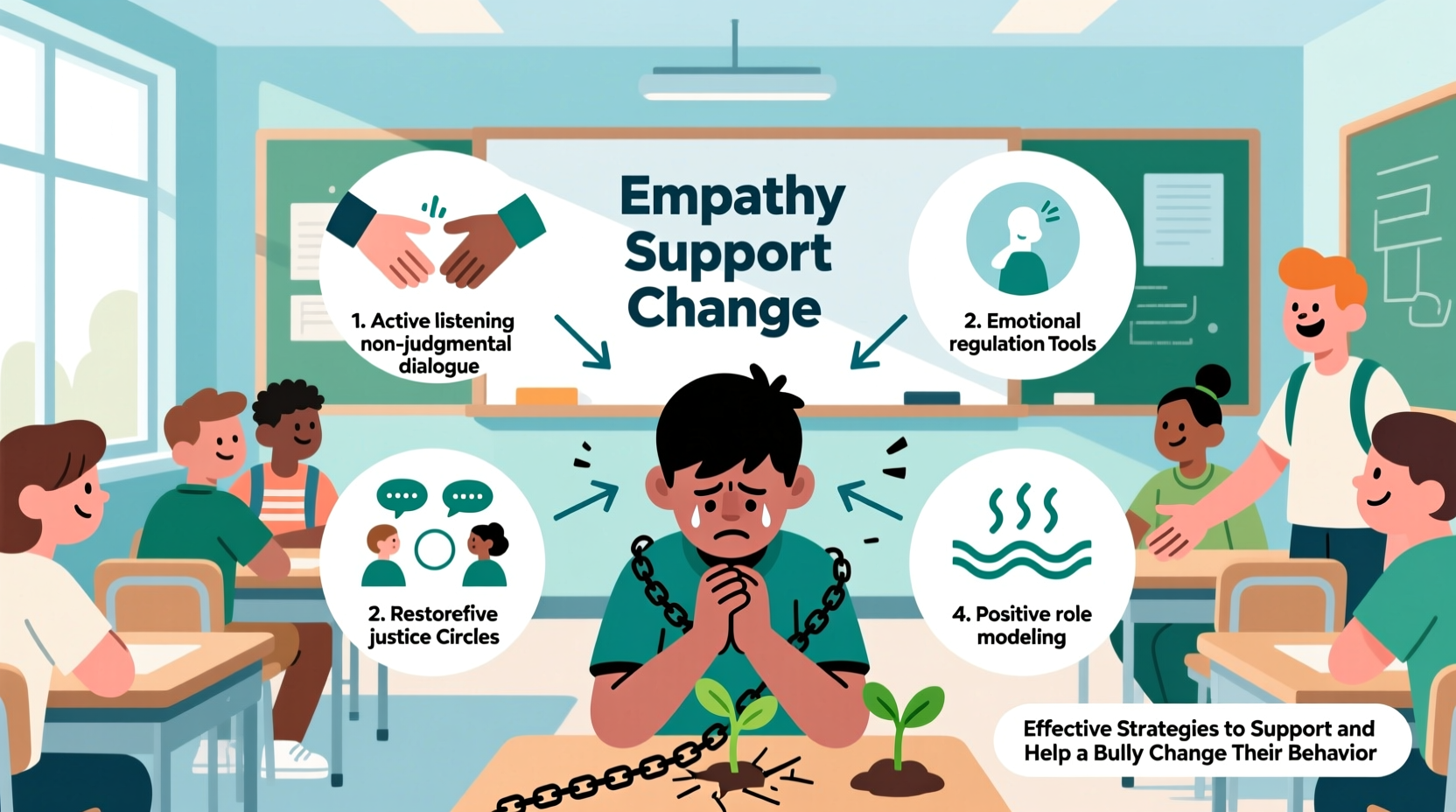
Bullying is rarely just about being “mean.” Research consistently shows that individuals who engage in bullying often face challenges such as low self-esteem, exposure to aggression at home, social isolation, or a need for control in environments where they feel powerless. Some may use intimidation as a way to gain social status, while others act out due to untreated trauma or mental health struggles.
Recognizing these underlying factors doesn’t excuse harmful actions, but it does create a pathway for meaningful intervention. Labeling someone a “bully” can become a self-fulfilling identity. Instead, viewing them as someone engaging in bullying behavior opens the door to change.
“Children who bully are often children who hurt. Our job isn’t to shame them into compliance, but to guide them toward empathy and responsibility.” — Dr. Rachel Kim, Child Psychologist and Author of *Beyond Discipline: Rethinking School Behavior*
Step-by-Step Guide to Supporting Behavioral Change
Helping a person change bullying behavior is a process, not an event. It requires patience, structure, and ongoing reinforcement. Below is a six-phase approach proven effective in school and family settings:
- Establish Safety and Accountability: Ensure victims are protected and the behavior is clearly named as unacceptable. Avoid public shaming, but do not minimize the impact.
- Conduct a Private, Non-Confrontational Conversation: Meet one-on-one in a calm environment. Use open-ended questions like, “Can you help me understand what happened?” rather than accusations.
- Identify Triggers and Motivations: Work together to uncover patterns. Was the behavior triggered by stress, jealousy, peer pressure, or a desire for attention?
- Teach Empathy and Perspective-Taking: Use role-playing or guided reflection to help the individual consider how their actions affected others.
- Create a Restorative Plan: Involve the person in making amends—this could include a sincere apology, community service, or participating in a restorative justice circle.
- Monitor Progress and Reinforce Positive Behavior: Provide regular feedback and recognition when respectful choices are made.
Key Strategies for Parents and Educators
Adults play a pivotal role in shaping behavioral norms. The way authority figures respond to bullying can either reinforce cycles of aggression or interrupt them. Consider the following strategies:
- Model Respectful Communication: Children learn more from observation than instruction. Demonstrate active listening, emotional regulation, and conflict resolution in daily interactions.
- Set Clear, Consistent Boundaries: Enforce rules fairly and predictably. Inconsistency breeds confusion and undermines trust.
- Encourage Emotional Literacy: Help the individual name their feelings—anger, insecurity, frustration—and explore healthy outlets like journaling, sports, or talking with a trusted adult.
- Foster Pro-Social Opportunities: Assign leadership roles that build responsibility without dominance, such as mentoring younger students or organizing group activities.
Do’s and Don’ts When Responding to Bullying Behavior
| Do’s | Don’ts |
|---|---|
| Respond promptly and firmly to incidents | Ignore bullying or dismiss it as “kids being kids” |
| Separate the behavior from the person’s identity | Label the child as “a bully” permanently |
| Involve the student in creating solutions | Impose consequences without explanation or dialogue |
| Provide ongoing support and check-ins | Assume one conversation will fix the problem |
| Collaborate with counselors or mental health professionals | Try to handle serious cases alone without expert input |
Real Example: Transforming Behavior Through Restorative Practices
In a middle school in Portland, Oregon, a seventh-grade student named Marcus repeatedly mocked classmates online and disrupted class with aggressive comments. Initially suspended twice, his behavior worsened after each return. Then, the school implemented a restorative intervention.
A trained facilitator met with Marcus privately and discovered he had recently moved after his parents’ divorce and felt invisible at school. He admitted using insults to get laughs because he feared being ignored. Instead of another suspension, he participated in a restorative circle with peers he’d targeted. After hearing how his words made others feel, Marcus apologized sincerely. He later joined the school’s peer mediation team and became known for defusing conflicts.
This case illustrates that when bullying behavior is met with curiosity rather than only punishment, real change becomes possible.
Essential Checklist for Supporting Change
- ✔️ Address the behavior immediately and calmly
- ✔️ Hold a private, non-judgmental conversation
- ✔️ Identify emotional triggers and unmet needs
- ✔️ Involve a counselor or mental health professional if needed
- ✔️ Teach empathy through guided reflection or role-play
- ✔️ Create a restorative action plan (e.g., apology, service)
- ✔️ Monitor progress with weekly check-ins
- ✔️ Recognize and praise positive behavioral shifts
- ✔️ Maintain open communication with parents or caregivers
- ✔️ Reinforce a culture of respect and inclusion school-wide or at home
Frequently Asked Questions
Can a bully really change their behavior?
Yes, many individuals who engage in bullying can and do change, especially when provided with consistent support, clear expectations, and opportunities for personal growth. Long-term change depends on addressing root causes and reinforcing positive alternatives over time.
What should I do if the person refuses to take responsibility?
Resistance is common, especially if shame or fear is involved. Avoid forcing accountability. Instead, continue building trust, express concern for their well-being, and gently restate expectations. Sometimes external support from a therapist or mentor can break through resistance when direct approaches fail.
Is zero tolerance effective for stopping bullying?
Zero-tolerance policies often lead to increased suspensions and expulsions but do little to reduce bullying long-term. They can push students further into disengagement. More effective approaches combine firm boundaries with restorative practices, skill-building, and emotional support.
Conclusion: Building a Path Forward
Supporting a person who has engaged in bullying is not about excusing harm—it’s about believing in the possibility of growth. Real change happens when we replace isolation with connection, judgment with understanding, and punishment with purposeful guidance. Every individual deserves the chance to learn from their mistakes and become better.
Whether you’re a parent navigating a difficult conversation, an educator reshaping classroom culture, or a peer offering quiet support, your actions matter. By applying these strategies with consistency and compassion, you contribute to a world where empathy outweighs aggression and second chances lead to lasting change.




 浙公网安备
33010002000092号
浙公网安备
33010002000092号 浙B2-20120091-4
Comments
No comments yet. Why don't you start the discussion?