
Cleaning a calligraphy pen is essential for maintaining consistent ink flow and preserving the life of the nib. However, when the nib is bent—whether from accidental pressure, improper storage, or long-term use—the process demands extra care. A misaligned tine or warped shaft can worsen if cleaned improperly, leading to inconsistent line variation, ink starvation, or permanent structural failure. The challenge lies in removing dried ink and residue without applying force that could further distort delicate metal components. This guide outlines precise, low-risk cleaning methods tailored specifically for pens with bent nibs, ensuring functionality is restored while minimizing additional stress on the fragile structure.
Understanding the Risks of Cleaning a Bent Nib
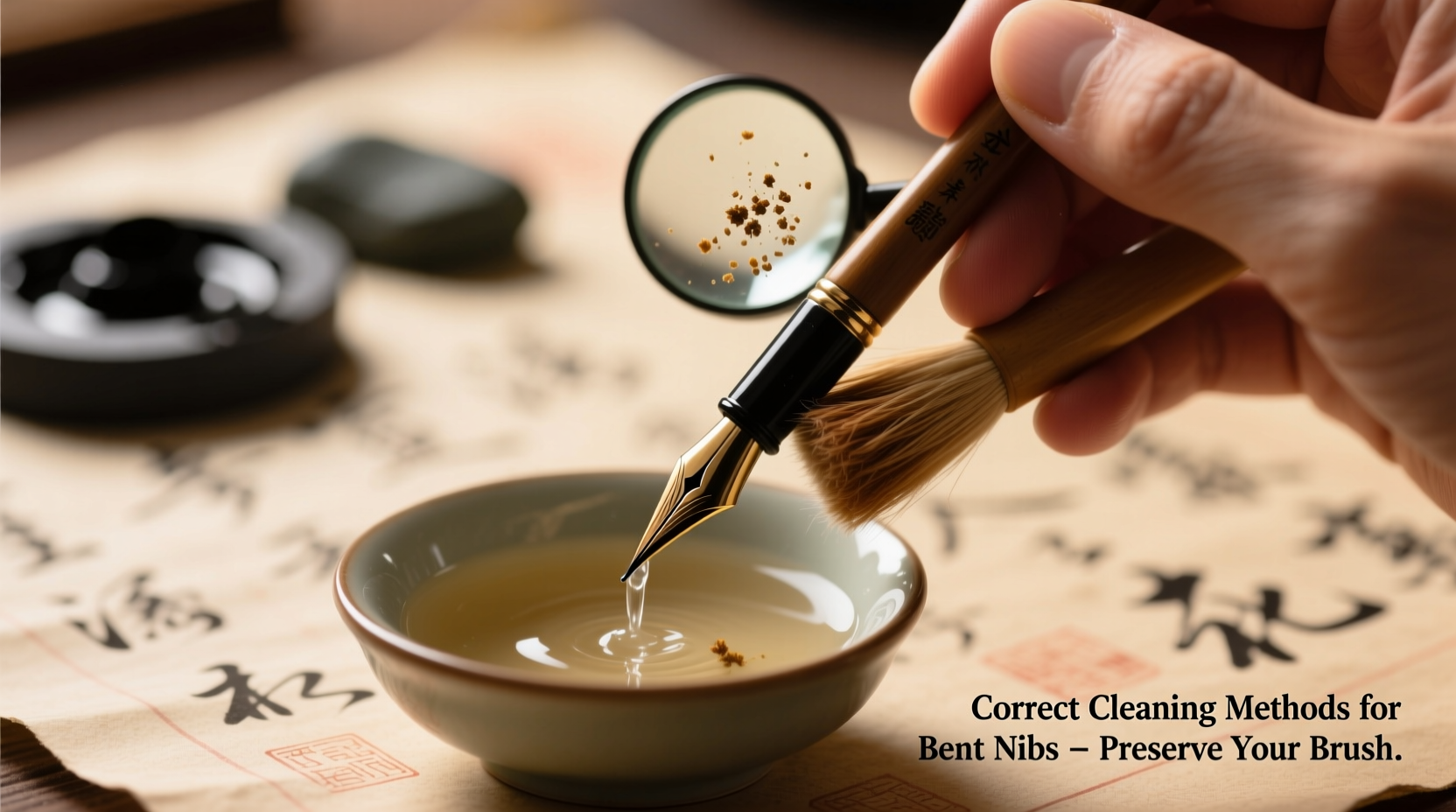
A bent nib alters the natural alignment of the tines and their spring tension. When bent, one tine may press against the other, restricting ink flow or creating an uneven split. Aggressive cleaning—such as scrubbing, twisting, or soaking in harsh solvents—can exacerbate micro-fractures, widen splits, or permanently deform the metal. Moreover, many traditional cleaning techniques assume a symmetrical, intact nib, making them unsuitable for compromised ones.
The goal isn’t just cleanliness but preservation. Residual ink must be removed gently to prevent corrosion, especially around the vent hole and inner slit, where moisture and pigment can linger. At the same time, physical manipulation should be kept to an absolute minimum. Understanding these risks allows you to approach cleaning with caution and precision.
Step-by-Step Gentle Cleaning Process
Follow this sequence to safely remove ink buildup while protecting the bent nib’s current state. Each step uses minimal mechanical stress and avoids submerging vulnerable parts unnecessarily.
- Flush with Lukewarm Water: Hold the nib under a gentle stream of lukewarm (not hot) water. Angle the pen so water flows from the feed toward the tip, helping dislodge dried ink without forcing particles deeper into the slit.
- Use a Bulb Syringe for Controlled Flushing: Fill the syringe with lukewarm water and gently squeeze it over the feed and nib base. This provides more directed pressure than running water but avoids direct contact with the bent tines.
- Soak Feed-Down (Not Nib-Down): Submerge only the feed and section in a glass of water for 10–15 minutes. Keep the nib above water to prevent prolonged exposure that might weaken already-stressed metal.
- Wipe Tines with a Damp Lint-Free Cloth: After soaking, lightly dampen a microfiber cloth or coffee filter and wipe along the length of the nib—never across the tines. This removes surface residue without lateral pressure.
- Air-Dry Horizontally: Lay the pen flat on a clean towel in a dust-free area. Avoid upright drying, which can trap water in the feed and cause slow evaporation that leads to re-deposited ink.
This method prioritizes indirect cleaning, reducing the need to touch or manipulate the bent portion directly.
Do’s and Don’ts When Handling a Bent Nib Pen
| Do | Don’t |
|---|---|
| Use distilled or filtered water to avoid mineral deposits | Soak the entire nib assembly for hours—prolonged immersion weakens metal fatigue points |
| Clean after every 2–3 writing sessions to prevent heavy buildup | Scrub between tines with a toothbrush or pin—this can widen existing bends or splits |
| Use a soft cotton swab moistened with water to clean around the nib base | Apply heat (e.g., hairdryer) to speed drying—thermal stress worsens deformation |
| Inspect under magnification before and after cleaning | Attempt DIY bending corrections without proper tools |
Alternative Cleaning Methods for Stubborn Ink
If standard water flushing fails due to dried pigmented or iron-gall inks, consider mild alternatives that don’t require aggressive scrubbing.
- Diluted Dish Soap Solution (1:10 with Water): Use only on the feed during short soaks (max 5 minutes). Rinse thoroughly afterward to prevent soap residue from affecting future ink flow.
- Vinegar-Water Mix (1:3 ratio): Effective for calcium-based ink deposits. Limit exposure to 3–5 minutes, then flush immediately with clean water.
- Ammonia-Free Pen Flush Solutions: Commercially available cleaners like Goo Gone Pen Flush or Pen Right Write are formulated to dissolve ink without damaging metals. Apply via bulb syringe, never immersion.
For all chemical-assisted cleans, avoid letting solutions reach the nib’s shoulder or grip area, where adhesive bonding or decorative plating may degrade.
“Even slight bends change how ink travels through the slit. Cleaning should support function, not attempt restoration. I always recommend conservative hydration over mechanical intervention.” — Dr. Lena Torres, Calligraphy Instrument Conservator at the Royal Writing Arts Institute
Real-World Scenario: Recovering a Vintage Flex Nib with a Curve
A collector once brought a 1930s Swan fountain pen with a pronounced leftward bend in the flexible nib. Years of storage in a cramped case had warped the gold alloy. Attempts to write caused blotting and railroading. Instead of forcing alignment, the conservator used a 10-minute feed-down soak in warm distilled water, followed by three rounds of bulb-flushing. A magnified inspection revealed residual carbon black lodged near the breather hole. Using a single strand of silk thread dampened with vinegar solution, they wove it carefully through the slit from base to tip—capillary action pulled out debris without spreading the tines. After air-drying, the pen wrote smoothly with its original character preserved. The bend remained, but performance improved dramatically.
This case underscores that functionality doesn’t require perfection. With patience and non-invasive techniques, even significantly deformed nibs can be revived.
Frequently Asked Questions
Can I still use a pen with a bent nib after cleaning?
Yes, as long as the tines aren’t fused or cracked. Many bent nibs retain usable flexibility and line variation. Cleaning often restores flow even without correcting the shape. Test with smooth inks first to assess performance.
Is it safe to use alcohol-based cleaners on a bent nib?
No. Alcohol dries out feed materials and can corrode certain metals over time. It also evaporates quickly, leaving behind concentrated ink particles. Stick to water-based or ammonia-free pen-specific flushes instead.
How often should I clean a pen with a damaged nib?
More frequently than a healthy one—ideally every 7–10 days of use. Buildup in a misaligned nib causes faster clogging. Regular light maintenance prevents deep-set residue that would require risky cleaning later.
Maintaining Performance Beyond Cleaning
Cleaning is only part of long-term care. To extend the usability of a bent-nib pen:
- Store it horizontally in a protective case to prevent additional pressure.
- Use free-flowing inks (like Pelikan 4001 or Rohrer & Klingner) that resist clogging.
- Avoid pressing down during writing; let the nib glide naturally to reduce strain.
- Rotate its use with other pens to limit wear on compromised areas.
Final Thoughts
A bent nib doesn’t mean the end of a calligraphy pen’s usefulness. With careful, informed cleaning, you can maintain its writing capability and protect its remaining integrity. The key is shifting focus from cosmetic perfection to functional sustainability. By avoiding aggressive tools, limiting immersion, and relying on gentle fluid dynamics, you preserve what’s left of the nib’s original design. These techniques apply not only to vintage finds but also to modern flex pens that have suffered accidental drops or misuse.
Respect the fragility, honor the history, and keep the ink flowing—responsibly.




 浙公网安备
33010002000092号
浙公网安备
33010002000092号 浙B2-20120091-4
Comments
No comments yet. Why don't you start the discussion?