
Ash stains are more common than many realize—whether from a fireplace, grill, campfire, or accidental contact with cigarette ash. While dry and powdery at first, ash can easily embed into fabric fibers, especially when moisture is introduced. If not treated promptly and correctly, what begins as a light smudge can become a permanent blemish. The good news: most ash stains are removable with the right approach. This guide outlines proven, fabric-safe methods to lift ash residues without causing further damage.
Understanding Ash Stains and Fabric Reactions
Ash may appear harmless, but it contains alkaline compounds that can alter fabric pH, weaken fibers, and cause discoloration over time. When ash comes into contact with damp fabric—or when water is used improperly during cleaning—it can set the stain deeper into the material. Natural fibers like cotton, wool, and silk are particularly vulnerable due to their porous structure. Synthetic blends fare slightly better but still risk permanent soiling if mishandled.
The key to successful removal lies in treating ash as a dry contaminant first. Never rub or wet the stain immediately. Instead, focus on gentle dry removal before introducing any liquid solutions. Acting quickly increases your chances of complete restoration, especially on delicate or untreated fabrics.
Step-by-Step Guide: Removing Ash Stains Safely
- Let the Ash Dry Completely
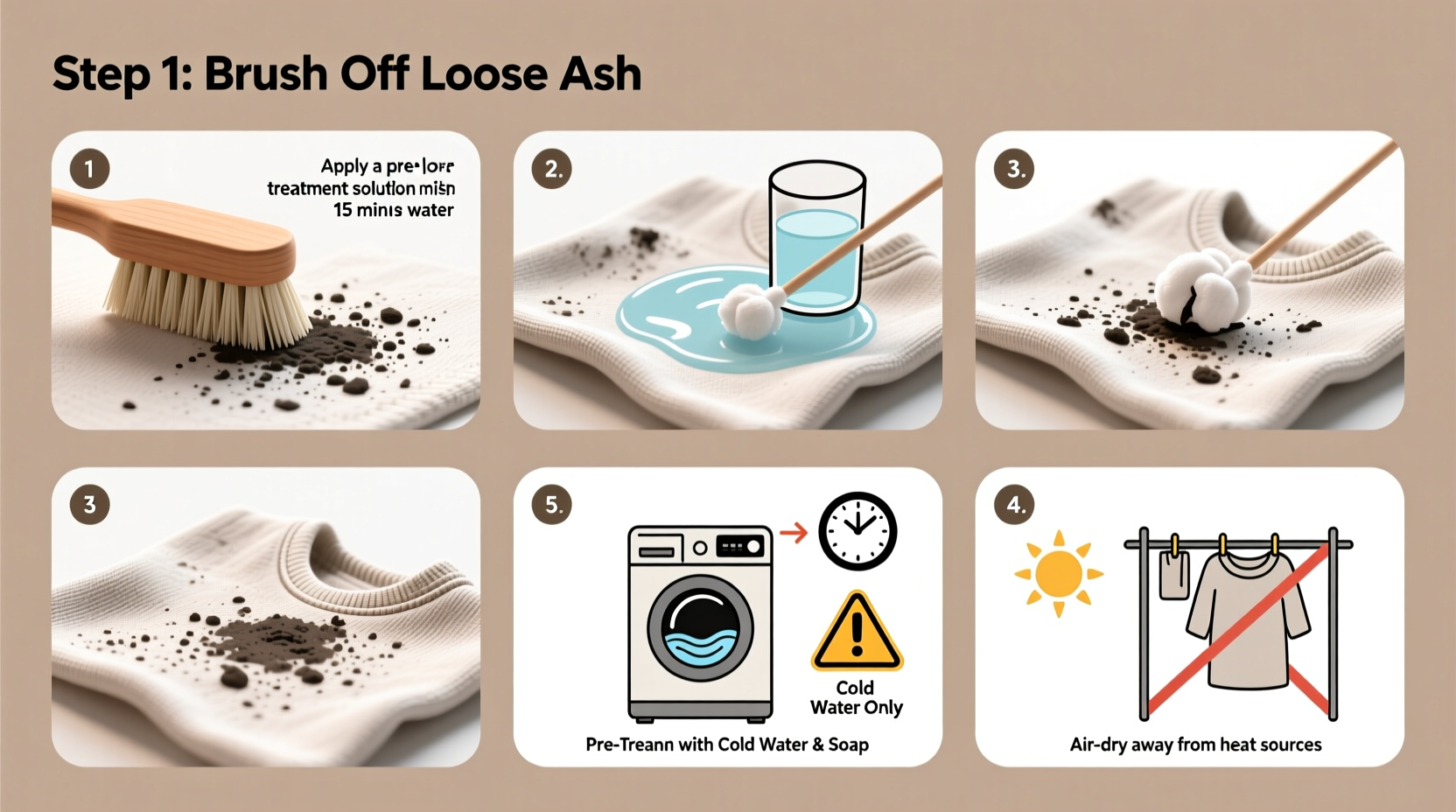
If the clothing is damp or wet, allow it to air-dry fully in a well-ventilated space. Moisture activates the alkaline components in ash, increasing its staining potential. - Gently Brush Off Loose Ash
Take the garment outdoors and use a soft-bristled brush (such as a clean toothbrush or lint-free cloth) to lightly flick away surface ash. Avoid pressing hard—this forces particles deeper into fibers. - Vacuum Delicate Fabrics
For silks, wools, or textured materials, use a vacuum cleaner with a low-suction setting and a brush attachment. Hold the nozzle just above the fabric to lift residue without abrasion. - Pre-Treat with Baking Soda or Cornstarch
Sprinkle baking soda or cornstarch over the affected area to absorb residual oils and alkaline traces. Let sit for 15–30 minutes, then gently brush off. - Wash According to Care Label
Check the garment’s care instructions. For machine-washable items, use cold water and a mild detergent. Add half a cup of white vinegar to the rinse cycle to neutralize any remaining alkalinity. - Air-Dry and Inspect
After washing, air-dry the garment away from direct sunlight. Heat from dryers can set lingering residues. Once dry, inspect the area. If the stain persists, repeat treatment before considering stronger options.
Do’s and Don’ts: Ash Stain Removal Table
| Do’s | Don’ts |
|---|---|
| Act quickly while ash is still dry | Rub or scrub the stain aggressively |
| Use a soft brush or vacuum for dry removal | Apply water or cleaner immediately |
| Pre-treat with baking soda or cornstarch | Use hot water—it can set the stain |
| Wash in cold water with mild detergent | Put stained clothes in the dryer until stain is gone |
| Test cleaning agents on hidden seams | Use bleach on protein-based fabrics like silk or wool |
Expert Insight: Why Alkalinity Matters
Ash isn’t just dirt—it’s chemically reactive. Dr. Lena Peterson, textile chemist at the Institute for Fabric Integrity, explains:
“Wood and tobacco ash have a pH between 9 and 11, making them highly alkaline. When they interact with natural fibers, they can break down protein structures in wool and silk, leading to fiber degradation. Immediate dry removal minimizes chemical exposure and preserves fabric integrity.” — Dr. Lena Peterson, Textile Chemist
This insight underscores why timing and method matter. Treating ash as a chemical contaminant—not just a physical one—leads to better outcomes.
Real Example: Campfire Incident Recovery
Sarah, a hiking guide in Oregon, once brushed against a dying campfire while adjusting logs. A puff of ash coated her lightweight merino wool sweater. At first, she tried wiping it with a damp towel—only worsening the situation by creating gray streaks.
She followed up by airing the sweater overnight, then used a soft clothes brush to remove loose particles. She applied a paste of baking soda and a few drops of water, let it sit for 20 minutes, and rinsed with cold water. After a gentle hand wash with wool-safe detergent and flat drying, the sweater showed no lasting damage. Her mistake was initial wetting—but correcting course saved the garment.
Alternative Methods for Stubborn Residues
If basic techniques don’t fully remove the stain, consider these targeted approaches based on fabric type:
- For Cotton or Linen: Mix equal parts hydrogen peroxide and water. Dab lightly on the stain, wait 10 minutes, then rinse with cold water. Follow with a normal wash cycle.
- For Synthetics (Polyester, Nylon): Use a small amount of rubbing alcohol on a cotton swab. Blot—do not rub—to lift darkened areas. Rinse thoroughly afterward.
- For Wool or Silk: Avoid harsh chemicals. Instead, mix a few drops of mild dish soap with cold water. Gently dab with a microfiber cloth, then blot dry. Professional cleaning is recommended for valuable items.
Checklist: Quick Ash Stain Response Plan
- ✅ Ensure the fabric and ash are completely dry
- ✅ Remove loose ash with brushing or low-suction vacuuming
- ✅ Apply baking soda or cornstarch to absorb residue
- ✅ Check garment care label for washing instructions
- ✅ Wash in cold water with mild detergent
- ✅ Air-dry and inspect before rewashing or storing
- ✅ Repeat treatment if needed; avoid heat until stain is gone
Frequently Asked Questions
Can I use a dryer after treating an ash stain?
No. Heat from dryers can permanently set any remaining residue. Always air-dry the garment first and confirm the stain is fully removed before using a dryer.
Is vinegar safe for all fabrics?
Vinegar is generally safe for cotton, linen, and synthetic blends but should be avoided on silk, wool, and other protein-based fibers. Its acidity can weaken these delicate materials over time. Always dilute and test first.
What if the ash stain has already been washed and dried?
If the garment has already been through the washer and dryer, the stain may be set. In this case, professional dry cleaning offers the best chance of recovery. Home remedies are less effective at this stage.
Final Thoughts and Action Steps
Removing ash stains doesn’t require expensive products or complex procedures—just prompt action and the right sequence of steps. By treating ash as both a physical and chemical contaminant, you protect your garments from long-term damage. The most effective strategy combines dry removal, pH-neutralizing agents, and careful laundering.
Next time ash lands on your clothes, resist the urge to wipe or spray. Instead, follow the gentle, science-backed methods outlined here. Your wardrobe will stay cleaner, safer, and longer-lasting.




 浙公网安备
33010002000092号
浙公网安备
33010002000092号 浙B2-20120091-4
Comments
No comments yet. Why don't you start the discussion?