
Maintaining the appearance and structural integrity of collectible building block figures—especially detailed ones like Iron Man—is essential for enthusiasts and collectors alike. Over time, dust, fingerprints, and environmental grime can dull vibrant finishes and obscure intricate design elements. However, improper cleaning methods can scratch surfaces, loosen joints, or fade paint. The key lies in using gentle, targeted techniques that remove debris without compromising durability. This guide outlines practical, tested approaches to keep your Iron Man figures looking pristine while preserving their long-term value.
Understanding Your Figure’s Materials
Most modern building block figures are made from acrylonitrile butadiene styrene (ABS) plastic, a durable thermoplastic known for impact resistance and color retention. Iron Man figures often feature painted details, metallic finishes, and translucent parts (like the arc reactor), which require special care. Some limited editions may include rubberized joints or chrome plating, both of which react poorly to moisture and abrasives.
Cleaning must account for material sensitivity. For example, acetone-based cleaners can dissolve ABS, while excessive water exposure may corrode internal metal components in motorized versions. Always inspect your figure closely before beginning any cleaning process. Look for manufacturer labels indicating whether the piece is washable or if it contains electronic parts.
Step-by-Step Cleaning Process
A systematic approach ensures thorough cleaning while minimizing risk. Follow this sequence for best results:
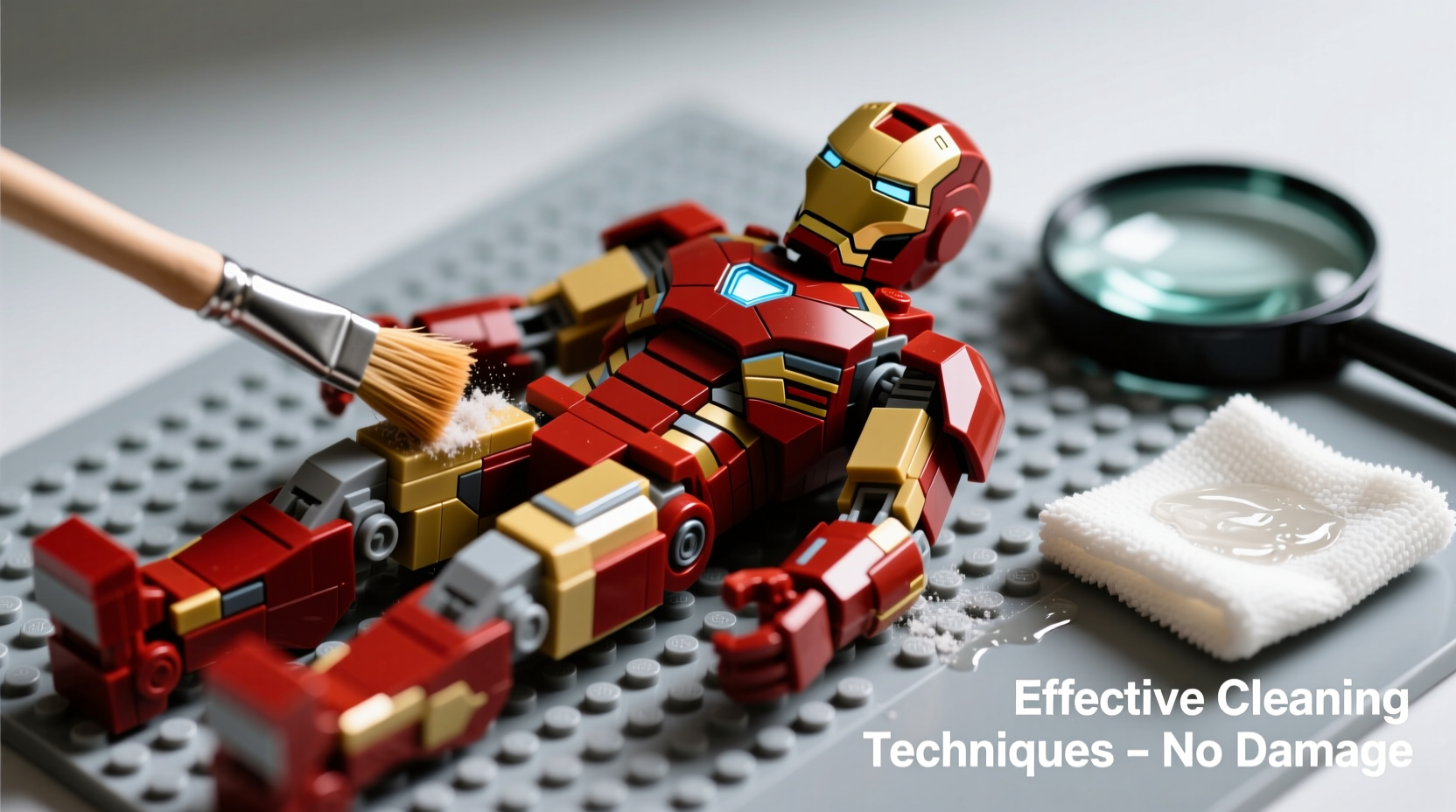
- Dust Removal: Use a soft-bristle brush or compressed air to dislodge loose particles from crevices, armor seams, and helmet vents.
- Surface Wipe: Dampen a microfiber cloth with distilled water only. Gently wipe non-painted areas. Avoid circular motions to prevent micro-scratches.
- Spot Cleaning: For stubborn fingerprints or smudges, lightly apply a 1:10 solution of mild dish soap and water to the cloth—not directly on the figure.
- Drying: Air-dry upright on a lint-free towel. Do not use heat sources like hairdryers.
- Final Inspection: Check articulation points and decorative elements for residue or stress.
This method preserves factory-applied finishes and prevents warping. It's suitable for most standard Iron Man minifigures and larger display models under 15 inches tall.
Do’s and Don’ts: A Quick Reference Table
| Do’s | Don’ts |
|---|---|
| Use distilled water to prevent mineral deposits | Soak the entire figure in water |
| Clean during low-humidity conditions | Use alcohol, bleach, or window cleaners |
| Store cleaned figures in UV-protected cases | Scrub with paper towels or abrasive sponges |
| Handle by sturdy sections like legs or torso | Disassemble glued or press-fit parts forcefully |
| Inspect monthly for dust buildup | Expose to direct sunlight after cleaning |
Expert Insight on Preservation
“Collectors often underestimate how quickly oils from skin degrade plastic surfaces. Regular, gentle maintenance extends both visual appeal and structural longevity.” — Dr. Lena Torres, Polymer Conservation Specialist at the National Toy Archive
Dr. Torres emphasizes that even minimal contact introduces sebum and salts that accelerate surface degradation over time. Her research shows that figures cleaned every 3–4 months using pH-neutral methods retain up to 90% of original gloss compared to untreated counterparts exposed to handling.
Real Example: Recovering a Vintage Mark III Display Piece
A collector in Austin owned a 2012 Iron Man Mark III deluxe set that had been displayed near a window for two years. Sunlight had yellowed the red armor segments, and dust had accumulated inside the chest reactor cavity. Following professional advice, they began by removing visible debris with a camera lens blower. Then, using a cotton swab lightly moistened with distilled water, they carefully cleaned around the reactor’s edge. After air-drying for 24 hours, they applied a museum-grade UV-blocking acrylic spray (designed for plastics) to prevent further discoloration. Within a week, the figure regained much of its original contrast and luster—without damaging delicate printing on the gauntlets.
Advanced Techniques for Heavily Soiled Figures
For figures stored in garages or attics, deeper cleaning may be necessary. One controlled method involves partial immersion:
- Remove all detachable accessories (repulsor beams, stands).
- Seal electronic compartments with waterproof tape if present.
- Submerge only the base or less-detailed sections in lukewarm soapy water for no more than 2 minutes.
- Rinse under slow-running distilled water.
- Pat dry immediately and place in a ventilated area away from direct airflow.
Note: This should only be attempted on solid ABS pieces without decals, electronics, or fabric elements. Chrome-finished variants require extra caution, as moisture can cause delamination beneath the coating.
Checklist: Safe Cleaning Routine
Before each cleaning session, refer to this checklist to ensure safety and consistency:
- ✅ Identify presence of electronics or stickers
- ✅ Gather tools: microfiber cloths, soft brush, cotton swabs, distilled water
- ✅ Work in a clean, static-free environment
- ✅ Test cleaning solution on an inconspicuous area first
- ✅ Allow full drying time before reassembly or display
- ✅ Document condition pre- and post-cleaning for collection records
Frequently Asked Questions
Can I use isopropyl alcohol on my Iron Man figure?
No. Isopropyl alcohol—even at low concentrations—can strip paint, cloud transparent parts, and weaken plastic joints over time. Stick to water-only methods unless advised otherwise by the manufacturer.
How often should I clean my display figures?
Light dusting every 2–4 weeks is recommended. Full cleaning should occur every 3–6 months, depending on environment. More frequent cleaning is needed in high-pollution or pet-friendly homes.
What should I do if paint starts peeling after cleaning?
Stop all cleaning immediately. Peeling indicates either prior damage or use of an incompatible substance. Preserve the current state and consult a toy restoration specialist. Future handling should avoid liquids entirely.
Conclusion: Protect Your Collection with Smart Habits
Iron Man building block figures blend artistic design with engineering precision, making them worth protecting with thoughtful care. By understanding material limits, following structured cleaning steps, and avoiding common pitfalls, you can maintain their brilliance for years. Whether you're a casual fan or a dedicated collector, consistent maintenance enhances enjoyment and preserves sentimental and monetary value.




 浙公网安备
33010002000092号
浙公网安备
33010002000092号 浙B2-20120091-4
Comments
No comments yet. Why don't you start the discussion?