
In today’s fast-paced world, pressure is inevitable. Whether it stems from work deadlines, personal responsibilities, or unexpected life events, chronic stress can erode mental well-being. However, mental resilience—the ability to adapt and recover from adversity—is not a fixed trait. It can be cultivated through deliberate practice and evidence-based strategies. Building this inner strength allows individuals to remain focused, composed, and effective even under intense pressure.
Understanding Mental Resilience and Pressure
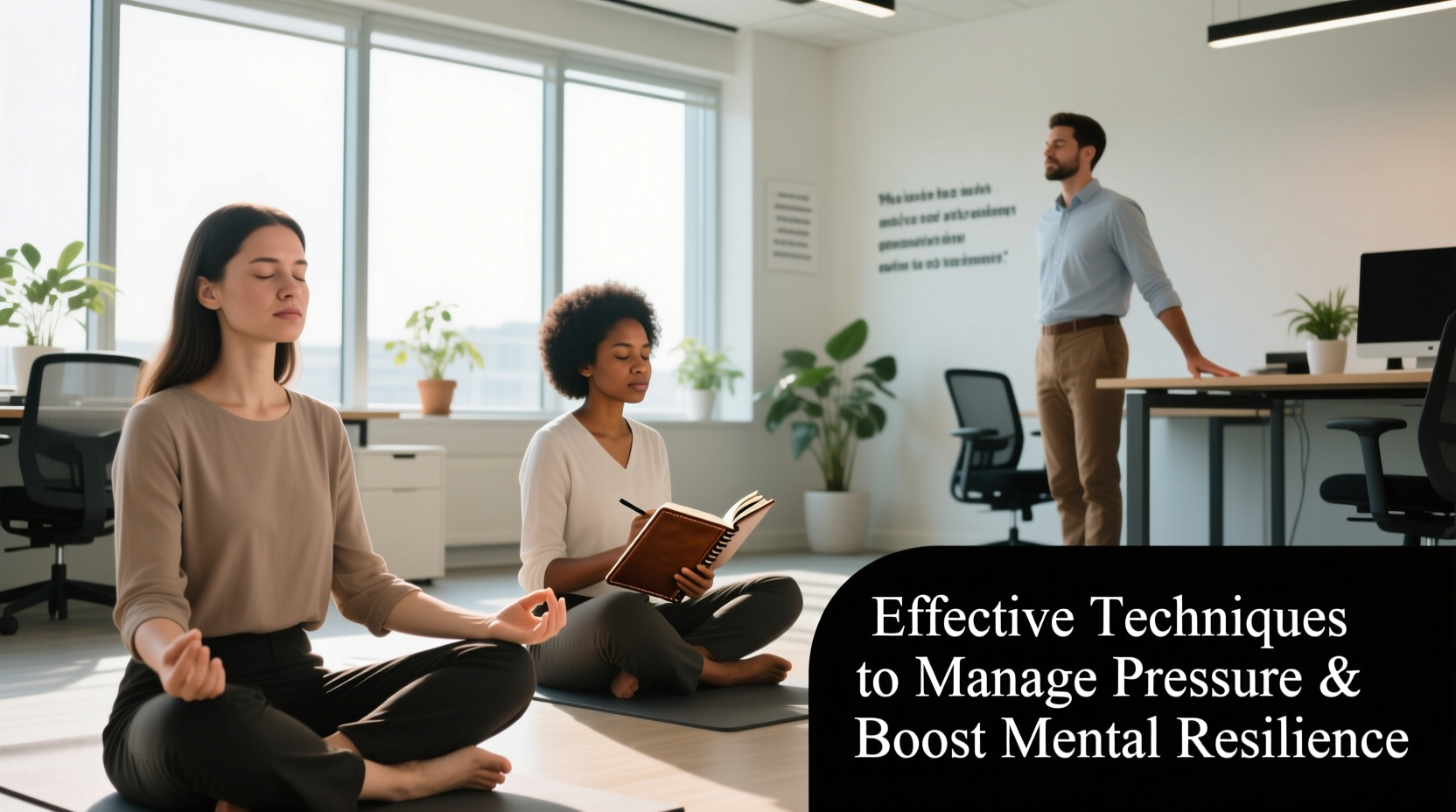
Mental resilience isn't about avoiding stress but navigating it with clarity and composure. It involves emotional regulation, cognitive flexibility, and a growth-oriented mindset. When pressure mounts, resilient individuals don’t collapse; they recalibrate. Research from the American Psychological Association shows that people with higher resilience report better job performance, stronger relationships, and improved physical health.
Pressure itself isn’t inherently negative. In moderate doses, it can enhance focus and motivation—a phenomenon known as the Yerkes-Dodson Law. But when sustained without recovery, it leads to burnout, anxiety, and impaired decision-making. The key lies not in eliminating pressure, but in building systems to manage it effectively.
Core Techniques to Manage Pressure
Managing pressure begins with awareness and ends with action. These foundational techniques help regulate the nervous system and maintain cognitive control during high-stakes moments.
- Controlled Breathing: Slow, diaphragmatic breathing activates the parasympathetic nervous system, reducing heart rate and calming the mind. Try inhaling for four counts, holding for four, exhaling for six, and pausing for two—repeat for 90 seconds.
- Reframing Thoughts: Cognitive reappraisal involves shifting perspective on a stressful event. Instead of “This presentation will expose my weaknesses,” try “This is an opportunity to demonstrate growth.”
- Micro-Pauses: Short breaks (even 60 seconds) between tasks prevent cognitive overload. Use them to stretch, hydrate, or simply close your eyes.
Building Long-Term Mental Resilience
Resilience is like a muscle—it strengthens with consistent training. Incorporating daily habits reinforces neural pathways associated with calm, focus, and adaptability.
- Regular Physical Activity: Exercise increases BDNF (brain-derived neurotrophic factor), which supports neuron health and emotional regulation. Even 20 minutes of brisk walking five times a week yields measurable benefits.
- Sleep Hygiene: Chronic sleep deprivation impairs prefrontal cortex function, weakening impulse control and problem-solving. Aim for 7–9 hours with a consistent bedtime.
- Mindfulness Practice: Daily meditation—even 10 minutes—reduces amygdala reactivity. Apps like Insight Timer or Waking Up offer guided sessions tailored to stress reduction.
- Social Connection: Strong relationships buffer against stress. Talking through challenges with trusted peers reduces perceived threat levels.
“Resilience is not born from solitude, but forged in connection. The brain heals best in safety, and safety is found in trusted relationships.” — Dr. Dan Siegel, Clinical Professor of Psychiatry, UCLA
Step-by-Step Guide to Responding Under Pressure
When pressure hits, having a structured response prevents reactive decisions. Follow this timeline to regain control:
- Pause (0–30 seconds): Stop speaking or acting. Take one deep breath to interrupt the stress cascade.
- Assess (30 seconds–2 minutes): Identify the source of pressure. Ask: What exactly is happening? What part can I influence?
- Reframe (1 minute): Replace catastrophic thinking with neutral or constructive language. Example: “I’m failing” becomes “I’m learning under pressure.”
- Act Strategically (Next Steps): Choose one small, immediate action. Focus on process, not outcome—e.g., “Send a clarifying email” rather than “Fix everything.”
- Debrief Later (Post-Event): Reflect objectively: What worked? What would I adjust? Avoid self-judgment; treat it as data collection.
Do’s and Don’ts of Stress Management
| Do’s | Don’ts |
|---|---|
| Practice gratitude journaling daily | Suppress emotions until they erupt |
| Break large tasks into micro-actions | Try to solve complex problems while emotionally charged |
| Use positive self-talk (“I can handle this step”) | Rely solely on caffeine or stimulants to push through |
| Seek feedback after high-pressure events | Compare your behind-the-scenes struggle to others’ highlight reels |
Real Example: A Surgeon’s Calm in Crisis
Dr. Lena Torres, a trauma surgeon at a Level I hospital, faced a critical moment during a complex surgery when a patient’s blood pressure dropped unexpectedly. Instead of panicking, she applied a technique taught in her resilience training: tactical breathing. She paused for three controlled breaths, then calmly directed her team through a rapid sequence of interventions. Post-surgery, she debriefed with her team, focusing on what went well and where coordination could improve. Her ability to remain composed wasn’t innate—it was trained. Over two years, she practiced mindfulness and scenario-based stress drills, preparing her mind for high-stakes moments. “The body wants to panic,” she said. “But the mind can choose differently.”
Checklist: Daily Habits to Strengthen Resilience
- ☑ Practice 5–10 minutes of mindfulness or breathwork
- ☑ Complete one task using time-blocking (e.g., 25-minute focused session)
- ☑ Write down three things you handled well today
- ☑ Limit screen time 60 minutes before bed
- ☑ Connect meaningfully with one person (in person or via call)
FAQ
Can mental resilience be learned, or is it genetic?
While some people may have a predisposition toward emotional stability, resilience is largely developed through experience and practice. Neuroplasticity allows the brain to rewire itself in response to new behaviors, such as mindfulness, cognitive reframing, and stress inoculation training.
How long does it take to see improvements in resilience?
Many people notice subtle shifts within 2–4 weeks of consistent practice. Studies on mindfulness programs show reduced cortisol levels and improved emotional regulation after just eight weeks of daily 10-minute sessions.
What should I do if I feel completely overwhelmed despite trying these techniques?
Recognizing when to seek professional support is a sign of strength, not weakness. Therapists specializing in cognitive behavioral therapy (CBT) or acceptance and commitment therapy (ACT) can provide personalized tools. Employers often offer Employee Assistance Programs (EAPs) with free counseling sessions.
Conclusion: Cultivate Your Inner Strength
Mental resilience isn’t about enduring endless pressure—it’s about transforming how you relate to it. By integrating breathing techniques, cognitive strategies, and daily habits, you build a foundation that supports clarity, courage, and sustained performance. The goal isn’t to eliminate stress but to respond with intention rather than reaction. Every challenge becomes a rehearsal for greater composure.




 浙公网安备
33010002000092号
浙公网安备
33010002000092号 浙B2-20120091-4
Comments
No comments yet. Why don't you start the discussion?