
Black neutral pens—often favored for their sleek appearance and professional finish—are a staple in offices, classrooms, and creative studios. However, one persistent issue users face is ink smudging. Whether it's a signature on a contract, handwritten notes in a journal, or annotations on a manuscript, smudged ink can compromise legibility and aesthetics. Unlike bold markers or gel pens with quick-dry formulas, many black neutral pens use pigmented inks that take longer to dry or are more prone to transfer. The good news is that with the right techniques, tools, and habits, smudging can be significantly reduced or eliminated altogether.
Understanding Why Smudging Occurs
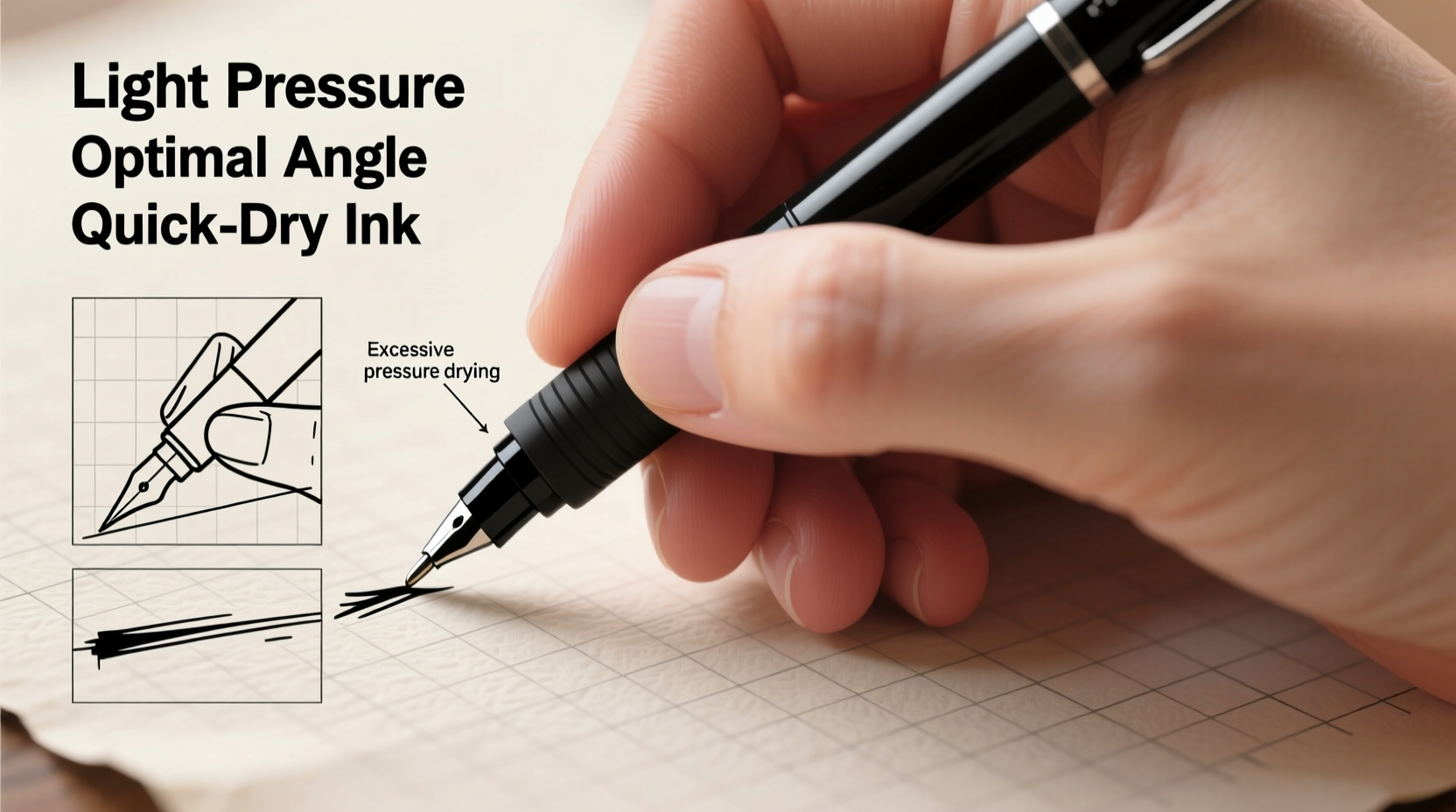
Ink smudging happens when wet ink transfers from the paper surface onto another surface—typically your hand, sleeve, or adjacent page—before it has fully dried. Several factors contribute to this:
- Ink composition: Neutral black pens often use carbon-based or pigment-rich inks that provide depth and permanence but dry slower than dye-based alternatives.
- Pen tip size: Fine tips deposit less ink and dry faster; broader tips lay down more ink, increasing drying time and smudge risk.
- Paper absorbency: Low-quality or glossy paper prevents ink from being absorbed quickly, leaving it vulnerable to smearing.
- Writing pressure: Heavy-handed writing increases ink flow and surface saturation, raising the likelihood of smudging.
Selecting the Right Paper and Pen Combination
The foundation of smudge-free writing lies in pairing the right pen with compatible paper. Not all paper reacts the same way to ink, and understanding this interaction is crucial.
| Paper Type | Absorbency Level | Smudge Risk with Neutral Pens | Recommended For |
|---|---|---|---|
| Bond Paper (70–90 gsm) | Moderate | Medium | Everyday note-taking, printing |
| Recycled Paper | Low | High | Not ideal; uneven texture traps wet ink |
| Cotton Blotting Paper | Very High | Low | Calligraphy, archival documents |
| Silk Finish / Laid Paper | Low to Moderate | Medium-High | Formal letters; use with fast-drying ink |
| Tomoe River (68–80 gsm) | High | Low | Journaling, fountain pens, fine liners |
When selecting a pen, look for models specifically labeled as “quick-dry” or “smudge-resistant.” Brands like Uni-ball Signo, Pilot Precise V5, and Pentel Energel offer neutral black variants with hybrid inks that combine pigment opacity with faster drying times. These formulations reduce reliance on extended drying periods while maintaining rich black tones.
Step-by-Step Guide to Smudge-Free Writing
Preventing smudging isn’t just about equipment—it’s also about technique. Follow this sequence to minimize ink transfer during and after writing:
- Prepare your workspace: Ensure your writing surface is clean and flat. Avoid resting your palm directly on freshly written text.
- Use a writing slope or angled desk: Elevating your paper reduces contact between your hand and the page, especially beneficial for left-handed writers.
- Write from left to right (or right to left if left-handed): Always move your hand away from wet ink. Left-handed individuals should consider slanting paper clockwise to avoid dragging fingers through fresh lines.
- Apply moderate pressure: Let the pen do the work. Excessive force deposits excess ink and slows drying.
- Allow 10–30 seconds of drying time: After finishing a line or paragraph, pause briefly before turning the page or placing your hand over it.
- Use a blotting card or non-absorbent shield: Slide a small piece of rigid plastic or index card under your hand while writing to create a barrier between skin and paper.
“Many people overlook how much writing angle affects smudging. A slight elevation and proper hand positioning can eliminate 80% of contact issues.” — Dr. Lena Tran, Handwriting Ergonomics Researcher, University of Design & Cognition
Practical Tools and Accessories to Minimize Smudging
Beyond paper and pen choice, several accessories can enhance your smudge prevention strategy:
- Finger cots or writing gloves: Worn on the pinky or heel of the hand, these reduce friction and prevent direct skin-to-paper contact.
- Ink-drying accelerators: While rare for everyday use, some artists use specialized sprays or heat tools (like embossing guns on low setting) to speed up drying—use cautiously to avoid paper warping.
- Quick-dry highlighters: Pairing a fast-drying yellow highlighter with your neutral pen ensures even highlighted sections remain smudge-free.
- Page protectors or interleaving sheets: When storing multi-page documents, place wax paper or glassine sheets between pages to prevent offset transfer.
Real-World Example: A Legal Assistant’s Workflow
Sophie M., a legal assistant in Chicago, regularly signs, annotates, and files contracts using black neutral pens. Early in her career, she struggled with smudged signatures on client agreements—a problem that undermined professionalism. After switching from standard copy paper to 90 gsm laser bond paper and adopting the Uni-ball Signo UM-151 (a rollerball with quick-dry gel hybrid ink), her smudging dropped by over 90%. She now uses a finger cot on her pinky and keeps documents flat for at least 30 seconds post-signature before stacking. “It’s not just about the pen,” she says. “It’s the whole system—paper, posture, patience.” Her workflow is now used as a training model in her firm’s administrative onboarding.
Do’s and Don’ts of Preventing Ink Smudging
| Do’s | Don’ts |
|---|---|
| Choose high-absorbency, acid-free paper | Use glossy or coated paper for handwriting |
| Opt for pens with quick-dry or hybrid ink | Press too hard while writing |
| Let ink dry before handling | Immediately close notebooks after writing |
| Use a hand rest or glove | Rest your hand directly on wet ink |
| Store documents with protective sheets | Stack freshly written pages without spacing |
FAQ
Can I fix a smudged signature without reprinting the document?
In minor cases, you can carefully touch up a smudged signature with a fine-tip permanent marker once the original ink is completely dry. However, for formal or legal documents, it’s best to sign again on a clean copy to maintain clarity and authenticity.
Are gel pens better than ballpoint pens for preventing smudges?
It depends on the formulation. Traditional gel pens often smudge more due to higher ink volume. However, modern hybrid gel pens (like those with \"nano-pigment\" technology) dry faster and resist smudging better than standard ballpoints. Look for labels like “quick-dry” or “smudge-proof” rather than assuming gel = messy.
Does temperature affect ink drying time?
Yes. Cold environments slow down evaporation, prolonging drying time. Conversely, warm, dry air helps ink set faster. Avoid writing in damp basements or overly humid rooms if smudging is a concern.
Conclusion: Mastering the Details for Flawless Results
Preventing ink smudging with black neutral pens is a blend of smart material choices, mindful writing habits, and practical tools. It’s not enough to own a high-end pen if the paper won’t absorb the ink or your hand drags across wet lines. By optimizing each element—from selecting Tomoe River paper to using a writing glove—you gain control over the entire process. The result? Crisp, clean writing that reflects precision and care.




 浙公网安备
33010002000092号
浙公网安备
33010002000092号 浙B2-20120091-4
Comments
No comments yet. Why don't you start the discussion?