
Dealing with pet accidents is an inevitable part of dog ownership. Among the most common—and unpleasant—is cleaning up dog vomit from carpet. If not handled quickly and correctly, it can leave behind unsightly stains, lingering odors, and even damage carpet fibers. The key lies in acting fast and using the right method based on your carpet type and the nature of the mess. This guide provides practical, proven techniques that eliminate both stain and odor while preserving your carpet’s integrity.
Why Immediate Action Matters
Dog vomit contains proteins, acids, and sometimes bile or food dyes—all of which can bind to carpet fibers within minutes. The longer it sits, the more likely it is to set into a permanent stain or cause discoloration. Additionally, bacteria in organic matter multiply rapidly, increasing odor and potential hygiene risks. Quick intervention prevents deep penetration and makes cleanup significantly easier.
Step-by-Step Guide to Remove Dog Throw Up Safely
Follow this detailed process to clean vomit effectively without damaging your carpet. These steps are designed for synthetic and wool-blend carpets commonly found in homes.
- Protect Yourself: Put on disposable gloves to avoid direct contact with bacteria.
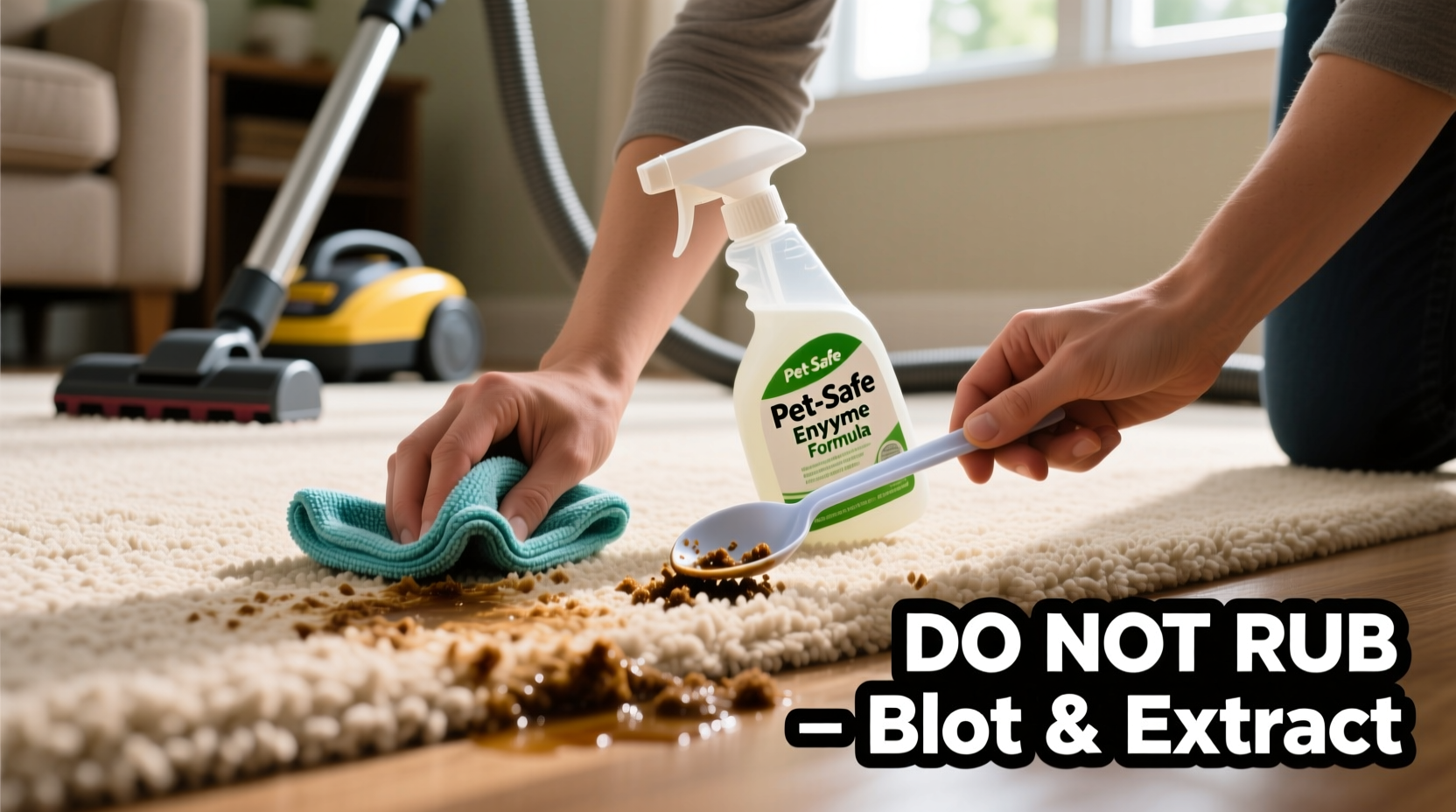
- Blot Excess: Use paper towels or a clean cloth to gently lift as much solid material as possible. Do not rub—this pushes the mess deeper into fibers.
- Scoop Solids First: For thicker chunks, use a spoon or dull knife to carefully scrape them into a trash bag.
- Rinse with Cold Water: Dampen a clean cloth with cold water and dab the area lightly. Warm or hot water can set protein-based stains.
- Apply a Cleaning Solution: Choose one of the recommended solutions below based on availability and sensitivity concerns.
- Blot Again: After letting the solution sit for 5–10 minutes, blot thoroughly with a dry towel until no moisture transfers.
- Rinse and Blot Once More: Lightly mist the area with water and blot again to remove any cleaning residue.
- Dry Completely: Use a fan or open windows to accelerate drying. Avoid walking on the area until fully dry to prevent tracking.
Recommended Cleaning Solutions
- Vinegar and Baking Soda Paste: Mix two tablespoons of baking soda with enough white vinegar to form a paste. Apply, wait 10 minutes, then blot.
- Dish Soap and Hydrogen Peroxide Mix: Combine one teaspoon of dish soap (like Dawn), one tablespoon of 3% hydrogen peroxide, and one cup of cold water. Spray and blot.
- Enzyme-Based Cleaner: Products like Nature’s Miracle or Rocco & Roxie use enzymes to break down organic matter at a molecular level—ideal for eliminating odor-causing bacteria.
“Enzymatic cleaners are the gold standard for biological stains. They don’t just mask odors—they destroy the source.” — Dr. Laura Thompson, Veterinary Microbiologist
Do’s and Don’ts When Cleaning Vomit Stains
| Do | Don’t |
|---|---|
| Act immediately after the incident | Delay cleaning beyond 15–20 minutes |
| Blot, never scrub or rub aggressively | Use excessive water that could seep into padding |
| Test any solution on a hidden carpet patch first | Use bleach or ammonia—these react dangerously with organic compounds |
| Ventilate the room during and after cleaning | Walk on wet carpet or cover with rugs before dry |
| Use enzyme cleaners for complete odor elimination | Assume the smell is gone if you can’t detect it—dogs have superior scent detection |
Real Example: A Family’s Experience with Carpet Recovery
The Carter family adopted a rescue puppy who suffered from occasional digestive issues. One evening, their dog vomited on the living room’s light beige Berber carpet. Initially, they used a store-bought carpet foam, but the yellow stain remained, and their dog kept returning to the same spot. Suspecting residual odor was attracting him back, they switched to an enzymatic cleaner applied according to label instructions. After two applications over 48 hours, the stain disappeared and the behavior stopped. Their takeaway? Surface cleaning isn’t enough—targeting the biological root is essential.
Cleaning by Carpet Type: Tailored Approaches
Not all carpets respond the same way to cleaning agents. Knowing your carpet fiber helps avoid shrinkage, fading, or texture changes.
- Synthetic Fibers (Nylon, Polyester): Tolerate mild detergents and vinegar solutions well. Most resilient to moisture.
- Wool or Wool-Blend Carpets: Sensitive to alkaline and acidic cleaners. Use pH-neutral enzymatic sprays only. Avoid vinegar unless diluted heavily (1:10 with water).
- Stain-Resistant Treated Carpets: Preserve protective coatings by avoiding abrasive scrubbing or strong solvents.
Always check manufacturer guidelines or consult your installer before applying unfamiliar products.
Frequently Asked Questions
Can I use vinegar on all types of carpet?
While white vinegar is effective on many synthetic carpets, it should be avoided or highly diluted on natural fibers like wool, which can be damaged by acidity. Always test in an inconspicuous area first.
How do I know if the stain is truly gone?
After cleaning and drying, inspect under natural light. Residual stains often appear darker or slightly discolored. If in doubt, reapply treatment. Also, smell the area—any sour or musty odor indicates remaining organic matter.
Will hydrogen peroxide bleach my carpet?
Pure hydrogen peroxide (above 3%) can lighten dyes, especially in dark or red-toned carpets. Stick to 3% concentration and test on a hidden section. Never mix with vinegar—this creates peracetic acid, which is corrosive.
Prevention and Maintenance Checklist
Reduce future incidents and improve response readiness with these proactive steps:
- ✅ Feed dogs in low-traffic, hard-surface areas when possible
- ✅ Keep a spill kit stocked with gloves, paper towels, and a spray bottle
- ✅ Train pets to avoid certain rooms where carpets are harder to clean
- ✅ Schedule regular vet checkups if vomiting is frequent
- ✅ Rotate enzymatic cleaner stock to ensure freshness (inactive enzymes lose potency over time)
Final Thoughts and Call to Action
Removing dog throw up from carpet doesn’t require expensive tools or professional services—if you act swiftly and use the right approach. Whether you rely on DIY solutions like vinegar and baking soda or invest in enzyme-based products, consistency and thoroughness make all the difference. Protect your home’s cleanliness, your carpet’s lifespan, and your peace of mind by mastering these simple yet powerful techniques.




 浙公网安备
33010002000092号
浙公网安备
33010002000092号 浙B2-20120091-4
Comments
No comments yet. Why don't you start the discussion?